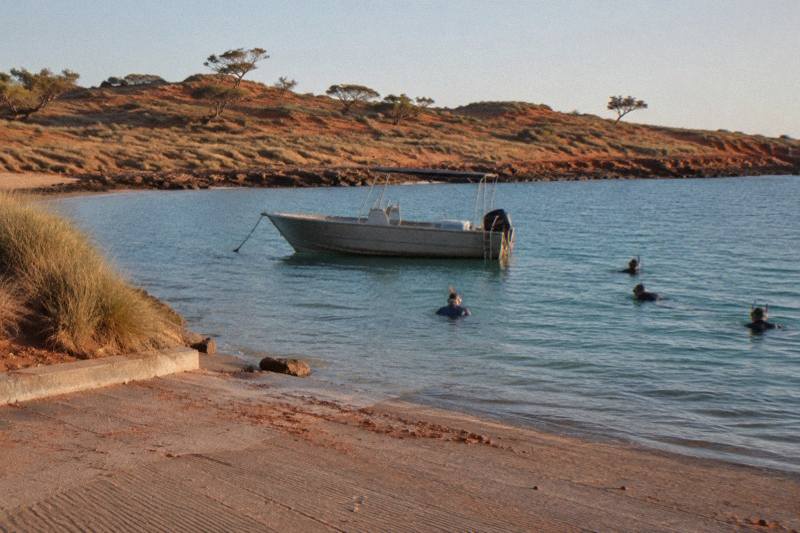
Are Whale Sharks Dangerous? The Honest Answer For Ningaloo Swimmers
Whale sharks are the largest fish in the sea and one of the safest large animals you can share water with, and the real risk at Ningaloo is not the shark's behaviour but contact with its tail, plus the ordinary hazards of a day on open water.
Short answer
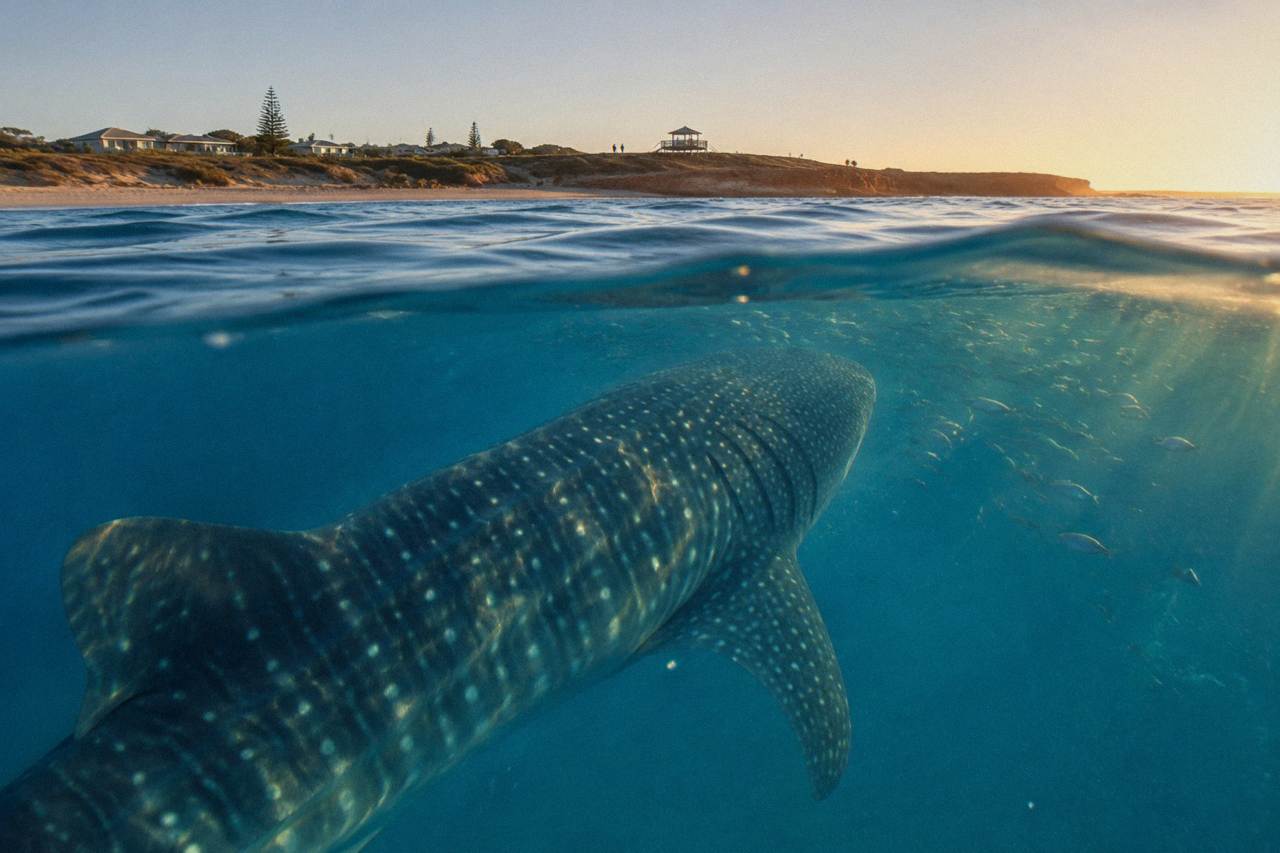
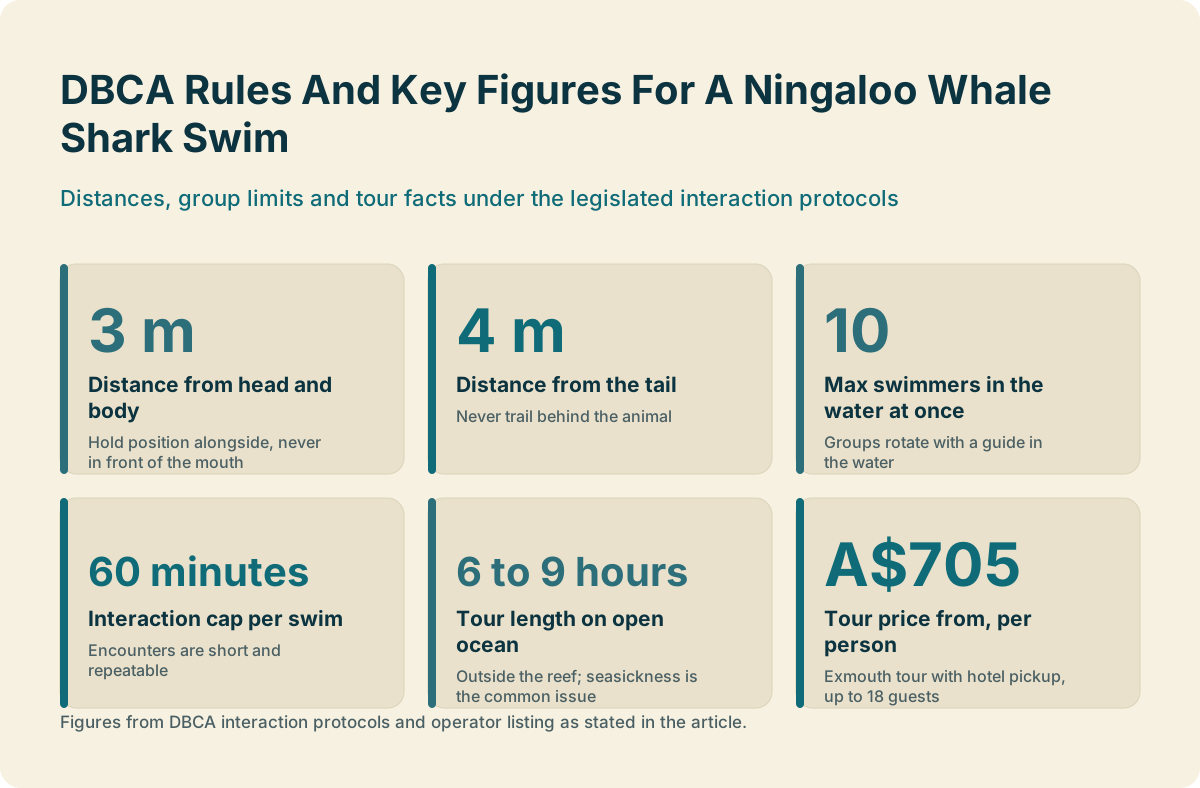
No, whale sharks are not dangerous to swimmers in the way large predatory sharks are. They are filter feeders with tiny teeth and no ability to bite a person. The documented risk at Ningaloo is accidental contact with a moving tail or fin, which is why DBCA rules keep swimmers 3 metres from the body and 4 metres from the tail.
The question that stops most first-time swimmers is not the price and not the season, it is the animal itself. A whale shark can grow to roughly the length of a bus, and the idea of slipping into open water beside one sounds, to plenty of people, like the opening scene of a documentary that ends badly. The honest answer is the opposite. Whale sharks are filter feeders, they cannot bite a human, and the documented risk at Ningaloo is not the shark turning on anyone, it is a swimmer drifting too close to a moving tail. The rules written by the Department of Biodiversity, Conservation and Attractions (DBCA) treat the tail as the hazard, not the mouth. With the safety question settled, the next thing most swimmers worry about is getting a good photo, and our guide to photographing whale sharks at Ningaloo covers which cameras hold up in the water and what photos your tour already hands you.
That distinction shapes everything about how the Ningaloo Blue swim from Exmouth, the Coral Bay Ecotours whale shark safari and the Ningaloo Marine Interactions odyssey actually operate on the water. Crews brief swimmers on distances before the first jump, guides swim alongside each group, and the whole interaction is built around the animal's comfort rather than the swimmer's convenience. This guide lays out what a whale shark actually is, where the real risks sit, what the official rules require, and how the Exmouth and Coral Bay tour rosters handle safety in practice.
Are Whale Sharks Dangerous To Swim With At Ningaloo?
No. Whale sharks are filter feeders that eat plankton and small organisms by straining water through their gills, and they have no capacity to bite, chase or prey on a person. The genuine hazards in a Ningaloo swim are accidental contact with the shark's tail or fin, and the ordinary risks of a long day on open ocean, which is why licensed operators run guided groups under strict DBCA protocols. If you're curious how Ningaloo compares with other spots around the globe, our guide to the world's best places to swim with whale sharks explains why this reef stands out.
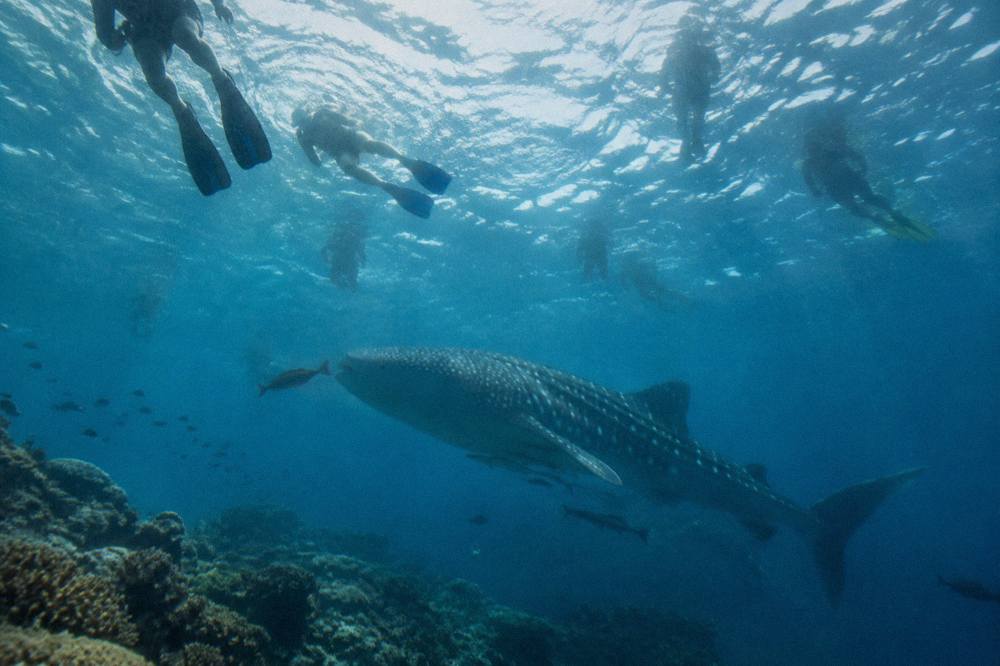
The scale of the animal is the thing that unnerves people, and the scale is real. What is equally real is what the animal does with its mouth. A whale shark feeds by swimming forward with its mouth open, filtering plankton, krill and small fish from the water column. Its teeth are tiny, roughly the size of a fingernail clipping, and they play no role in feeding. The gill rakers do the work. There is no mechanism, anatomical or behavioural, for a whale shark to attack a swimmer, and the species is not implicated in unprovoked injuries to people anywhere in the world.
The official record backs this up. DBCA's whale shark management framework for Western Australia, which governs every commercial swim at Ningaloo, is built on the premise that the animal is safe if approached correctly, and its rules target crowding, touching and tail contact rather than aggression. The department's whale shark management page sets out the interaction protocols every licensed operator must follow, from the 250-metre vessel approach zone to the maximum of 10 swimmers in the water at one time. None of those rules exist because the shark attacks people. They exist because a several-metre animal moving through water carries momentum, and a careless swimmer can be in the wrong place.
For context on just how routine this has become: over 41,000 people swam with whale sharks at Ningaloo in the 2025 season, according to the regional tourism body, and the activity has grown from about 1,000 participants in 1993 to more than 36,000 in 2022 per DBCA's own visitor figures. That is a mass-participation tourism industry running daily for months each year, not a stunt.
| Question | Honest answer |
|---|---|
| Can a whale shark bite a person? | No. It is a filter feeder with tiny, non-functional teeth. |
| Has a whale shark killed anyone at Ningaloo? | No fatal attack on a swimmer is recorded in the DBCA-managed whale shark swim industry. |
| What is the real injury risk? | Accidental contact with the tail or pectoral fin of a moving animal. |
| What is the open-water risk? | Seasickness, fatigue, sun exposure, the same as any boat day. |
| Who manages the rules? | DBCA, under legislated interaction protocols for swimmers and vessels. |
Why A Whale Shark Cannot Hurt You The Way A Predator Can
A whale shark is a filter-feeding shark, not a predatory one. Its feeding system strains plankton from seawater through gill rakers, its teeth are vestigial, and its behaviour around humans at Ningaloo is indifference or slow avoidance. The species feeds on some of the smallest organisms in the ocean, and it has no attack behaviour to trigger.
The word "shark" does a lot of unfair work here. Whale sharks belong to the same class as great whites, but the family resemblance ends at the skeleton. A predatory shark hunts, stalks and bites; a whale shark cruises, mouth open, vacuuming the water. The Ningaloo aggregation itself exists because of food, not hunting: the DBCA Gujawari information guide explains that the mass coral spawning on the reef in March and April, involving more than 200 coral species, triggers plankton blooms that bring the sharks in close to shore. They come to eat organisms measured in millimetres.
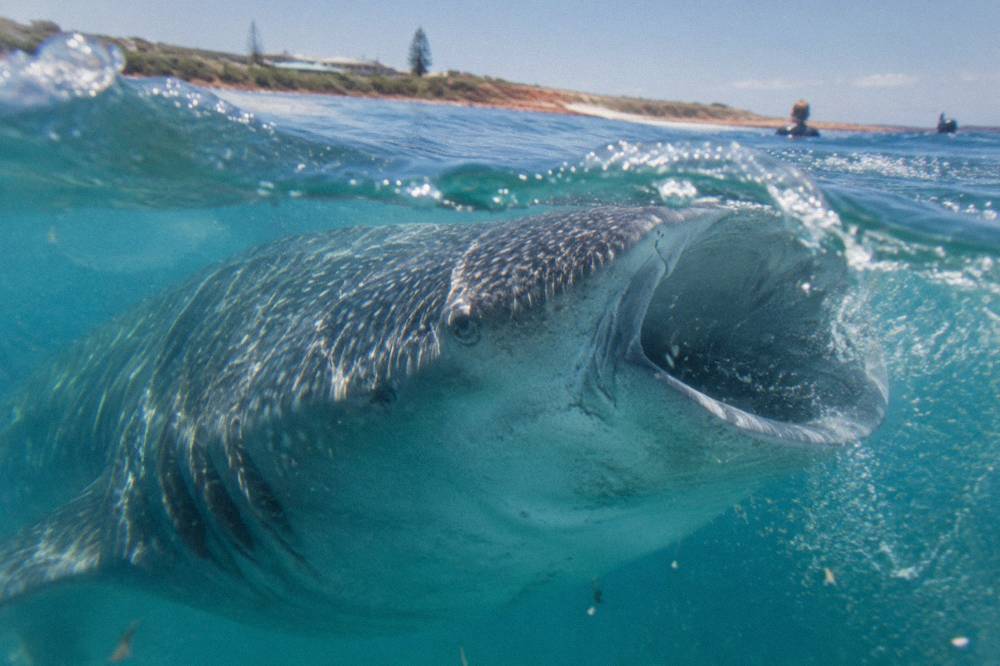
Behaviourally, swimmers at Ningaloo describe animals that either ignore people entirely or bank gently away when a group gets too close. The DBCA recreational rules tell swimmers to cease the interaction if the animal shows signs of stress, which tells you the framework's concern: the shark's welfare, not the swimmer's survival. A species that needs protecting from swimmers is not a species that threatens them.
The conservation status confirms the direction of the danger. The Gujawari guide lists the whale shark as specially protected (migratory) in Western Australia, Vulnerable and Migratory under national environment law, and Endangered on the IUCN Red List. Every protection runs one way. If you want the wider shark picture at Ningaloo, including whether the reef holds anything that should genuinely worry a swimmer, the great white sharks question at Ningaloo covers it separately.
If the safety question is settled and the season is the next blocker, these are the three Exmouth-side options worth comparing first: the full whale shark swim, a smaller boat snorkel, and a beach-based reef day.
Where The Real Risk Sits: The Tail, The Fins And The Boat At Ningaloo
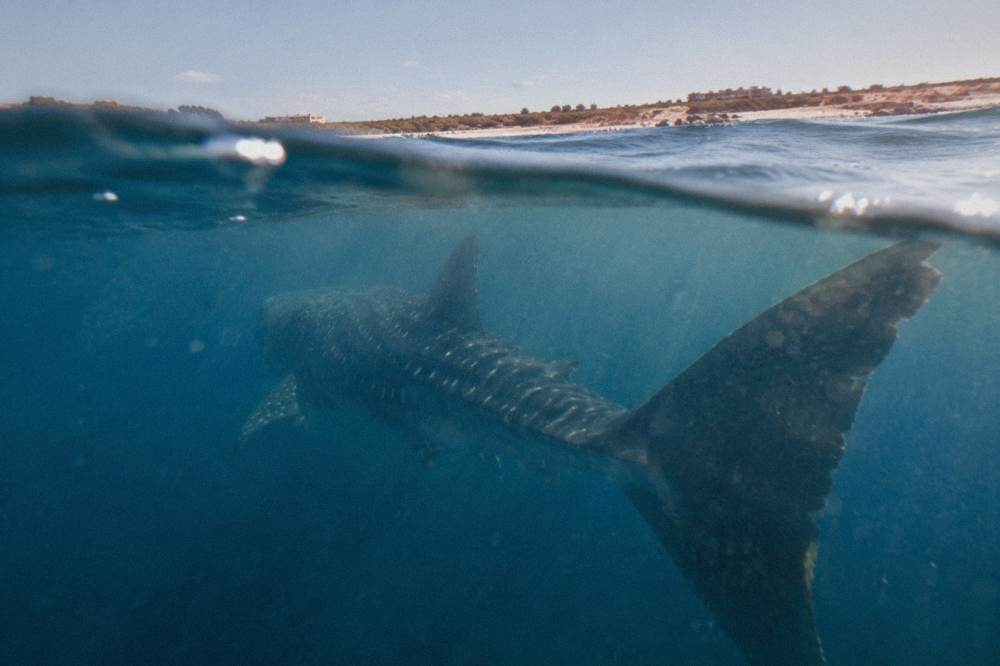
The documented physical risk in a Ningaloo whale shark swim is contact injury, not predation. A whale shark's tail sweeps a wide arc as it swims, and DBCA's distance rules, 3 metres from the head and body, 4 metres from the tail, exist because a tail strike from a moving several-metre animal can bruise or injure. Secondary risks are boat-related: propellers, ladders, deck slips and seasickness.
A whale shark moving at cruise speed covers water quickly, and a swimmer who positions behind the animal can end up inside the tail's sweep. This is the single most likely way to get hurt in the water, and it is entirely avoidable by holding position alongside the body, never the tail. Crews on the Ningaloo Blue swim out of Exmouth, the Coral Bay Ecotours safari and the Ningaloo Marine Interactions odyssey all brief this before the first drop, and a guide swims with each group of up to 10 to police it.
The vessel rules matter just as much. Only one boat at a time may be "in contact" with a shark inside a 250-metre approach zone, for a maximum of 90 minutes at no more than 6 knots, and commercial vessels must display whale shark and dive flags while swimmers are in the water. Swimmers enter ahead of the shark's direction of travel so the boat is never dropping people onto the animal. These are the details that separate a licensed operator from a private boat improvising an encounter.
Then there is the day itself. A whale shark tour is 6 to 9 hours on open ocean outside the reef, and for many guests the honest answer to "is it dangerous" is "the shark is fine, the swell is the problem". Seasickness, dehydration and sun exposure send more people to the rail than any animal does, and the seasickness question deserves its own read before you commit.
| Hazard | Likelihood | How the rules or crew manage it |
|---|---|---|
| Tail or fin contact | Low, most likely injury | 4 m tail distance, guide in water, group of max 10 |
| Crowding the shark | Low | Max 10 swimmers, one vessel in contact at a time |
| Boat propeller injury | Very low | Flag protocol, drop ahead of travel direction, 6 knot limit |
| Seasickness | Common | Medication before departure, deck time, crew briefed |
| Fatigue in the water | Moderate | Flotation support, rotation of swim groups, repeated short swims |
| Touching the animal | Low, human error | Touch and riding prohibited, guide supervision |
The Ningaloo Blue swim from Exmouth runs with up to 18 guests and hotel pickup included, from A$705 per person, and its listing states the sale is final, so reading the terms before booking matters as much as the safety brief.
The DBCA Rules That Keep Ningaloo Swims Safe
Every licensed Ningaloo whale shark tour operates under DBCA's legislated interaction protocols: a maximum of 10 swimmers in the water at once, 3 metres from the head and body, 4 metres from the tail, no touching or riding, no flash photography, no cameras on extension poles, no motorised propulsion aids, and no scuba diving, with each swimming interaction capped at 60 minutes. Only operators licensed by the department may run commercial swims.
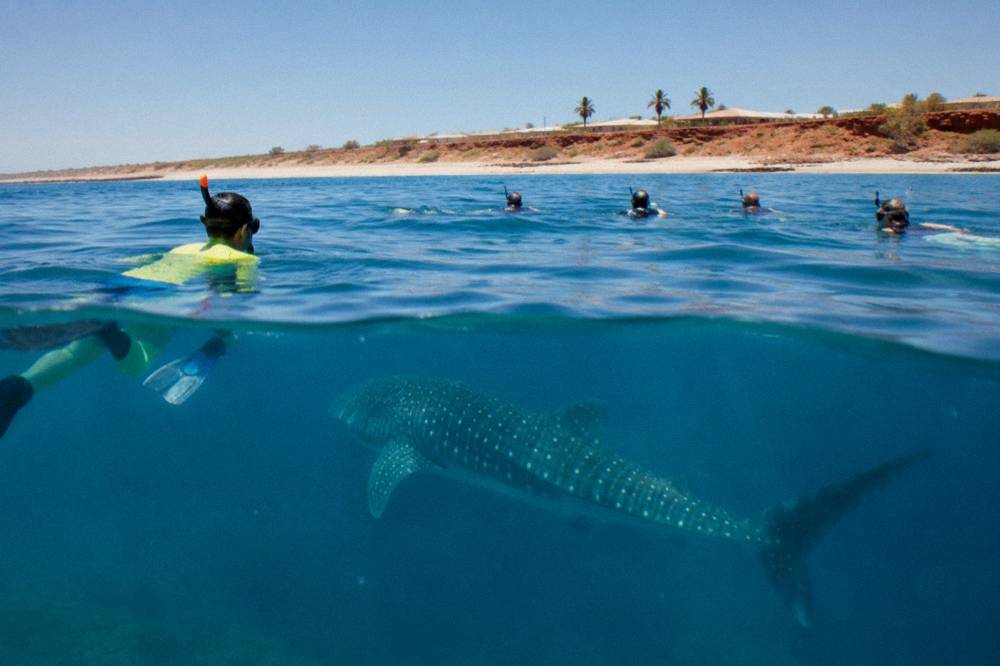
The full rule set is worth knowing because it explains why the experience feels so controlled. You do not jump in with a shark and freestyle. The boat holds contact position, a guide enters with your group of up to 10, and the swim is a series of short, positioned encounters, not a chase. DBCA's Ningaloo Marine Park page confirms the park itself charges no entry fee, and the interaction framework sits on top of that as a licensing layer for operators.
| DBCA rule | What it means in the water |
|---|---|
| Max 10 swimmers at a time | Groups rotate; you swim in a small, guided pod |
| 3 m from head and body | Hold position alongside, never in front of the mouth |
| 4 m from the tail | Never trail behind the animal |
| No touching or riding | Contact is prohibited, not discouraged |
| No flash or pole cameras | Handheld cameras only, no extensions |
| No scuba diving | Snorkel only, surface position |
| 60 minute interaction cap | Encounters are short and repeatable |
One point of honesty: no rule guarantees a sighting. Whale sharks are wild animals, no operator on this site's roster states a sighting guarantee, and the same DBCA framework that makes the swim safe also makes it wildlife-watching rather than a performance. The swim rules guide unpacks the full protocol set, and the no-sighting policy question covers what happens on a quiet day.
For swimmers who want the water but not the open-ocean whale shark day, the Cape Immersion six-hour boat snorkel runs with just 12 guests from Exmouth at A$275 per person, with pickup included and a 4.9 rating from 138 reviews, a smaller-group alternative that stays on the reef.
Do You Need To Be A Strong Swimmer At Ningaloo?
You need to be a confident snorkeller who can swim unassisted in open water, not a competitive athlete. Whale shark swims are conducted on the surface in guided groups with flotation support available, but you are in the open ocean outside the reef, and the physical demand is real: repeated short swims, current, and a long day. Non-swimmers can usually join as boat-based observers.
The swimming question and the danger question are really the same question. The shark poses no threat, so the only thing being tested is your own comfort in deep water. Tours typically begin with a shallow reef snorkel so crew can assess every guest before the first ocean drop, and guides carry flotation aids for tired swimmers. The strong swimmer question runs through the detail, including what support looks like in the water.
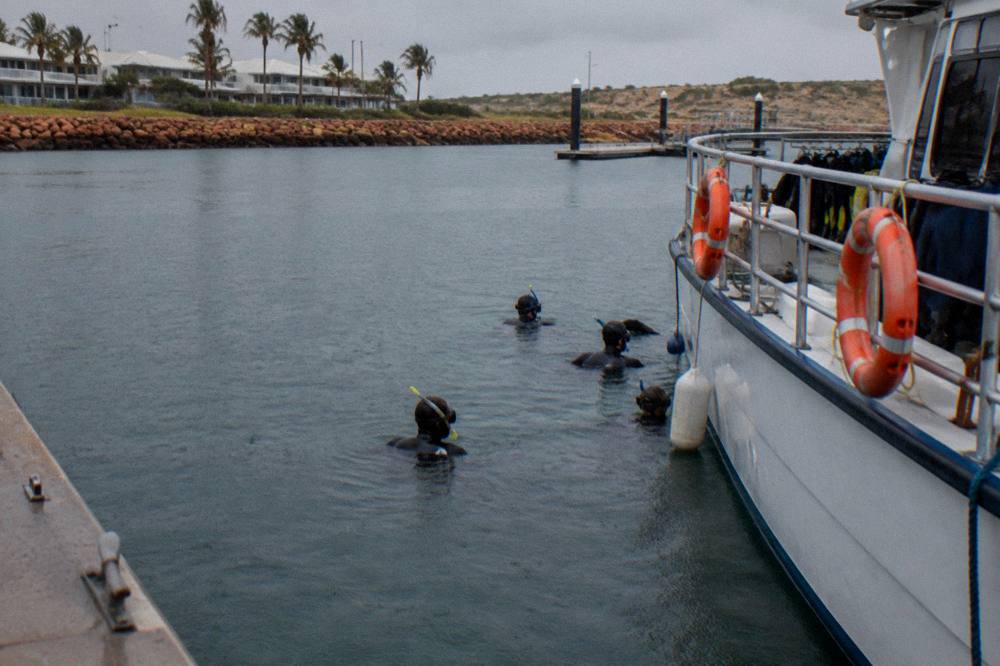
Age and ability policies vary by operator and are not printed uniformly across the roster, so the honest instruction is to check the listing for the tour you are considering. What is consistent is the format: surface snorkelling, guided groups, flotation support, and a boat within reach at all times. If open ocean is a hard no, the Exmouth Adventure Co. guided Turquoise Bay snorkel keeps you inside the fringing reef at A$250 per person with a 4.9 rating from 62 reviews, beach-based rather than open-ocean, with Exmouth accommodation pickup included.
| Water situation | Who it suits | Roster example |
|---|---|---|
| Open ocean, guided swim | Confident snorkellers | Ningaloo Blue swim from Exmouth, 18 guests |
| Open ocean, small group | Confident snorkellers wanting fewer people | Cape Immersion boat snorkel, 12 guests |
| Inside the fringing reef | Swimmers wanting calm, shallow water | Turquoise Bay guided snorkel, beach-based |
| On the boat, no swim | Non-swimmers and younger guests | Observer tickets, check each listing |
How The Exmouth And Coral Bay Tours Manage Safety In Practice
In practice, safety comes from three things working together: DBCA licensing, small guided groups, and crew briefings before every drop. Across the whale shark swims covered here, groups run from 18 to 20 guests, whale shark tours typically use spotter planes to locate animals calmly rather than chasing them, and every listing is run by a licensed operator, whether that is Ningaloo Blue out of Exmouth or Coral Bay Ecotours and Ningaloo Marine Interactions out of Coral Bay.
The day has a shape, and the shape is the safety system. Boats leave around 7:00 am, guests do two inner-reef snorkels while the spotter plane searches, and when a shark is located the vessel moves into the DBCA approach zone for a controlled, rotated swim. The Australia's Coral Coast whale shark page describes this standard day pattern for both towns: groups of up to 10 swimmers with a guide, up to 20 guests on board, repeated jumps and a late lunch on the way home.
| Tour | Departs | Group size | From (per person) | Rating |
|---|---|---|---|---|
| Ningaloo Blue whale shark swim | Exmouth, hotel pickup | 18 | A$705 | 4.8 from 219 reviews |
| Coral Bay Ecotours whale shark safari | Coral Bay, meet at point | 20 | A$745 | 4.8 from 173 reviews |
| Ningaloo Marine Interactions odyssey | Coral Bay, meet at point | 20 | A$700 | 5 from 23 reviews |
| Cape Immersion six-hour snorkel | Exmouth, pickup | 12 | A$275 | 4.9 from 138 reviews |
| Turquoise Bay guided snorkel | Exmouth, pickup | Listing does not state | A$250 | 4.9 from 62 reviews |
For anyone weighing the whole decision, from cost to what actually happens in the water, the what happens on a Ningaloo swim guide walks through the full day, and the homepage comparison on Whale Shark Tours Exmouth puts the swim options side by side. The Ningaloo Blue swim is the Exmouth pick for most first-timers: hotel pickup, 18 guests, a spotter plane and a 4.8 rating across 219 reviews, Check availability if the safety picture above has settled the main worry.
Common Questions About Whale Shark Safety At Ningaloo
Are whale sharks dangerous?
No. Whale sharks are filter feeders that strain plankton from the water and cannot bite a person. The documented risk at Ningaloo is accidental contact with a moving tail or fin, which DBCA's distance rules, 3 metres from the body and 4 metres from the tail, are designed to prevent.
Has anyone been hurt swimming with whale sharks at Ningaloo?
No unprovoked attack on a swimmer is recorded in the DBCA-managed whale shark swim industry, and the activity has run at scale for decades, with over 41,000 swimmers in the 2025 season alone. The injuries that do occur are contact injuries from tails or fins, and the guided, licensed format of a commercial tour exists to prevent them.
Can a whale shark bite you?
No. A whale shark's teeth are tiny and vestigial, roughly fingernail sized, and play no role in feeding. The animal filters plankton through gill rakers while swimming forward with its mouth open. There is no bite mechanism to fear.
Why do you have to stay 4 metres from a whale shark's tail?
The tail of a several-metre animal sweeps a wide arc as it swims, and a swimmer drifting behind the shark can be struck. DBCA's interaction protocol sets 3 metres from the head and body and 4 metres from the tail precisely because tail contact is the most realistic injury scenario in the water.
Is swimming with whale sharks safe for beginners?
It is safe for confident snorkellers who can swim unassisted in open water. Swims happen on the surface in guided groups of up to 10 with flotation support available, and tours typically assess guests on a reef snorkel first. Non-swimmers can usually join as observers. Check each listing for its age and ability policy.
Are there dangerous sharks at Ningaloo Reef?
Whale sharks are the giant species people travel for, and they are harmless filter feeders. The broader shark picture at the reef is covered separately, but the whale shark swim itself is not a predatory encounter under any reading of the official rules.
If the safety question was the last blocker, the three options below cover the full range: the classic open-ocean swim from Exmouth, a small-group boat snorkel, and a calm beach-based reef day.