What If You Get Seasick On A Ningaloo Whale Shark Tour?
A plain-language guide to open-ocean conditions, tablet timing, boat choice and booking terms for whale shark swims at Ningaloo, for travellers worried about seasickness.
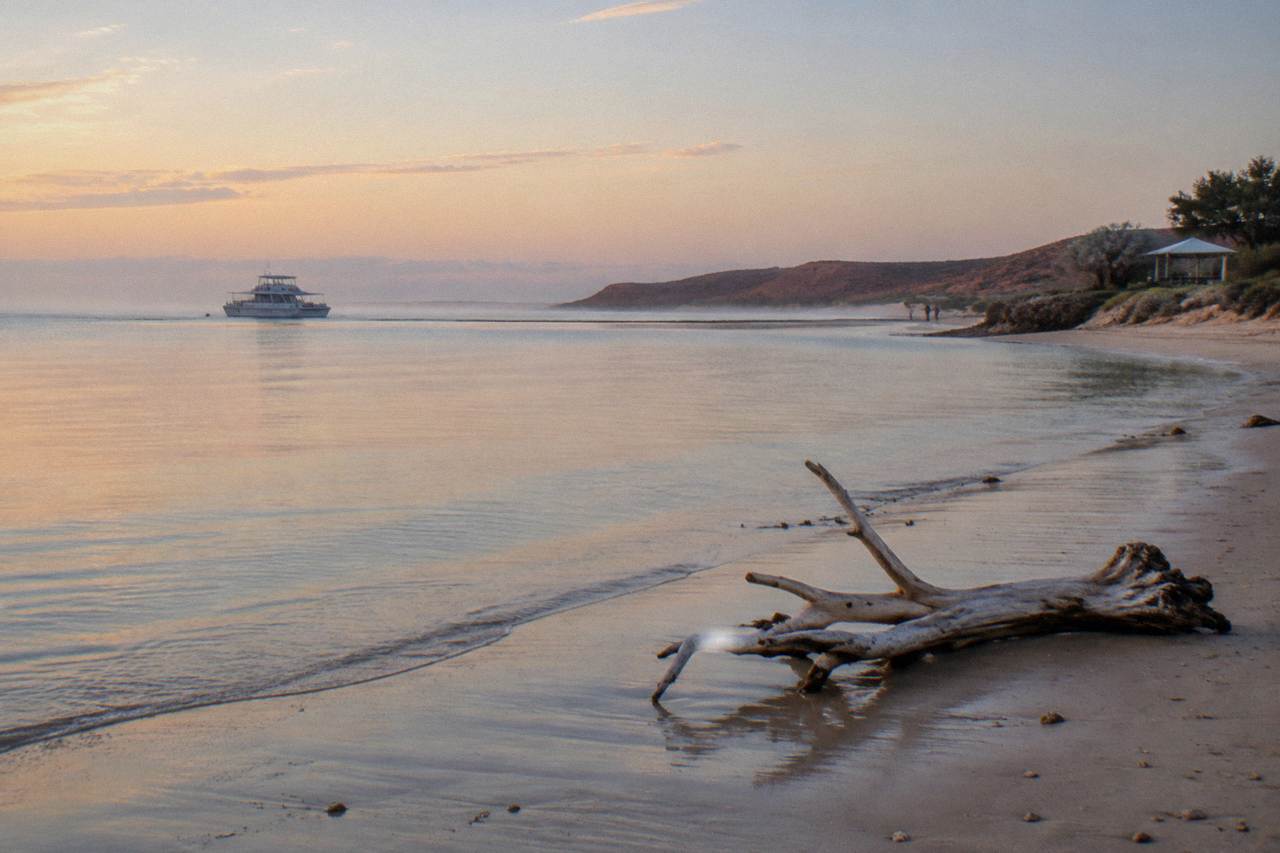
Ningaloo whale shark tours spend hours on open water outside the reef, and that fact alone stops plenty of people from booking. The Ningaloo Blue swim from Exmouth, the Coral Bay Ecotours Whale Shark Safari and the nine-hour Ningaloo Marine Interactions odyssey all put guests on boats in the Indian Ocean for most of the day, and the ocean does not always cooperate. The honest answer is that seasickness is a real possibility on any of these trips, that preparation makes a large difference, and that the roster offers shorter and gentler formats, from the Cape Immersion turtle snorkel to the Exmouth Adventure Co beach trips, for travellers who want the reef without the long open-ocean crossing. This guide sets out the conditions, the timing, the boat choices and the booking terms, in plain language and without medical claims.
What If You Get Seasick On A Ningaloo Whale Shark Tour?
If seasickness hits, the standard advice is to stay on deck in fresh air, keep your eyes on the horizon, tell the crew early, and move to the stern where the boat moves least; most people recover between stops, and the inner-reef snorkels give calm water breaks. No tour can promise a sickness-free day, and no listing on this roster promises one. General preparation before the trip matters more than anything you do once queasy.
The day usually starts early. Australia's Coral Coast, the regional tourism body, describes the typical pattern: guests leave accommodation about 7:00 am, take a bus to the boat ramp, and are back between 4:00 and 5:00 pm. That is a long day on the water, and most of the middle of it is spent outside the reef while spotter planes search. The tourism body's page on swimming with Ningaloo whale sharks also notes the standard structure: two inner-reef snorkels while the plane works, then the whale shark swims in groups of up to ten with a guide.
Operator FAQ pages are consistent on what the sea can do out there. Tours run in open ocean where wind, swell, current and tide all vary, and conditions can range from flat calm to choppy with swells; one operator FAQ mentions swells up to a couple of metres. Skippers make the final call on safety, and tours do not run in unsafe conditions, but a safe day can still be a bumpy one. For a fuller picture of how the day unfolds, see our guide to what actually happens on a Ningaloo swim.
If you already know open boats are a problem, the format you book is the single biggest lever you control. These three cover the range: the full whale shark experience from Exmouth, the classic Coral Bay day, and a short inshore alternative.
Why The Open Ocean Outside Ningaloo Reef Tests Stomachs
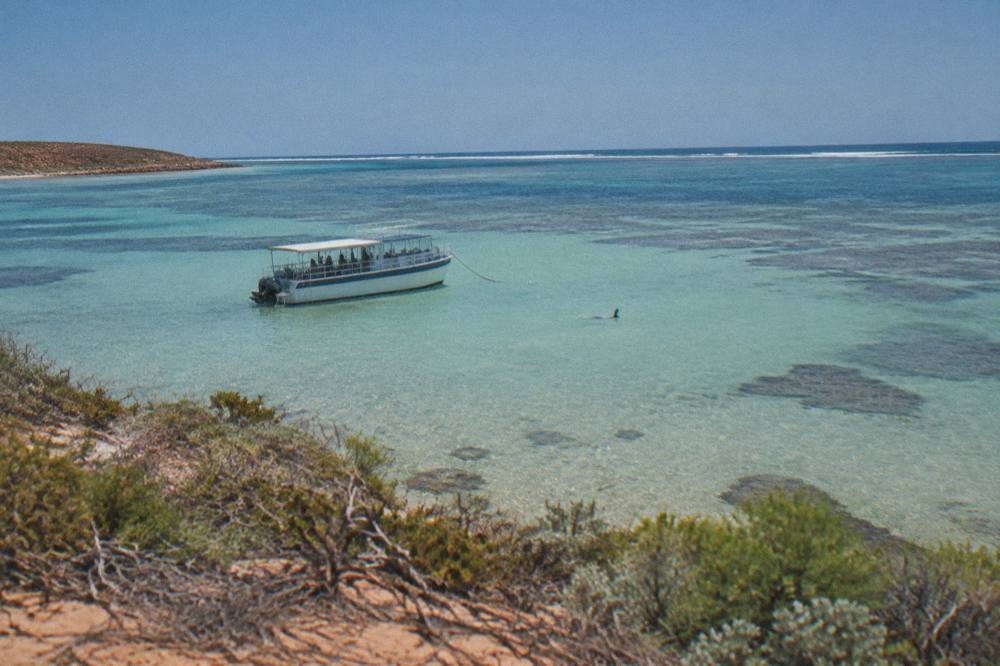
Whale shark boats travel beyond the fringing reef to find the animals, and the water outside the reef is exposed to ocean swell with no protection; the crossing, the drift while waiting and the return leg are all motion exposure. Inside the lagoon it is often flat, which is exactly why operators schedule reef snorkels there. The contrast between the two is the whole story of a seasick-prone day.
Ningaloo is unusual among the world's big reef systems because the reef sits close to shore, sometimes within swimming distance of the beach. That helps, but it does not remove the open-ocean section. Whale sharks feed on plankton blooms beyond the reef edge, and the boats go where the sharks are. The plankton itself is the draw: the DBCA Gujawari information guide explains that the March and April mass coral spawning, over 200 coral species, triggers the blooms that bring the sharks close to the coast each year.
Motion affects people differently, and the same swell that bothers one passenger leaves the next one eating lunch happily. What the operator pages agree on is practical: stay on deck rather than below, face the direction of travel, fix your eyes on the horizon rather than a phone or book, and keep something light in your stomach rather than nothing. Fresh air genuinely matters on these boats because almost all guest space is open deck anyway.
The timing of your trip within the season also shapes the sea you meet. Earlier months tend to bring lighter winds and warmer water, while the winter months from June onward can carry stronger fronts through the region. Our article on Exmouth weather and the best time to visit covers the pattern in detail. One reassuring fact from the verified research: in 2025, 41,390 people swam with whale sharks at Ningaloo, and the season has run for over three decades, so the industry is very used to nervous stomachs.
Should You Take Seasickness Tablets Before A Whale Shark Swim?
General, non-medical advice from operator pages is consistent: if you use seasickness medication, take it before departure as directed, not once you feel ill, because remedies work far better preventively; hydrate well, eat lightly on the morning, and skip alcohol the night before. For any medication question, including choice and timing, ask a pharmacist or doctor. No operator page on this site's research names a product or dose, and none will be named here.
The preventive point is the one that trips people up. Once nausea has started, tablets taken then are usually too late to save the day, which is why every Exmouth and Coral Bay operator FAQ says to medicate in advance. The other consistent threads are simple habits: a light breakfast rather than a heavy one or none at all, plenty of water the day before and the morning of, and no late-night drinking. These are comfort measures, not cures, and the honest framing is that they reduce the odds rather than remove them.
One caution worth planning around: some seasickness remedies cause drowsiness, and a drowsy swimmer in open ocean is not what any crew wants. That is a medication question, and it belongs with a pharmacist or doctor who knows your situation, not with a tour article. Tell the crew what you have taken as well; they would far rather know up front.
| Preparation | When | What operator pages say |
|---|---|---|
| Seasickness medication | Before departure, as directed | Take preventively, not after symptoms start |
| Food | Morning of the tour | Eat lightly, avoid a heavy breakfast |
| Drink | Night before and morning | Hydrate well, avoid alcohol the night before |
| Position on board | While travelling | On deck, mid to stern, eyes on the horizon |
| Crew | As soon as you feel unwell | Tell the crew early, they deal with this daily |
The final row is the one people forget. Crews on the Ningaloo Blue swim, the Coral Bay Ecotours safari and every other trip in this roster host dozens of guests a day through the whole March to August season, and a queasy passenger is a routine event, not an embarrassment. The operators' own pages state plainly that seasickness is not grounds for a refund, so a quiet word with the crew is both the kindest and the most useful thing you can do for yourself.
How To Pick A Boat And Tour Length That Suits A Nervous Stomach
Tour length is the clearest lever: the roster's whale shark days run from about 6 hours on the Ningaloo Blue trip to about 9 hours on the Coral Bay Ecotours safari and the Ningaloo Marine Interactions odyssey, while reef options run from 3 hours 30 minutes up. Shorter days mean less total motion exposure, and departure town changes the boat and the journey too.
Exmouth and Coral Bay departures differ in character. The Coral Bay Ecotours Whale Shark Safari and the Ningaloo Marine Interactions Whaleshark Odyssey both leave from Coral Bay, run about 8 to 9 hours, carry up to 20 guests and need a meet at the departure point. From Exmouth, the Ningaloo Blue swim is the shortest full whale shark day at about 6 to 7 hours, includes hotel pickup and lists a meal, which matters when appetite is fragile. There is no way to swim with whale sharks without the open-ocean leg, so within the whale shark category your choice is really about how many hours you spend out there and how big the boat feels.
| Tour | Departs | Duration | From (per person) | Rating |
|---|---|---|---|---|
| Whale Shark Safari, Coral Bay Ecotours | Coral Bay | 8 to 9 hours | A$745 | 4.8 from 173 reviews |
| Nine-Hour Whale Shark Odyssey, Ningaloo Marine Interactions | Coral Bay | 9 hours | A$700 | 5 from 23 reviews |
| Whale Shark Swim, Ningaloo Blue | Exmouth | 6 to 7 hours | A$705 | 4.8 from 219 reviews |
| Turtle Snorkel, Cape Immersion Tours | Exmouth | 3 hours 30 minutes | A$145 | 4.8 from 197 reviews |
| Guided Beach Snorkel, Exmouth Adventure Co | Exmouth | 7 hours | A$250 | 4.9 from 62 reviews |
Two honest notes on that table. First, the Coral Bay Ecotours safari carries a park fee on top of the ticket, A$20 per adult and A$10 per child payable before departure, which the listing states in its exclusions. Second, group size and boat type shape the ride as much as duration: Cape Immersion Tours takes 12 guests on its turtle trip and the same on its six-hour reef snorkel, while the big manta days such as the Coral Bay Ecotours Marine Eco Safari carry up to 30. Smaller is not automatically calmer, but fewer people does mean a quieter deck and quicker access to the stern rail.
The whale shark swim from Exmouth with Ningaloo Blue is the pick most worth a look for the seasick-prone, because it is the shortest route to the same animals, with pickup from your door removing the pre-boat stress of finding a ramp. You can Check availability beside our fuller write-up of the Ningaloo Blue whale shark swim. One flag: that listing states the sale is final and non-refundable, unlike the free-cancellation terms on most of the roster, so read it while your plans are still flexible.
What Happens If You Are Too Sick To Swim?
No listing on this roster states a seasickness refund or a free return policy, and none should be assumed; the general operator terms found in the research say seasickness is not refundable, while cancellations by the operator for weather or safety lead to a reschedule or a full refund. If you are too unwell to enter the water, you stay on the boat and watch the swim from the deck, and the crew will look after you.
That is a blunt paragraph, but it is better read before booking than at the rail. The pattern across operator terms is consistent: skipper decisions on unsafe weather are final, operator cancellations come with a reschedule or a refund, and guest seasickness sits in the same bucket as change of mind. Some operators elsewhere advertise standby return promises for seasick guests, but none of the 14 listings in this site's roster states one, so the only safe advice is to check the terms on the live listing before you pay, and to book the day your stomach, not just your calendar, can handle. The full index of guides sits on Whale Shark Tours Exmouth.
Booking terms are also worth a minute of attention. Most roster listings, including the Coral Bay Ecotours safari, the Ningaloo Marine Interactions odyssey and every Cape Immersion and Exmouth Adventure Co trip, state free cancellation. The Ningaloo Blue whale shark swim is the exception, marked final sale on its listing. Free cancellation does not cover seasickness on the day, but it does cover the decision you make the night before when the forecast turns.
Does Being In The Water Stop The Seasickness?
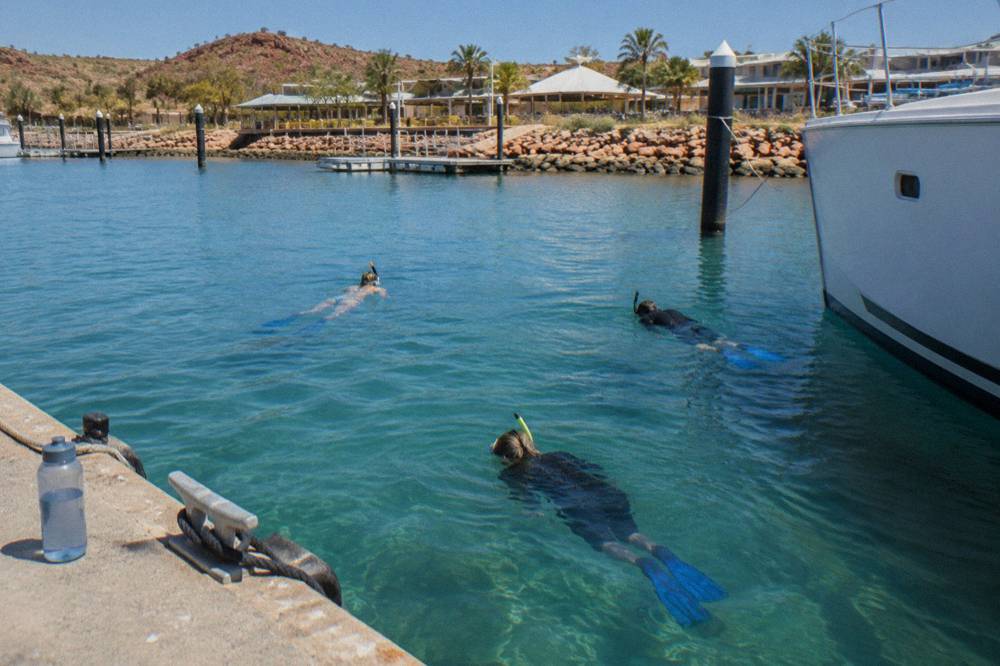
For many people it does: seasickness comes from passive motion on a boat, while floating in the water with your head down and a shark in view gives your body stable reference and your eyes something distant to fix on. Entry is in groups of up to ten with a guide, swims are short bursts, and you return to the boat between them, so relief is temporary but real. The hard part is the waiting, not the swimming.
The official interaction rules set by DBCA, the Department of Biodiversity, Conservation and Attractions, shape this rhythm. A maximum of ten swimmers may be in the water at a time, everyone must stay at least 3 metres from the head and body and 4 metres from the tail, and boats get a maximum of 90 minutes in contact with any one shark at no more than 6 knots. In practice this means repeated short jumps rather than one long immersion, which is good news for anyone whose stomach settles the moment the deck stops moving. The department's whale shark management page sets out the full protocol.
Between swims you are back on the boat, and that is where the day is won or lost. Pick your spot for the drift, stay outside in the air, and keep talking to the crew. The inner-reef snorkels early in the day, inside the protected lagoon, are the calmest water you will touch all trip, and they double as a chance to settle your stomach before the outer reef. Some guests find a mask on in shallow water resets them completely.
Flotation helps too. Roster listings such as the Ningaloo Marine Interactions Best of Ningaloo day include wetsuits and photo packages, and crews across the roster carry flotation aids for tired or anxious swimmers. If you are worried about the swimming side rather than the sea state, our article on whether you need to be a strong swimmer covers the requirements in detail. Basic confidence with a snorkel is the bar on most trips, not lap-swimming fitness.
Gentler Ningaloo Options If The Open Ocean Is A Dealbreaker
Yes, you can still swim with Ningaloo wildlife without committing to the open ocean: the Cape Immersion turtle snorkel runs about 3 hours 30 minutes from Exmouth from A$145, Exmouth Adventure Co's Turquoise Bay beach snorkel is a 7-hour day from A$250, and Coral Bay manta trips from A$220 to A$600 stay closer to the reef. None matches a whale shark swim, yet each delivers genuine encounters.
The turtle trip is the easiest first step. Cape Immersion Tours runs it from Exmouth in about 3 hours 30 minutes with pickup offered, a group of 12 and a 4.8 rating from 197 reviews, and no meal listed, so it is a short, contained outing rather than a commitment. The Exmouth Adventure Co guided Ningaloo Reef snorkel spends its day around Turquoise Bay and the cape beaches, largely in sheltered water, with a 4.9 rating from 62 reviews. At Coral Bay, the half-day manta adventure with Ningaloo Reef Dive, from A$220, uses a spotter plane but works the nearer reef, and the full-day manta trip from the same operator is A$260 with a 4.8 rating from 106 reviews.
Mantas deserve a special word because they are Coral Bay's resident animal, present year-round at the cleaning stations, unlike the seasonal whale shark. The Coral Bay Ecotours Marine Eco Safari, A$350 with a 4.8 rating from 565 reviews, is the most-reviewed trip on this entire roster, and the Ningaloo Marine Interactions Best of Ningaloo day, rated 5 from 274 reviews at A$350, includes wetsuits and photos. One honest caveat the luxury Ocean Eco Adventures manta cruise listing states itself: manta rays are wild animals and sightings are not guaranteed, a sentence that applies to every wild animal on this coast, whale sharks included.
For land days with the ocean at arm's length, our piece on things to do in Exmouth besides whale sharks covers Cape Range National Park, Yardie Creek and the beaches, and the Ningaloo Centre aquarium in town lists adult entry at A$25 with children and concession at A$17. A trip built around one whale shark day plus several gentler days is a very common and very sensible shape for a Ningaloo holiday, and our article on how many days you need in Exmouth lays out the options.

Planning The Week Around One Boat Day
Build a buffer day after your swim, book with free-cancellation terms while forecasts are uncertain, and keep your heaviest land activities for the day after the boat; if the weather turns unsafe the operator will reschedule or refund, but a tight itinerary leaves you nowhere to move. Travellers who plan this way rarely lose their whale shark day, they just shift it.
The season runs March to July in the official wording, with operators running to August, so peak choice is wide. Booking ahead matters in that window, and our piece on whether you need to book whale shark tours in advance covers timing; the seasickness angle is simply that a buffer day lets you rebook rather than sail into a forecast you dread. A nervous stomach with a fixed departure the next morning is the worst of all worlds.
| If this describes you | Book this | Why |
|---|---|---|
| Want the shortest full whale shark day | Ningaloo Blue swim, 6 to 7 hours, Exmouth | Least time outside the reef, hotel pickup |
| Happy with a long day, want Coral Bay | Coral Bay Ecotours safari, 8 to 9 hours | Classic big day, remember the A$20 park fee |
| Small group, full whale shark day | Ningaloo Marine Interactions odyssey, 9 hours, 20 guests | Longest day but smallest big-boat crowd |
| Not ready for open ocean at all | Cape Immersion turtle snorkel, 3 hours 30 minutes | Short, inshore, under A$150 |
| Reef day, beach based | Exmouth Adventure Co Turquoise Bay snorkel | Sheltered water, guided, 4.9 from 62 reviews |
Whatever you book, pack with the day in mind: light layers, water, sunscreen and the items in our whale shark swim packing list. Whale Shark Tours Exmouth keeps the full roster of whale shark, manta, humpback and reef trips side by side, so you can weigh duration, departure point and cancellation terms in one place before you commit a holiday's biggest day to the ocean.
Common Questions About Seasickness On Ningaloo Tours
Do Ningaloo whale shark tours get rough?
They can. The boats travel outside the reef into open ocean where wind and swell vary, and operator FAQs describe choppy days with swells of up to a couple of metres. Skippers cancel unsafe conditions, but a safe day can still be bumpy, and calm days are common too.
Can I get a refund if I am too seasick to swim?
No listing on this roster states a seasickness refund. Operator terms found in the research treat seasickness as non-refundable, while cancellations by the operator for weather or safety come with a reschedule or a full refund. Check the terms on the live listing before booking.
Which whale shark tour is shortest?
The Ningaloo Blue swim from Exmouth runs about 6 to 7 hours from A$705 per person and includes hotel pickup. The Coral Bay Ecotours safari runs 8 to 9 hours and the Ningaloo Marine Interactions odyssey about 9 hours.
Does being in the water help seasickness?
For many people, yes. Floating with your head in the water gives your body a stable reference, unlike standing on a moving deck. Swims happen in short bursts in groups of ten, with returns to the boat in between.
What if you get seasick on a whale shark tour?
Tell the crew early, get out on deck in fresh air, keep your eyes on the horizon and stay near the stern where the boat moves least. Prevention matters more: take any seasickness medication before departure as a pharmacist or doctor directs, eat lightly, hydrate and skip alcohol the night before.