Exmouth Weather And The Best Time To Visit Ningaloo
Weather and sea conditions decide what kind of day you get on the water at Ningaloo, and they shift month by month. This guide matches the verified water-temperature record to the whale shark, humpback and manta windows so you can plan the trip around the month that suits you.
Short answer
Exmouth is warm and dry through the main visiting window, with Ningaloo Reef water running about 28 degrees in April and cooling to about 23 degrees by September and October. Whale sharks swim from March to July, with operators running to August, humpbacks pass from June to November, and Coral Bay mantas are resident year-round.
Exmouth sits on the dry western edge of Cape Range, where the desert meets the Ningaloo Reef lagoon, and its weather runs to a simple rhythm: warm, mostly dry months through the middle of the year, and a build of heat and humidity into the cyclone season from November to April. For a trip built around the water, the month you choose matters more than almost any other decision, because it decides which animals are out there, how warm the sea feels, and how the wind will treat your boat day. Because a stretch of wind can scrub a single boat day, it pays to pad your dates, and our guide to how many days you need in Exmouth lays out plans that leave room for the weather to turn.
The reef itself is the reason the season works the way it does. Between March and April a mass coral spawning, involving more than 200 coral species, triggers plankton blooms along the shelf, and whale sharks arrive to feed on them. The Whale Shark Tours Exmouth roster is built around that window and the seasons that follow it: the Ningaloo Blue swim from Exmouth, the Coral Bay Ecotours safari, the Ningaloo Marine Interactions odyssey, the Cape Immersion boat snorkel, and the Exmouth Adventure Co. trips all run to the calendar the wildlife sets.
What Is The Weather Like In Exmouth Month By Month?
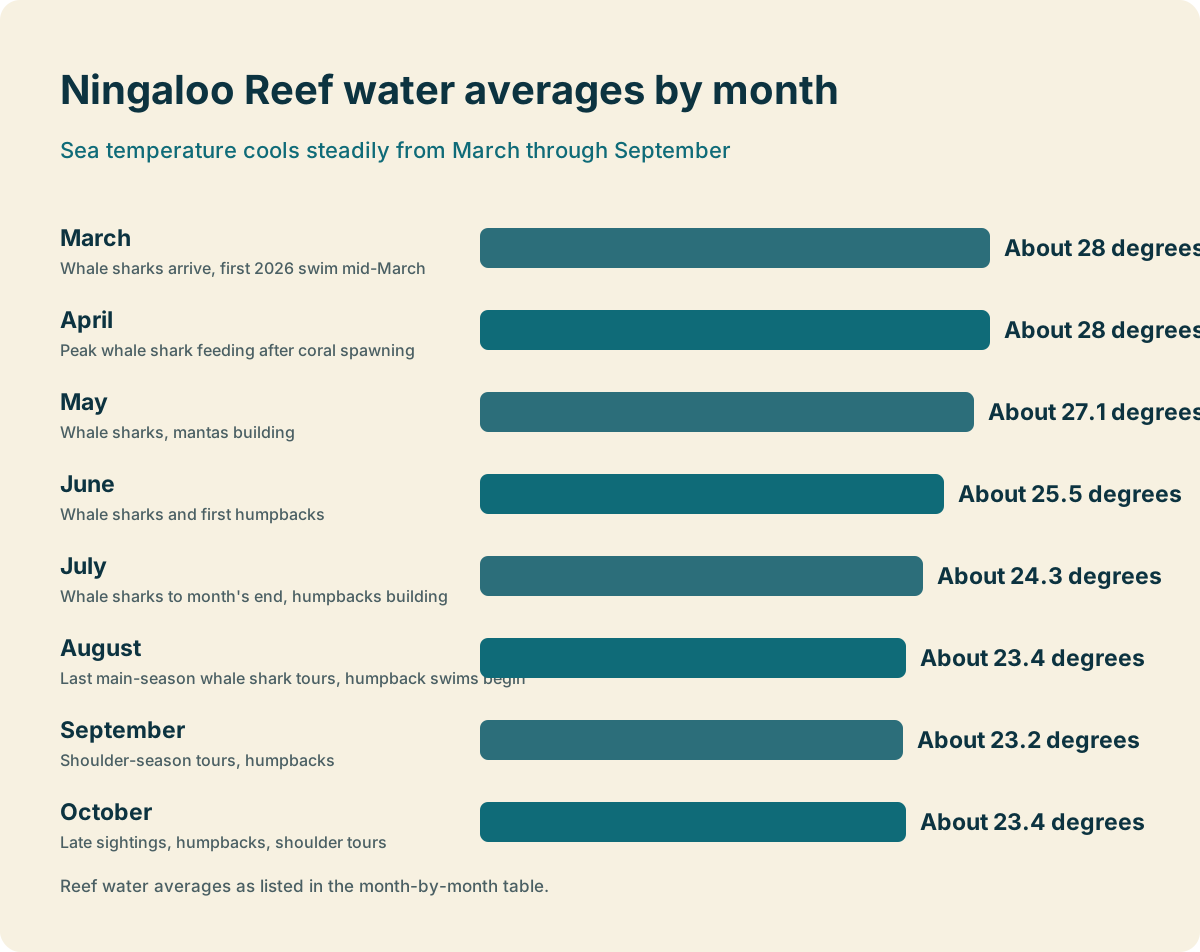
Exmouth's visiting window is warm and dry from autumn through spring, and the sea tells the real story: Ningaloo Reef water averages about 28 degrees in April, cools through winter to about 24 degrees in July, and bottoms out near 23 degrees in September before starting its slow climb back. Those few degrees decide your wetsuit comfort, which wildlife is around, and how the wind behaves on a boat.
The monthly sea-surface averages below come from long-term temperature records for Ningaloo Reef. Air temperatures are not the useful figure here; the water is, because almost every headline activity at Ningaloo, from a whale shark swim to the Cape Immersion turtle snorkel, puts you in the sea for an hour or more at a time.
| Month | Reef water average | How the sea feels | Wildlife window |
|---|---|---|---|
| March | About 28 degrees | Warm, light wetsuit often enough | Whale sharks arrive, first 2026 swim mid-March |
| April | About 28 degrees | Warmest month of the record | Peak whale shark feeding after coral spawning |
| May | About 27.1 degrees | Still warm | Whale sharks, mantas building |
| June | About 25.5 degrees | Cooling, wetsuits typically used | Whale sharks and first humpbacks |
| July | About 24.3 degrees | Cooler, thicker wetsuits common | Whale sharks to month's end, humpbacks building |
| August | About 23.4 degrees | Cool, wetsuits standard | Last main-season whale shark tours, humpback swims begin |
| September | About 23.2 degrees | Coolest of the record | Shoulder-season tours, humpbacks |
| October | About 23.4 degrees | Cool, wetsuits provided | Late sightings, humpbacks, shoulder tours |
Two patterns jump out of that table. First, the drop is steady rather than sudden: the sea drops about one degree a month through winter, which is why a May swim and an August swim feel like different sports. Second, the wildlife column runs ahead of the temperature column. The official season wording from the Department of Biodiversity, Conservation and Attractions puts whale sharks between March and July each year, while the regional tourism body notes Exmouth operators run tours to August, with sightings often extending to October and, in 2024 and 2025, into early November.
That shoulder extension is worth planning around. A September or October trip trades the main whale shark season for humpback swims, resident Coral Bay mantas, lighter crowds and cooler water, and the region's own guidance is explicit that no sighting is guaranteed outside the main season. The trade is real, but so is the reward.
Which Months Are Best For A Whale Shark Swim Around Exmouth?
Mid-March through July is the core whale shark window, with April to July the peak: the sharks arrive after the autumn coral spawning, the sea is at its warmest, and every licensed operator is running daily. Book April to June for the best combination of warm water, reliable feeding activity and full tour schedules, and treat August as the last main-season month rather than a sure thing.
The season has a shape, and it pays to know it. The first confirmed swim of 2026 happened in mid-March off Exmouth, on the early side of the usual pattern, and the feeding aggregation builds through April as the plankton bloom spreads. By June and July the sharks are still present but the water has cooled several degrees and the wind regime has shifted. Operators run their dedicated swim product through this whole span: the Ningaloo Blue swim from Exmouth (from A$705 per person, 4.8 from 219 reviews) runs six to seven hours with hotel pickup, while the Coral Bay Ecotours Whale Shark Safari (from A$745, 4.8 from 173 reviews) runs eight to nine hours from Coral Bay with a champagne lunch on the listing.
If your dates are fixed outside the peak, the shoulder still has options, but read the listing terms carefully. The Ningaloo Marine Interactions Whaleshark Odyssey (from A$700, 5 from 23 reviews) is a nine-hour Coral Bay day that spends its extra hours searching, which suits the later months when sharks are scarcer and more dispersed. No listing on this roster promises a sighting, and that honesty matters: whale sharks are wild animals, a quiet day is possible in any month, and the right response is to check the operator's own terms on the live listing before you book.
Weather-wise, the peak months are also the comfortable months. March and April water around 28 degrees means most people are happy in a light wetsuit or even skins for the in-water portions, and the days are warm without the peak-summer humidity. For a deeper read on the season itself, the month-by-month breakdown in what month is best for whale sharks in Ningaloo picks up where this weather picture leaves off.
How Do Wind And Swell Shape A Ningaloo Boat Day?
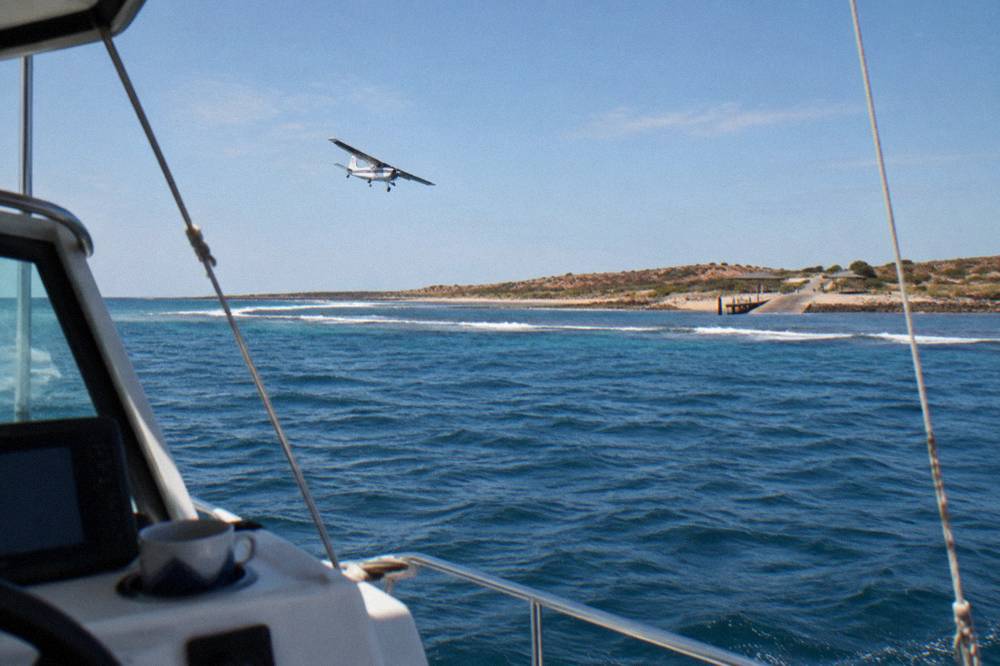
Tours operate in open ocean outside the reef, where conditions range from flat calm to choppy with swells of up to a couple of metres, and skippers make the final call on safety: trips do not run in unsafe strong winds, but they do proceed in marginal-but-safe weather. Wind is the planning variable that matters most, more than temperature, because it decides whether the deck is pleasant or punishing.
The geography explains the wind. Exmouth is sheltered by Cape Range from the east, and the prevailing south-westerlies blow across open water onto the outer reef where whale shark swims happen. A typical tour day follows the pattern the regional tourism body describes: leave accommodation around 7:00 am, two inner-reef snorkels inside the lagoon while spotter planes search outside, then repeated jumps with the whale shark when one is found, and a late lunch on the way home between 4:00 and 5:00 pm. The inner-reef snorkels are the protected part of the day; the outer-reef swim is where the swell lives.
| Condition | What it means on the water | How to plan for it |
|---|---|---|
| Light wind, low swell | Flat outside the reef, easy entries | Best-case day, no changes needed |
| Moderate breeze | Chop on the outer reef, fine inside the lagoon | Standard peak-season day |
| Fresh wind, swell to a couple of metres | Bumpy travel, spray on deck, harder swim entries | Medication early, stay on deck, hydrate |
| Unsafe strong wind | Skipper cancels or reschedules | Check the listing's weather terms before booking |
The seasickness question follows directly from this, and the operator guidance is consistent across the region: take medication in advance rather than after you feel unwell, eat lightly, skip alcohol the night before, stay on deck in fresh air and tell the crew early. None of the roster listings refunds for seasickness, so prevention is entirely in your hands. The full advice, including what to pack and how crew handle a rough day, is covered in what to do if you get seasick on a whale shark tour.
For readers who would rather keep the sea state at arm's length, there are roster options that stay closer to shore. The Cape Immersion turtle snorkel (from A$145, 4.8 from 197 reviews) is a short three-and-a-half-hour trip in the calmer Exmouth waters, and the Ocean Eco Adventures sunset whale watch (from A$139, 4.8 from 47 reviews) keeps you on the boat entirely.
The Cape Immersion six-hour wildlife snorkel (from A$275, 4.9 from 138 reviews) is the roster's flexible middle ground: it runs from Exmouth with pickup, carries just 12 guests, and mixes reef snorkelling with wildlife spotting, so a brisker day still delivers a full experience inside the lagoon.
Do You Need A Wetsuit At Ningaloo, And Which Thickness?
Early-season swimmers from March to May often find a light wetsuit or none at all sufficient in water of roughly 27.1 to 28 degrees, while June to October calls for the full wetsuit, with three to five millimetre suits common by July as the sea cools to the low twenties. Every whale shark and manta operator on the roster provides suits as part of the trip, so you do not need to buy or pack one.
The comfort line sits where the record crosses from the high twenties to the mid-twenties through June. Above that line, most people are happy in skins or a shortie for an hour in the water; below it, a full suit earns its keep, especially on a boat day where you climb out wet into wind. The month-by-month table above gives the averages; the infographic below turns them into a packing decision.
One detail the averages hide: a swim is not a bath. Whale shark swims involve repeated entries over a long day, and each climb back onto the boat costs body heat, so operators hand out full suits even in April when the water is at its warmest. The Coral Bay Ecotours Whale Shark Safari and the Ningaloo Blue swim both include gear and catering on their listings, and the Ningaloo Marine Interactions odyssey lists no meal, so pack accordingly for that one.
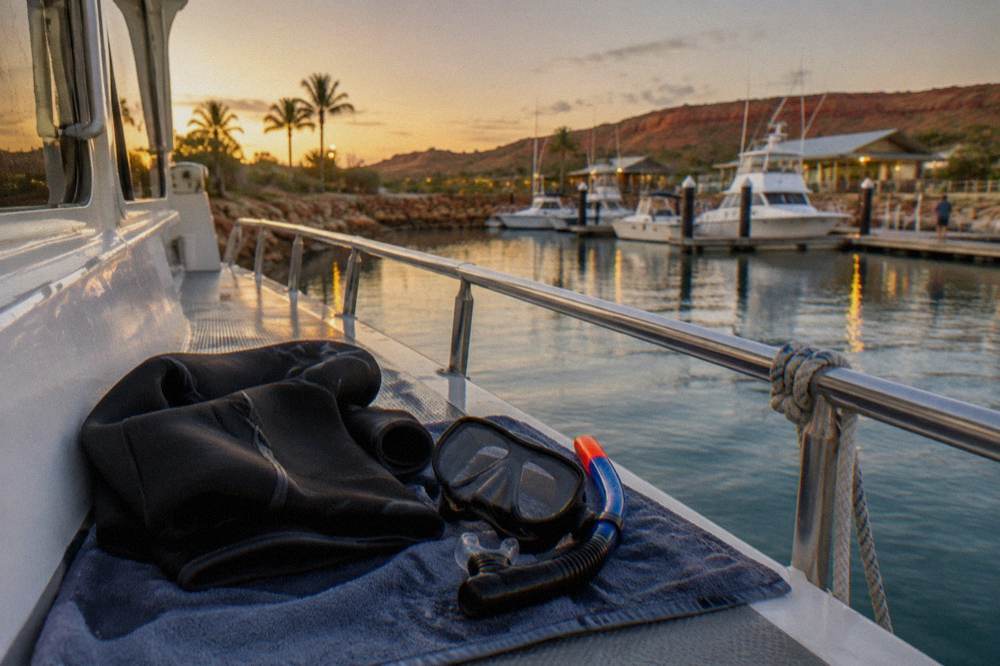
For the non-swim parts of a Ningaloo trip, the same logic applies at the beach. Turquoise Bay and the other Cape Range lagoon spots are shallow and sheltered, and in March to May water that is warmer than most Australian pools needs no suit at all. The Turquoise Bay snorkelling guide for Cape Range covers where to get in and what the lagoon is like through the year.
What About Humpbacks, Mantas And Turtles In Each Month?
Humpbacks pass Ningaloo from June to November, with swim tours running roughly August to October out of Exmouth and July to October from Coral Bay; Coral Bay's reef mantas are resident year-round at their cleaning stations, and turtles are a constant on the shallow reef through every visiting month. That means the only genuinely quiet months for big marine wildlife are the height of summer, when the whale sharks have gone and the heat builds.
The humpback window overlaps the tail of the whale shark season, which is why August is such a useful month: you can still join a dedicated swim tour while the first humpback trips are launching. The Coral Bay Ecotours Humpback Whale Safari (from A$745, 5 from 87 reviews) runs eight hours with alcohol included on the listing, carrying just 14 guests. Later, the Exmouth humpback swim season proper runs August to October, and the full picture is in swimming with humpback whales in Exmouth.
Mantas are the year-round insurance policy. Coral Bay has a resident reef manta population with cleaning stations close to town, which is why the manta listings cluster there: the Ningaloo Marine Interactions Best of Ningaloo day (from A$350, 5 from 274 reviews), the Coral Bay Ecotours Marine Eco Safari (from A$350, 4.8 from 565 reviews) and the Ningaloo Reef Dive half-day adventure (from A$220, 5 from 4 reviews) all run on that resident population, with peak sightings commonly May to September. The Ocean Eco Adventures luxury manta cruise states plainly on its listing that mantas are wild animals and sightings are not guaranteed, which is the honest framing for every species on this coast.
Turtles need no season at all. The Cape Immersion turtle tour and the Exmouth Adventure Co. guided beach snorkel at Turquoise Bay (from A$250, 4.9 from 62 reviews) find them through the whole visiting window, and a calm lagoon morning in any month from March to October usually turns up a few. The manta ray swim guide for Ningaloo maps the Coral Bay cleaning stations and the Exmouth transient sightings in detail.
What If The Weather Turns On Your Tour Day?
If a skipper judges conditions unsafe, the tour does not run, and the operator's own terms decide what happens next: across the industry that means a reschedule or a refund for weather cancellations, while guest cancellations and seasickness are treated separately, so the two things to read before booking are the weather clause and the cancellation clause on the live listing. The roster reflects that spread honestly. Most listings offer free cancellation, but the Ningaloo Blue whale shark swim states on its listing that the sale is final and non-refundable, a real difference for a trip that depends on the weather.
This is where booking timing and weather risk meet. The regional tourism body's day pattern, buses leaving around 7:00 am and returning by 4:00 to 5:00 pm, means a weather call is usually made early, and a cancelled day still leaves time for a land alternative: Cape Range National Park's canyons, the Vlamingh Head lighthouse, or the Ningaloo Centre aquarium in town. The things to do in Exmouth besides whale sharks guide carries the full backup list.
| Weather outcome | What typically happens | What it means for you |
|---|---|---|
| Operator cancels for unsafe conditions | Reschedule or refund per the listing's terms | Read the weather clause before booking |
| Marginal but safe conditions | Tour runs, bumpier than ideal | Medication early, plan a lighter evening |
| Guest cancels | Terms vary: free cancellation on most roster listings, final sale on the Ningaloo Blue swim | Check the cancellation line on the listing |
| Seasickness on the day | No refund across the region's operators | Prevent it: medication, light food, deck time |
Cyclone season is the one structural weather fact that shapes the whole calendar. The November to April window carries the cyclone risk, and the May to September stretch is the dry, cooler season with low cyclone risk. That aligns neatly with the wildlife calendar: the best weather months and the best wildlife months are the same months, which is why Exmouth's visiting year effectively runs autumn to spring.
How Do You Match A Tour To The Month You Can Travel?
Pick the month first, then the tour: March to July for a whale shark swim in the warmest water, August for the last main-season swims plus the first humpback trips, and September to October for humpbacks, mantas and shoulder-season reef days in cool water. Every month from March to October has a roster tour that suits it, so the calendar rarely forces a compromise, it just changes which listing fits.
The matching exercise is straightforward once the weather and wildlife lines are drawn. Early-season visitors in March and April get warm water and peak whale shark feeding, and can pair a swim day with a short turtle snorkel in the afternoons. Mid-winter visitors in June and July need the full wetsuit but get the overlap of whale sharks and the first humpbacks. Spring visitors trade the whale sharks for humpback swims and resident Coral Bay mantas, and the water, while at its coolest, is still warmer than a Melbourne summer beach.
| Your month | Best roster fit | Why it fits |
|---|---|---|
| March to April | Ningaloo Blue whale shark swim, from A$705 | Peak feeding, warmest water, hotel pickup from Exmouth |
| May to June | Coral Bay Ecotours Whale Shark Safari, from A$745 | Long eight-to-nine-hour search day, champagne lunch, mantas building |
| April to June | Ningaloo Marine Interactions Whaleshark Odyssey, from A$700 | Nine-hour day suits scarcer late-season sharks |
| August to October | Coral Bay Ecotours Humpback Whale Safari, from A$745 | Humpback swim window, small 14-guest group |
| Any month | Cape Immersion turtle snorkel, from A$145 | Short lagoon trip, weather-tolerant, runs all year |
Budget is the other axis, and the roster spans it: dedicated whale shark swims run A$700 to A$745, manta trips A$220 to A$600 across the manta listings, and reef and turtle tours from A$145 to A$320. A common pattern is one big swim day plus two or three shorter trips, which spreads the weather risk across the week rather than resting the whole visit on one boat day. The cost guide for swimming with whale sharks in Exmouth breaks the numbers down line by line.
The odyssey earns its place for exactly one kind of traveller: the person whose dates land late in the season and who wants the longest possible search day. Its 5 rating comes from a small pool of 23 reviews, so read the recent guest feedback on the listing rather than relying on the number alone.
How Many Days Do You Need To Beat The Weather?
Plan at least four to five days in Exmouth: whale shark tours take a full day, weather calls can shift a booking, and the region's day pattern, out around 7:00 am and back by 4:00 to 5:00 pm, leaves room for one water day at a time. A buffer day is not padding, it is how experienced visitors handle the fact that skippers, not calendars, make the final weather call.
The buffer logic compounds with distance. Exmouth is about 1,270 km north of Perth by road, roughly a 13-hour drive, or a just-under-two-hour Qantas flight into Learmonth followed by about 25 minutes to town. Nobody wants to travel that far and lose their one booked day to a stiff breeze. The how to get to Exmouth guide covers the routes, and the how many days you need in Exmouth breakdown sets the itinerary against the season windows.
The final planning read is the official one. The Department of Biodiversity, Conservation and Attractions states the whale shark season as March to July each year, and its Ningaloo Marine Park page extends that to August and adds the June to November humpback window, while the regional tourism body's whale shark page carries the Coral Bay and Exmouth season split, the 41,390 swim figure for 2025 and the early-November sightings of the last two seasons. Between the official season wording, the water-temperature record and the roster's own listing terms, every figure in this guide has a source you can check before you commit a date.
Common Questions About Exmouth Weather And The Best Time To Visit
What is the best month to visit Exmouth?
April to June is the strongest combination: whale sharks are feeding after the autumn coral spawning, reef water sits near 28 degrees, and the weather is warm and dry with low cyclone risk. August is the best trade-off month if you want the last main-season whale shark tours plus the first humpback swims.
How cold does the water get at Ningaloo Reef?
Long-term averages put Ningaloo Reef water at about 23 degrees in September and October, the coolest months of the visiting year, down from about 28 degrees in April. Operators provide wetsuits on every swim tour, and three to five millimetre suits are common from July onward.
Is Exmouth weather good in winter?
Yes, for the things most visitors come for. June to August is the dry, cooler season with low cyclone risk, warm days on land and sea temperatures sliding from about 25.5 degrees in June to about 23 by August. It is cooler in the water than autumn, but the whale shark season runs to July officially and August with operators, and humpbacks start passing from June.
Do whale shark tours get cancelled for weather?
Tours do not run in conditions a skipper judges unsafe, and strong-wind days are the usual cause. Across the region's operators a weather cancellation leads to a reschedule or refund under the listing's own terms, so read the weather and cancellation clauses before booking. Most roster listings offer free cancellation, though the Ningaloo Blue swim states its sale is final.
When is cyclone season in Exmouth?
The cyclone season runs November to April. The May to September stretch that covers most of the wildlife year falls in the dry, cooler season with low cyclone risk, which is why the visiting calendar and the wildlife calendar line up so neatly.
Can you swim at the beach in Exmouth in every month?
Yes, through the main visiting window from March to October. Lagoon beaches inside the reef, like Turquoise Bay, are shallow and sheltered, and even at the September low of about 23 degrees the water is pleasant for snorkelling in a wetsuit. The full beach-by-beach picture is in the guide to swimming at Exmouth beaches.