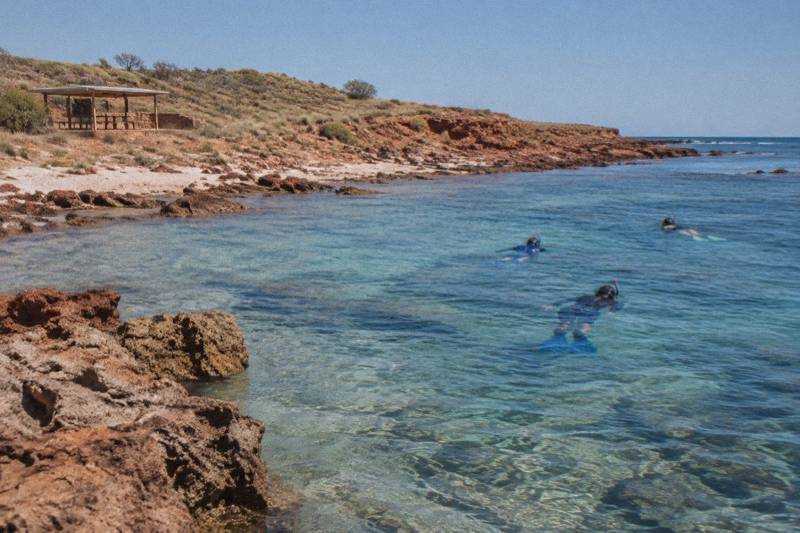
Turquoise Bay Snorkelling In Cape Range National Park
Turquoise Bay is the most famous shore snorkel on the Ningaloo Reef, a drift over coral that starts steps from the sand and costs nothing beyond the Cape Range National Park entry fee.
Short answer
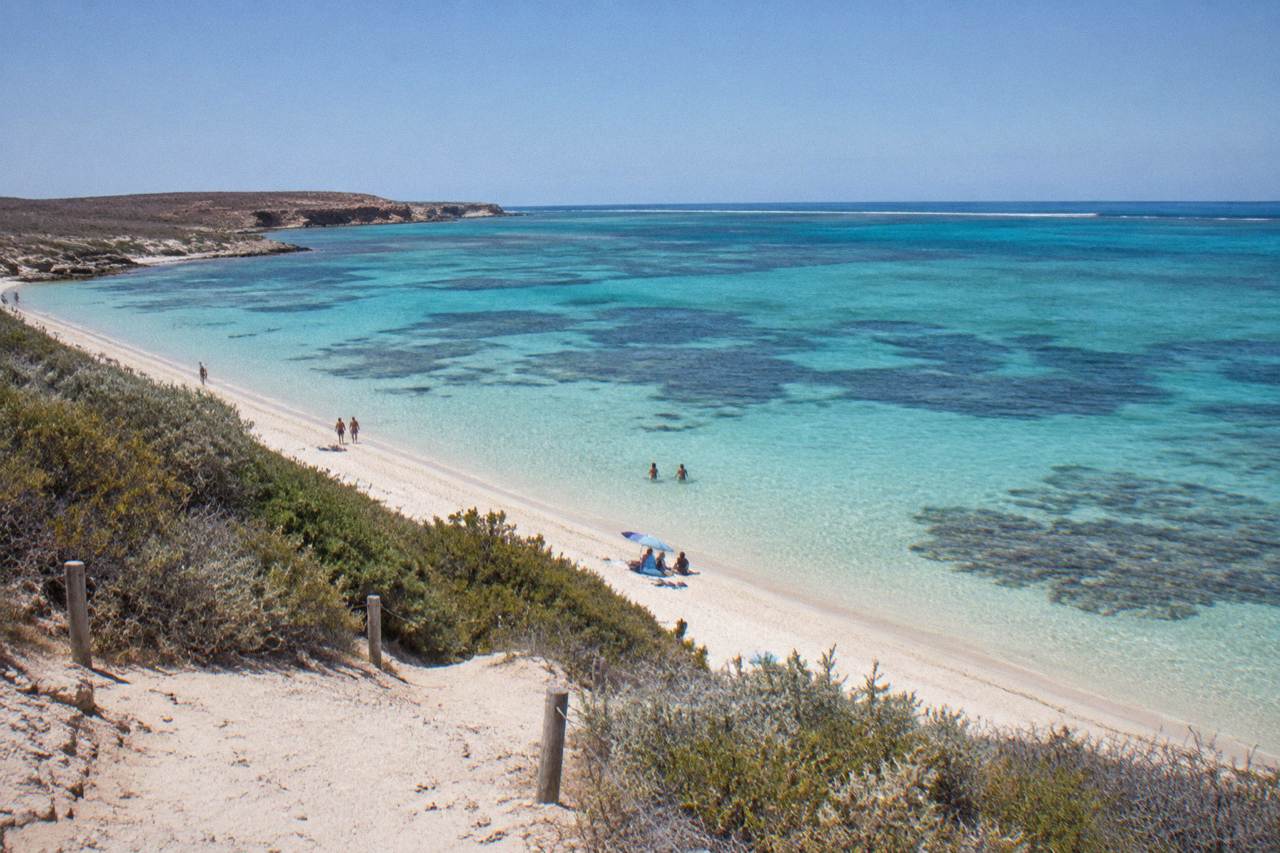
Turquoise Bay sits inside Cape Range National Park, about 60 km from Exmouth, and entry costs $17.00 per standard vehicle. The snorkel is free once inside: a self guided drift over coral in the Ningaloo Marine Park, which charges no entry fee. Most swimmers spend 30 to 60 minutes in the water.
Turquoise Bay does the thing that almost no other famous snorkel site in Australia does: it puts living reef within twenty metres of a white sand beach inside a national park. You walk in from the shore, the current carries you north over coral bommies, and you climb out further up the beach than where you started. No boat, no operator, no entry fee for the marine park itself. It is the most visited snorkel in Cape Range National Park and, for many travellers on a Ningaloo trip, the moment the reef stops being something you look at from a deck and becomes something you float inside.
That said, a shore snorkel at Turquoise Bay is a different animal from a whale shark day. The whale shark swim is a 6 to 9 hour boat expedition, from A$700 to A$745 per person on this site's roster, run out of Exmouth or Coral Bay. Turquoise Bay is the free-to-swim counterweight: the same fringing reef system, reached in bathers and a mask, on the days between tours. Whale shark guests fill their other Exmouth days with exactly this kind of shore snorkelling, and the guided options that build on it, from the Exmouth Adventure Co beach snorkel to the Cape Immersion turtle tours, are the natural same-trip add-ons rather than replacements for the big swim. Before you build the rest of your swim schedule, the plain guide to swimming at Exmouth's beaches covers the currents, stingers and water temperatures you'll meet at each spot.
Where Is Turquoise Bay And Why Do Snorkellers Rate It So Highly?
Turquoise Bay is on the western, reef side of Cape Range National Park, roughly 60 km by road from Exmouth and a short drive south of the Milyering Visitor Centre, inside a World Heritage area where the reef sits close enough to shore to snorkel from the beach. The bay faces the Ningaloo Reef lagoon, sheltered by the reef line from open ocean swell, which is why the water is typically clear, calm and shallow enough for confident beginners.
The Ningaloo Reef is unusual among the world's great coral systems because it is a fringing reef: the coral grows close to land rather than offshore behind a wide shelf of deep water. That geography is the whole reason a place like Turquoise Bay exists. At most famous reef destinations the coral begins a boat ride away. Here it begins where the sand stops. The Ningaloo Marine Park page from the state parks service notes the park protects this narrow fringing system along roughly 300 km of coast, and the marine park charges no entry fee at all.
Why snorkellers rate Turquoise Bay specifically comes down to three things stacked together. First, the drift: a gentle current runs parallel to the beach, so you float over the reef rather than fight to hold position. Second, the variety: coral bommies, sandy gutters and seagrass patches sit within a few fin kicks of each other, which means fish that like all three habitats appear in one swim. Third, the ease: you can stand up in the shallows at either end, and the whole snorkel lies within a few hundred metres of a car park with toilets and shade shelters.
The rating is not hype invented by tourism brochures. It is the direct product of the reef's shape. For background on the system as a whole, the guide to Ningaloo Reef and how it formed explains the fringing geology in more depth, and the full Cape Range National Park guide covers the park's gorges and the rest of its coastline.
How Does The Drift Snorkel At Turquoise Bay Actually Work?
The drift works by entering at the southern end of the beach near the sandbar and letting the prevailing current carry you north over the reef flat, then walking back along the sand to your starting point. Most people spend 30 to 60 minutes in the water. The critical safety rule is the channel at the southern end: never snorkel into or across it, as the current there pulls strongly out toward the reef gap.
The mechanics are simple but worth walking through once, because the entry point matters. The current that makes the bay famous flows north, so you start at the southern, sandy end. Once you are past the sandbar, the water deepens to a few metres over coral, and the drift begins almost immediately. Fish life starts within the first twenty metres: parrotfish working the coral, wrasse in the sandy patches, and, on the outer edge of the visible reef, larger trevally and the occasional reef shark patrolling the drop toward the lagoon floor.
Experienced snorkellers describe the drift as effortless to the point of feeling like cheating. There is no kicking against anything. You surface, check your position relative to the beach, and let the water do the work. The one genuine hazard is the channel at the south end, where water exiting the lagoon concentrates. Signs at the beach mark it, and every piece of official advice says the same thing: stay well north of it. If you feel yourself being pulled sideways and the beach is getting further away, swim hard toward the sand, stand up, and re enter further north.
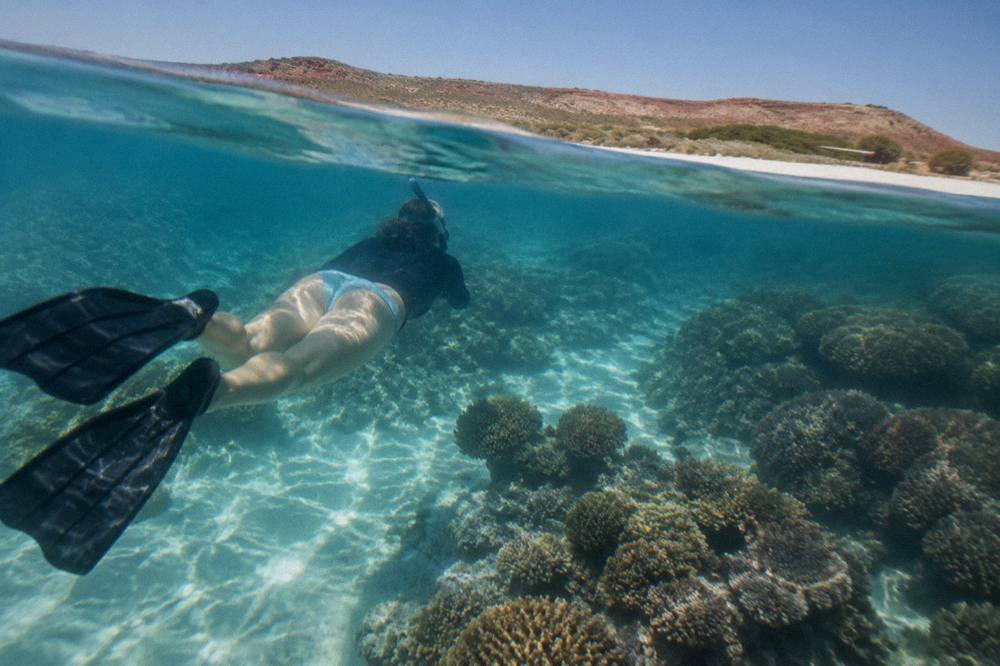
Two practical notes shape the whole experience. Wind is the first: the bay faces west and exposed to afternoon sea breezes, so mornings give the calmest surface and the best visibility. The second is tide and timing relative to your other plans, because the whale shark boats leave Exmouth accommodation around 7:00 am on swim days. That makes Turquoise Bay a natural fit for the day before or the day after your swim, a point the guide to how many days you need in Exmouth works through in detail.
If you would rather have a guide in the water on your first drift, or want the day to include gear, lunch and other reef sites, the tours below are the ones built around exactly this stretch of coast.
What Does It Cost To Snorkel Turquoise Bay And Cape Range?
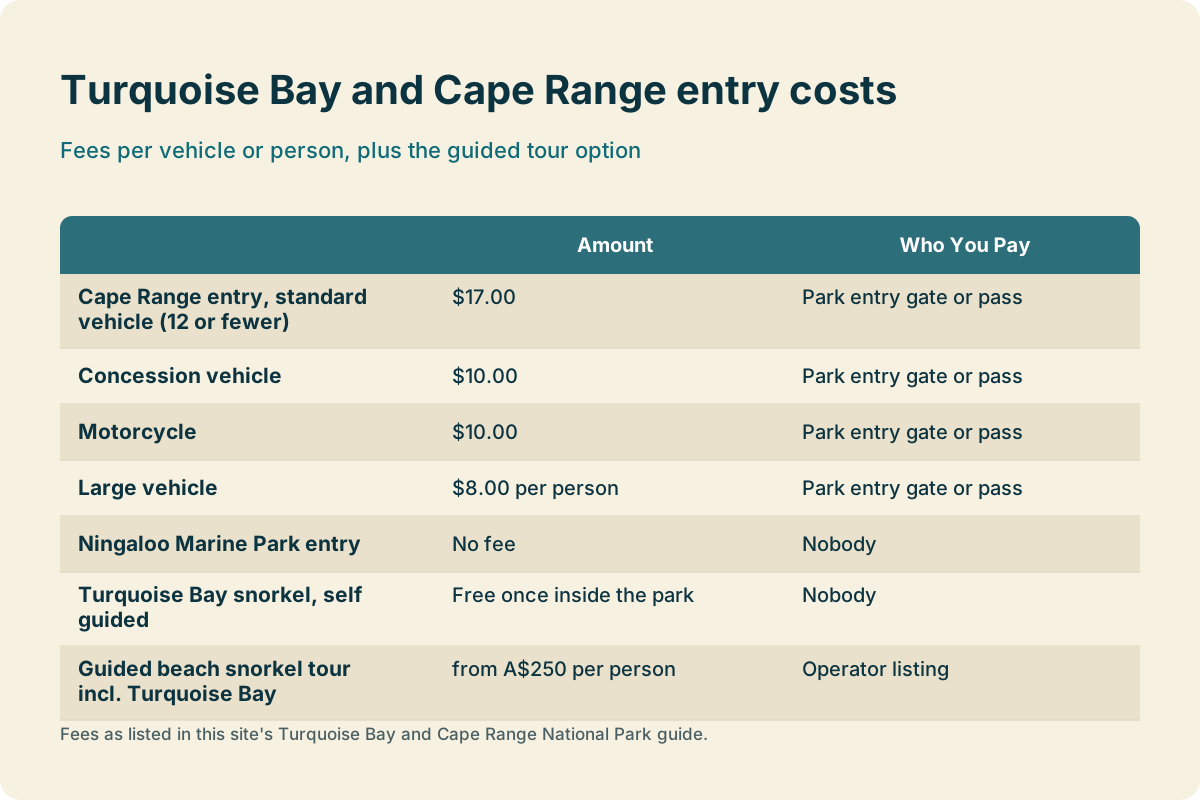
Snorkelling Turquoise Bay itself is free once you are inside Cape Range National Park, and park entry costs $17.00 per standard vehicle, with a valid WA park pass covering it. The Ningaloo Marine Park, the water side of the reef, charges no entry fee at all. A guided tour that includes Turquoise Bay runs from A$250 per person on this site's roster, a gap that reflects gear, transport and supervision rather than access.
The fee structure surprises people because two different agencies govern one view. The beach and the dunes sit in Cape Range National Park, managed by the state parks service, which charges a standard vehicle entry fee. The water you float in sits in Ningaloo Marine Park, which the official park page confirms charges nothing. You pay once, at the park gate on the Yardie Creek road, and the pass covers the park's other sites, including the gorges, on the same day.
| Cost | Amount | Who You Pay |
|---|---|---|
| Cape Range entry, standard vehicle (12 or fewer) | $17.00 | Park entry gate or pass |
| Concession vehicle | $10.00 | Park entry gate or pass |
| Motorcycle | $10.00 | Park entry gate or pass |
| Large vehicle | $8.00 per person | Park entry gate or pass |
| Ningaloo Marine Park entry | No fee | Nobody |
| Turquoise Bay snorkel, self guided | Free once inside the park | Nobody |
| Guided beach snorkel tour including Turquoise Bay | from A$250 per person | Operator listing |
Two savings worth knowing. A WA park pass, if you already hold one, covers the Cape Range entry. And the vehicle fee is per vehicle, not per person, so a car of four swimmers splits $17.00 four ways. That is why the honest budget framing for a Ningaloo trip is: the whale shark swim is the expensive day, from A$700 to A$745 per person for the three Exmouth and Coral Bay swim tours on this site's roster, and everything around it, including Turquoise Bay, is close to free.
The paid option earns its price differently. The Exmouth Adventure Co guided snorkel from A$250 per person runs 7 hours with accommodation pickup, gear, a meal and a guide who reads the conditions and picks the best section of reef on the day. That matters when the breeze is up or when you want the drift explained rather than worked out by trial and error.
What Are Oyster Stacks And When Is The Best Time To Snorkel There?
Oyster Stacks are a line of five limestone islets just off the beach a few kilometres north of Turquoise Bay, snorkelled from the shore at high tide only, because the coral between the stacks and the beach is too shallow at low water. The snorkel is shorter and more compact than Turquoise Bay but denser with coral, and the tide window, roughly the hour either side of high tide, is a hard rule rather than advice.
The stacks themselves are old reef limestone, colonised at the waterline by the oysters that give the site its name. What makes the snorkel special is what surrounds them: coral growing right up against the rock, so the reef structure is vertical as well as horizontal, with fish using the islets' shadows and overhangs. Anemones and their clownfish are a common sight here, and the sheltered gaps between stacks hold dense schools of smaller reef fish.
The tide constraint is the whole game. At mid to low tide the coral between the beach and the stacks sits in centimetres of water and snorkelling over it is both impossible and damaging. Plan around the tide tables, available at the Milyering Visitor Centre and online, and aim to enter within the window around high water. Local advice is consistent: if you arrive and the coral is exposed, wait or come back; there is no version of this snorkel at low tide.
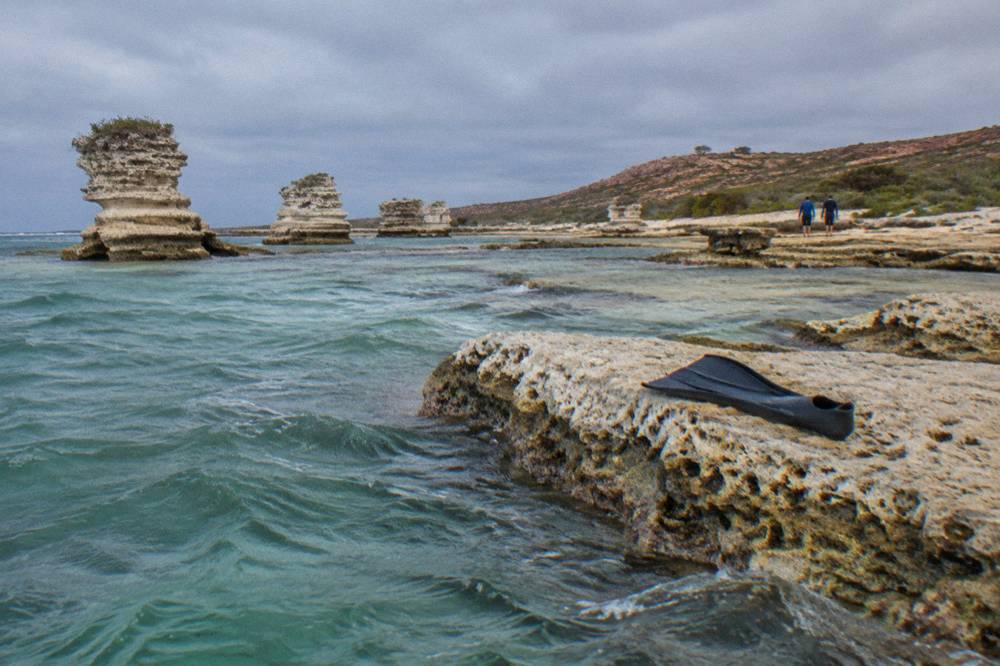
Oyster Stacks suits a confident snorkeller more than a nervous beginner. There is no gentle standing-up escape midway as at Turquoise Bay: once you are out at the stacks you commit to the circuit. Families and first timers usually do better spending their water time at Turquoise Bay or the sheltered lagoon at Lakeside, south along the coast, and saving the stacks for a second or third snorkel day when masks feel normal.
| Shore Snorkel Site | Character | Best Conditions | Best For |
|---|---|---|---|
| Turquoise Bay | Long drift over reef flat and gutters | Morning, light wind | All levels, first timers |
| Oyster Stacks | Compact coral around limestone islets | High tide window only | Confident snorkellers |
| Lakeside | Sheltered calm lagoon patch reef | Most conditions | Families, children |
Should You Snorkel Turquoise Bay Yourself Or Take A Guided Tour?
Most confident snorkellers can do Turquoise Bay independently with no guide, no booking and no cost beyond park entry, which is exactly why the site is famous. A guided tour is worth paying for when you want gear supplied, a guide who picks the day's best reef, transport from Exmouth, or a longer day combining the bay with other sites, and the roster's guided options run from A$145 to A$320 per person.
The honest case for doing it yourself is strong. The entry, the channel warning and the drift direction are all signposted, the beach is patrolled by foot during busy periods, and thousands of visitors snorkel it safely each season with nothing but a mask and reasonable caution. If you have snorkeled before, own gear or hire it in Exmouth, and have a car, the free version of Turquoise Bay is not a compromise version.
The case for a guide is about the things a beach cannot give you. Conditions change: wind shifts, visibility moves, and on some mornings the best water is not at Turquoise Bay at all but at another reef section the operator checks that day. Guides also point out animals most visitors swim past, from octopus in the rubble to turtles resting under ledges, and they carry flotation and first aid. For a traveller with one or two snorkel days total on a once in a lifetime trip, that expertise is what the ticket buys.
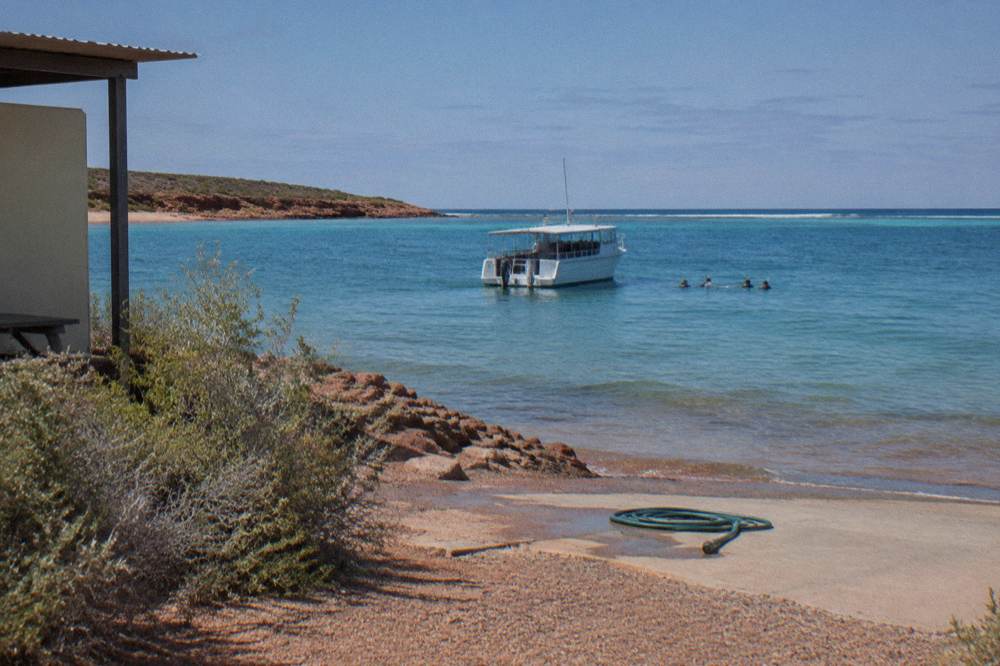
The tour options break into three shapes. A short turtle-focused trip, like the Cape Immersion turtle snorkel, from A$145 per person, is a three-and-a-half-hour water fix with a small group of 12 and pickup. A full beach day, like the Exmouth Adventure Co guided snorkel, layers gear, meal and multiple sites into 7 hours. And a combo day, the Ningaloo in a Day safari, from A$320 per person, pairs snorkelling with the Yardie Creek cruise and gorge stops in a group of 8, which suits travellers without their own vehicle especially well, since the listing states pickup.
For travellers who want a boat under them rather than a beach behind them, Cape Immersion also runs a 6 hour Ningaloo Reef snorkel and wildlife adventure, from A$275 per person, rated 4.9 from 138 reviews, with a group of 12, lunch and Exmouth pickup on the listing. It reaches reef sections the shore snorkels cannot, and it is a sound middle option between the free beach and the full whale shark day.
| Tour | Operator | Price (from) | Duration | Group | Rating |
|---|---|---|---|---|---|
| Guided Ningaloo Reef Snorkel Adventure | Exmouth Adventure Co. | A$250 pp | 7 hours | not stated on listing | 4.9 from 62 reviews |
| Ningaloo in a Day safari | Exmouth Adventure Co | A$320 pp | 8 hours approx. | 8 | 5 from 6 reviews |
| Turtle Snorkel Tour | Cape Immersion Tours | A$145 pp | 3 hours 30 minutes approx. | 12 | 4.8 from 197 reviews |
| 6 Hour Reef Snorkel and Wildlife | Cape Immersion Tours | A$275 pp | 6 hours approx. | 12 | 4.9 from 138 reviews |
What Marine Life Can You See At Turquoise Bay And Nearby Reefs?
The reliable sightings at Turquoise Bay are reef fish in the hundreds of species, parrotfish, wrasse, butterflyfish and trevally, plus turtles, stingrays in the sandy gutters, reef sharks on the lagoon edge, and, in season, manta rays and humpback whales passing outside the reef. Turtles are near daily at the bay and its neighbouring sites, and the reef fish are present every single swim, which is what a fringing reef close to shore delivers.
The core of the experience is the ordinary made vivid. Parrotfish grind audible beak scrapes along the coral. Juvenile fish use the seagrass patches as nurseries. On the sand between bommies, stingrays bury themselves to the eyes. Further out, where the reef flat tilts toward the lagoon floor, the water turns a deeper blue and the big stuff appears: trevally schools, the occasional reef shark, and in the right months the silhouettes of manta rays working the water column.
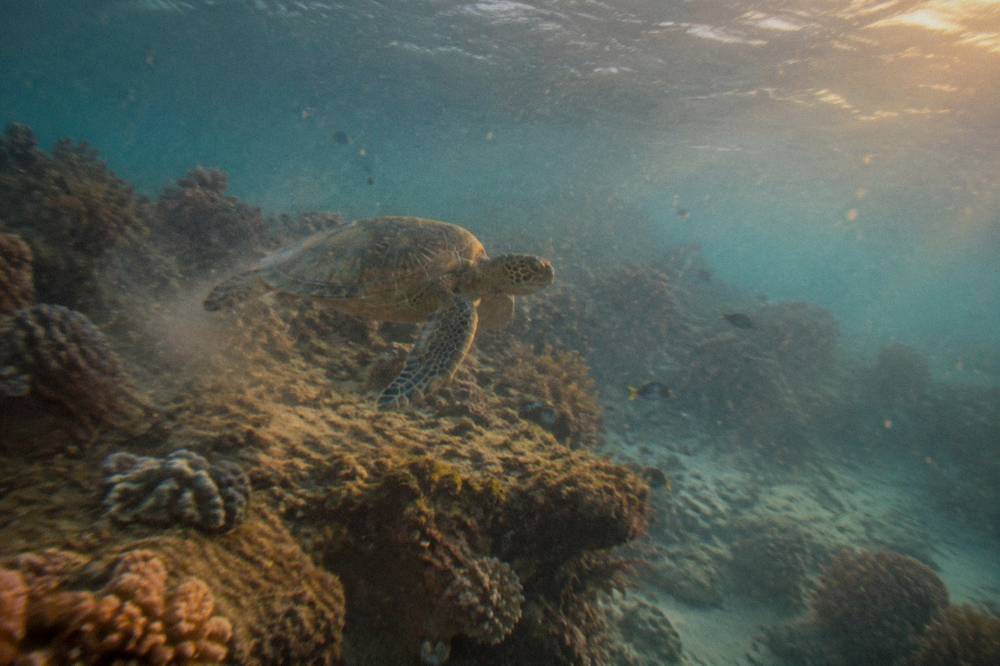
Season shapes what passes by. Humpbacks migrate along the Ningaloo coast from June to November, and while you will not swim with them from a beach, surface activity outside the reef is a common sight from the sand in August to October. Mantas are year round residents at Coral Bay and more transient off Exmouth, so a bay encounter is possible but never promised; the Ocean Eco Adventures manta listing on this site's roster states plainly that manta rays are wild animals and sightings are not guaranteed, and the same honesty applies to any shore snorkel. The guide to manta ray swims at Ningaloo covers where your odds are structurally better.
| Marine Life | Chance At Turquoise Bay | Notes |
|---|---|---|
| Reef fish (parrotfish, wrasse, butterflyfish) | Every swim | The core of the site |
| Sea turtles | Common, near daily | Rest under ledges, feed on seagrass |
| Stingrays | Common in sand gutters | Often buried, look for eyes |
| Reef sharks | Occasional on lagoon edge | Harmless, best viewed calmly |
| Manta rays | Possible, not promised | Transient off Exmouth |
| Humpback whales | Surface blows visible Jun-Nov | Watch from beach, swim on licensed tours |
One wildlife note that changes behaviour: everything here is protected. Ningaloo is a marine park with the strongest protections in the state system, and the department's marine wildlife rules set the tone for all interactions, not just whale sharks. Do not chase, touch or stand on coral, give turtles room to surface and breathe, and let every animal choose its own distance.
How Does Turquoise Bay Fit Into A Whale Shark Trip To Exmouth?
Turquoise Bay is the classic filler day around a whale shark swim: most travellers book the swim for one day and spend the days either side shore snorkelling the same reef for the cost of park entry, because the whale shark tours are full days from around 7:00 am to 4:00 or 5:00 pm. Three or four days in Exmouth covers the swim, two shore snorkel sessions and the park's gorges without rushing.
The rhythm of a whale shark week explains it. Swim days start early, with buses collecting guests from Exmouth accommodation around 7:00 am, two inner reef snorkels while spotter planes search, then the open water whale shark sections, and a return between 4:00 and 5:00 pm. It is a full, tiring, brilliant day. What it is not is flexible: you will not be at Turquoise Bay that afternoon. The days around it are where the beach snorkels, the gorge walks and the short tours slot in.
The pairing also works as a confidence ladder. Snorkellers sometimes worry about the swimming fitness needed for a whale shark day, and the honest answer is that basic snorkel confidence matters more than speed. Two or three self guided drifts at Turquoise Bay, or a gentle guided session at the bay with the Exmouth Adventure Co trip, build exactly the mask clearing and fin technique the whale shark boats expect. The guide to swimming ability on a whale shark tour sets out what the roster listings actually state.
| Day Plan | Morning | Afternoon | Cost Per Person |
|---|---|---|---|
| Whale shark swim day | Boat tour, 8 to 9 hours | Still on the boat | A$700 to A$745 |
| Turquoise Bay day | Drift snorkel at first light | Oyster Stacks at high tide | $17.00 per vehicle split |
| Combo tour day | Guided reef snorkel | Yardie Creek cruise | from A$320 |
| Turtle tour day | Turtle snorkel, 3 hours 30 minutes | Gorges or rest | from A$145 |
One caution about doubling up on consecutive days: sun and salt accumulate. The whale shark day involves hours of reflected glare off open water, and a full free day at Turquoise Bay adds more of both. Skin protection, hydration and a rest day between big water days are the difference between finishing your week with two more swims and finishing it with sunburn.
For travellers organising the whole week at once, Whale Shark Tours Exmouth lays out the swim operators and seasons side by side, and the free beach days slot around whatever swim dates you lock in first. The short tours are easier to add later, since the listings on this roster all state free cancellation except the Ningaloo Blue swim, so a spare-day tour can be booked with room to move it.
What Do You Need To Bring For A Day Snorkelling Turquoise Bay?
For a self guided day snorkelling Turquoise Bay, bring a mask, snorkel and fins, sun protection that works in water, drinking water, and a tide table if Oyster Stacks is on the plan; gear can be hired in Exmouth if you do not own it. Add reef shoes for the coral rubble and a rash suit or wetsuit to stay comfortable outside the warmest months.
The full packing logic for Ningaloo water days is covered in the guide to what to bring on a whale shark swim, and most of it carries over: reef safe sun protection, a wide hat for the sand, more water than feels necessary, and something warm for the drive back. What changes at Turquoise Bay is that you are your own support crew. There is no boat galley, no crew handing out snacks, and the shade shelters at the car park are the only retreat from the midday sun, so food, water and timing your swims to the morning matter more.
Water temperature shapes comfort. Long term sea surface data for Ningaloo Reef shows averages near 28 degrees in March to May, easing to the low to mid 20s by August to October, which is why locals snorkel in just a rash suit early in the season and why a wetsuit feels right by spring. Operators supply wetsuits on the guided tours; on the free beach version, the choice is yours. The guide to Exmouth weather across the year sets the monthly picture.
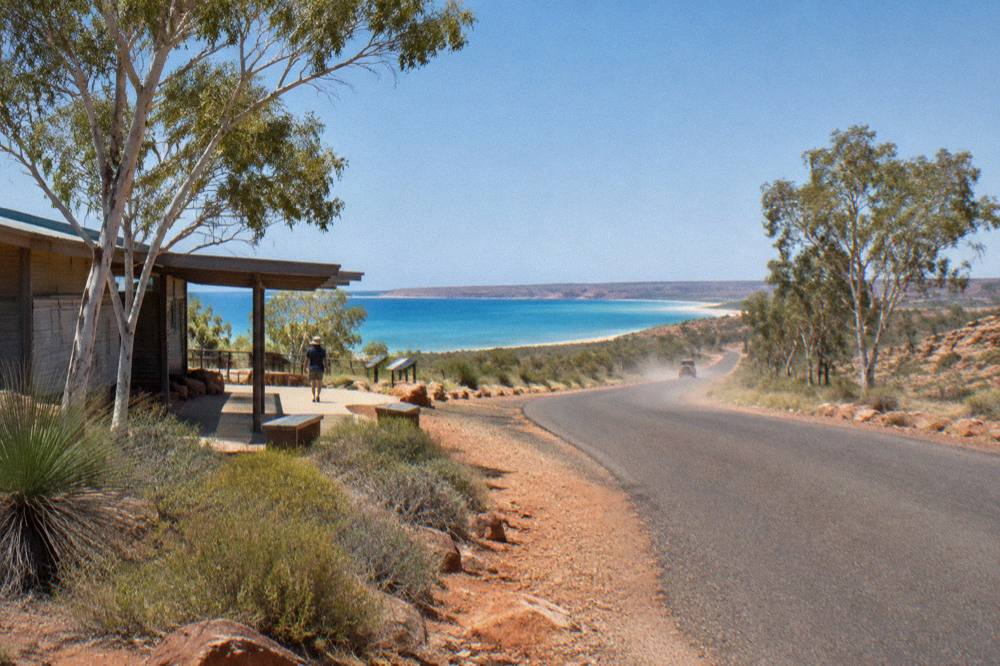
A last note on timing inside the park itself. Turquoise Bay's car park fills on calm mornings in peak season, April to July, the same months the whale shark boats are fullest, and the park's day use areas are busiest between late morning and mid afternoon. Arriving early gives you calm water, an easy park and the drift almost to yourself. Arriving at midday gives you a shuttle walk from an overflow bay and choppy surface glare: same reef, worse version of the day.
If the planning is done and the only question left is which water days to lock in, these are the three tours this guide keeps coming back to for the days around the swim.
Common Questions About Turquoise Bay Snorkelling
Is Turquoise Bay free to snorkel?
The snorkel itself is free. Entry to Cape Range National Park, where the beach sits, costs $17.00 per standard vehicle, and the Ningaloo Marine Park side charges no entry fee. Once through the park gate you can drift snorkel all day at no further cost.
Can beginners snorkel Turquoise Bay?
Yes, it is one of the best beginner shore snorkels in Australia because the current carries you along the beach rather than out to sea, and you can stand in the shallows at either end. The one hard rule is to stay well clear of the channel at the southern end, where the current runs out toward the reef.
How long does the Turquoise Bay drift snorkel take?
Most people spend 30 to 60 minutes in the water, drifting a few hundred metres north over the reef, then walk back along the sand. Two or three drifts with rest stops make a full morning.
When should I snorkel Oyster Stacks?
Only around high tide, roughly the hour either side of it. At lower water the coral between the beach and the stacks is too shallow to snorkel over safely or without damaging it. Check the tide tables before you plan the day.
Are there turtles at Turquoise Bay?
Sea turtles are a common, near daily sight at Turquoise Bay and nearby reef sites, resting under ledges and feeding on seagrass. The Cape Immersion turtle snorkel, from A$145 per person, is built around them if you want a guide who knows their spots.
Do I need a tour to snorkel Turquoise Bay?
No, confident snorkellers do it independently with hired or own gear. A guided tour, from A$250 per person for the full day Exmouth Adventure Co trip, adds gear, transport, a guide who picks the best conditions, and other reef sites in the same day.