What Is Ningaloo Reef And Why Does It Matter For Your Trip?
Ningaloo Reef is Australia's largest fringing coral reef, running roughly 300 km along Western Australia's North West Cape and sheltering the towns of Exmouth and Coral Bay. It earned World Heritage status in 2011 and hosts one of the world's most reliable whale shark gatherings each autumn.
Short answer
Ningaloo Reef is a roughly 300 km fringing coral reef on Western Australia's Coral Coast, listed as World Heritage in 2011. It sits close enough to shore to snorkel from the beach, and each March to July plankton blooms draw whale sharks close in. Swims run from A$700 to A$745 per person.
Ningaloo Reef is the reason this stretch of Western Australian coast has a tourism season at all. It is a fringing coral reef, which means it grows directly off the shore rather than sitting far out at sea like the Great Barrier Reef, and it runs roughly 300 km along the arid coastline of the North West Cape. The towns of Exmouth and Coral Bay sit on its doorstep, and from several beaches you can walk into the water and be over coral within a few fin kicks. The Ningaloo Coast was inscribed on the World Heritage list in 2011, and the reef is the centrepiece of that listing along with the limestone ranges of Cape Range National Park behind it.
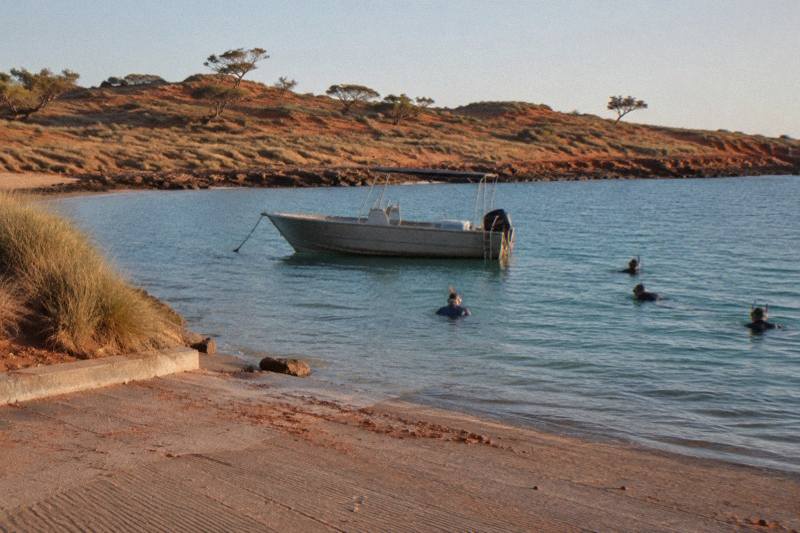
This guide explains what the reef actually is, why whale sharks gather along it in such predictable numbers, what else lives in its waters, and how the rules that protect all of it shape the tours you can book. If you are weighing a swim, the six-hour Cape Immersion boat snorkel is one of the easiest first encounters with the reef itself, but the whale shark swims from Exmouth, from A$705 per person, are the events most visitors plan their whole trip around.
What Is Ningaloo Reef?
Ningaloo Reef is a fringing coral reef extending roughly 300 km along the North West Cape of Western Australia, from Red Bluff north of Coral Bay around to the Muiron Islands near Exmouth. Because it hugs the shore, the deep ocean water it needs sits only kilometres away, which is precisely why whale sharks, mantas and humpbacks come so close. It was inscribed as the Ningaloo Coast World Heritage Area in 2011.
The name itself carries history. Ningaloo is the anglicised spelling of Nyinggulu, the name used by the Traditional Owners of this coast, including the Baiyungu, Thalanyji and Yinigurdira peoples, whose connection to the area is part of what the World Heritage listing recognises. The Department of Biodiversity, Conservation and Attractions, the state agency that manages the marine park, notes that whale shark visitor numbers here grew from about 1,000 people in 1993 to more than 36,000 in 2022, and the regional tourism body recorded 41,390 whale shark swims in the 2025 season alone. A quiet fishing coast became one of the most famous marine destinations on the planet inside a single generation.
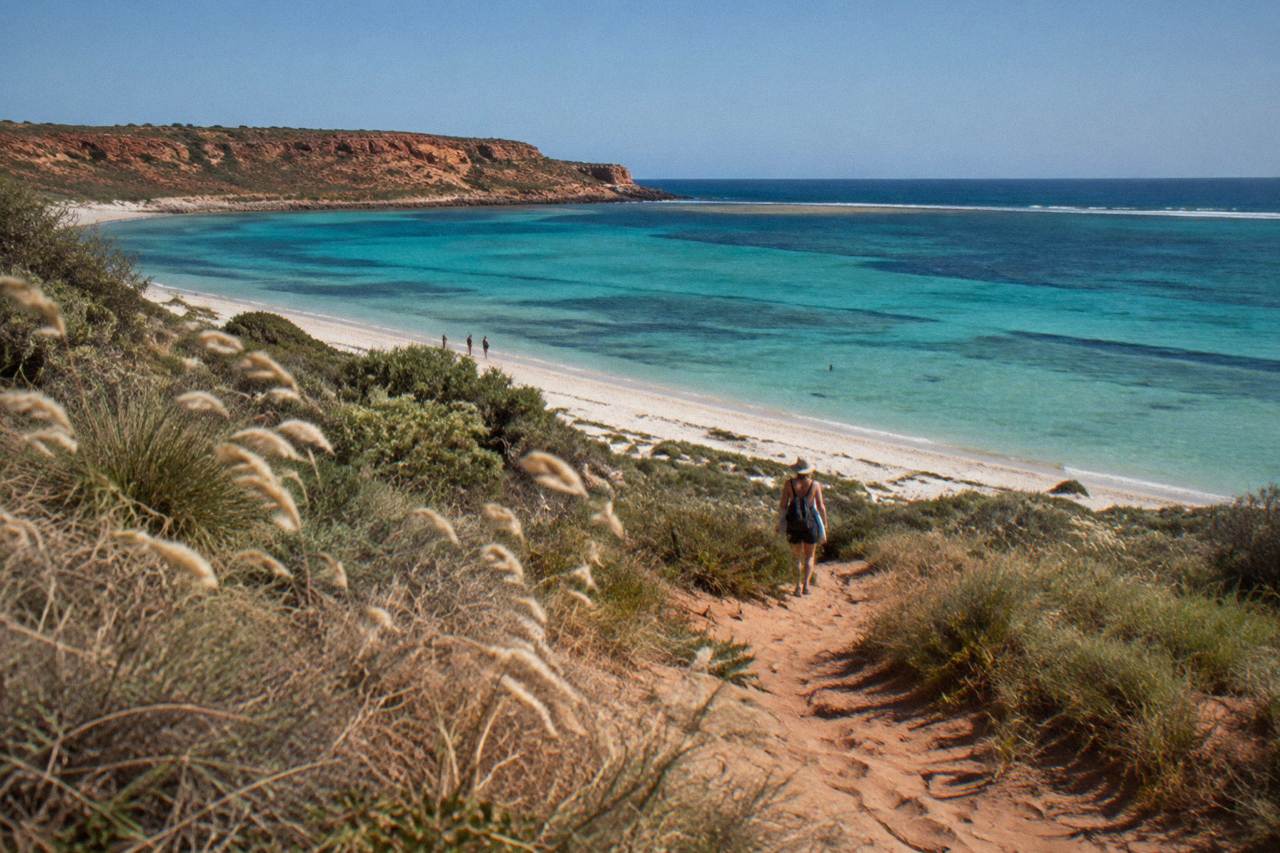
What makes a fringing reef different in practice is access. On the Great Barrier Reef you typically need a long boat ride or a flight to a pontoon. At Ningaloo, Turquoise Bay and several other Exmouth beaches put you over coral within metres of the sand, and Coral Bay's main beach is effectively inside the lagoon. The Exmouth Adventure Co guided Turquoise Bay snorkel trip exists precisely because that shore access is so unusual, while operators like Ningaloo Reef Dive run manta trips out of Coral Bay over the same lagoon system. The reef's structure gives you both a sheltered inner lagoon for easy snorkelling and a drop-off to open ocean a short boat ride away.
The park status matters too. Ningaloo Marine Park has no entry fee, unlike neighbouring Cape Range National Park, which charges a standard vehicle entry fee. The marine park is managed under specific interaction protocols for whales and whale sharks, which is why every licensed tour you can book here follows the same swimmer limits and approach distances. Those rules are covered in full later in this guide.
What Is So Special About Ningaloo Reef?
Three things set Ningaloo apart: the reef sits unusually close to the edge of the continental shelf, so open-ocean megafauna appear just off a swimmer's beach; the whale shark gathering each March to July is one of the largest and most predictable in the world; and the whole stretch earned World Heritage status in 2011 for its intact land-to-sea ecosystem, from arid range country to coral lagoon.
The proximity is the headline fact. At most fringing reefs the ocean shelf lies far offshore. At Ningaloo the seafloor drops away steeply within a few kilometres of the coast, which brings deep-water currents, and the animals that ride them, practically to the beach. A whale shark tour boat leaving Tantabiddi Boat Ramp near Exmouth can be searching over open ocean within an hour, and swimmers on the Ningaloo Blue whale shark trip, which departs Tantabiddi or picks up from Exmouth hotels, are typically in the water with a shark before lunch.
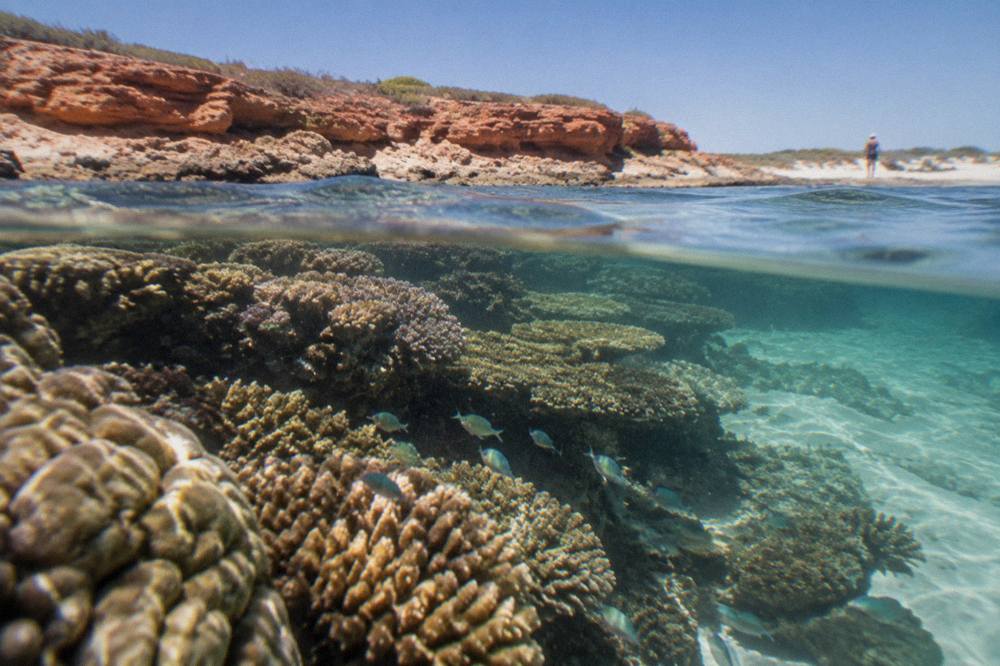
The whale shark story is the one most visitors arrive for, and it is covered in its own section below. But the reef's specialness does not begin and end with one species. Coral Bay supports a resident population of reef manta rays that can be encountered year round, which is why the Coral Bay Ecotours Marine Eco Safari, from A$350 per person with a 4.8 rating across 565 reviews, runs in every month of the year. Humpback whales pass along the coast between June and November, and turtles, dolphins and dugongs are regulars in the lagoon.
| What makes it special | The detail | Where you notice it |
|---|---|---|
| Fringing structure | Reef grows off the shore for roughly 300 km | Snorkelling from beaches at Turquoise Bay and Coral Bay |
| Deep water close by | Continental shelf edge lies a short boat ride out | Whale shark swims a short run from Tantabiddi ramp |
| World Heritage listing | Ningaloo Coast inscribed in 2011 | Protected across both marine park and Cape Range |
| Resident mantas | Year-round reef manta population at Coral Bay | Manta tours run in all seasons from Coral Bay |
| Whale shark gathering | March to July main season, DBCA wording | Swim tours from both Exmouth and Coral Bay |
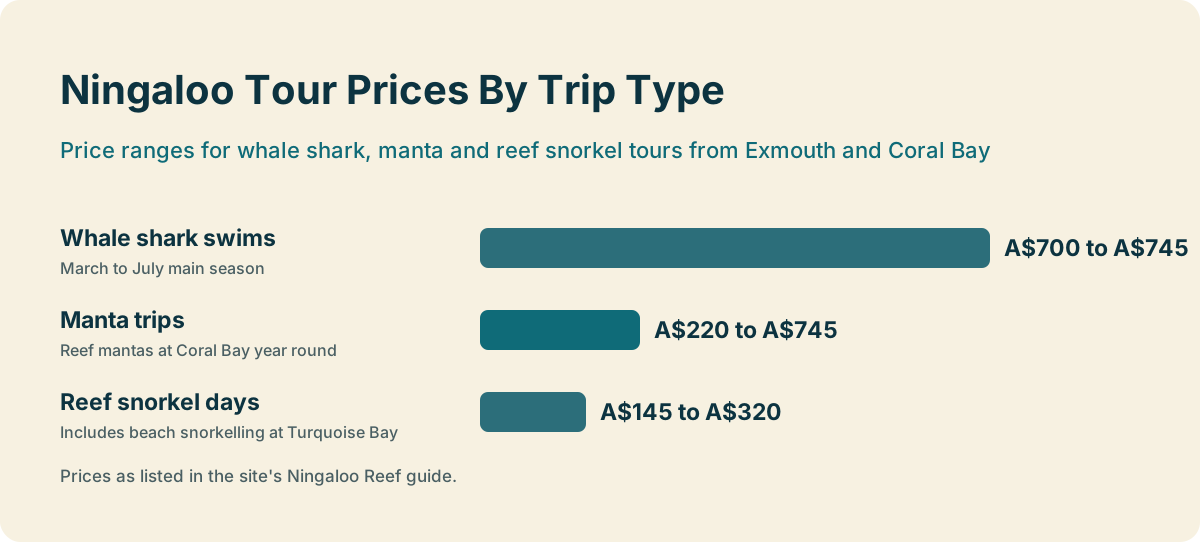
That combination is why the region supports three distinct families of tours on this site: whale shark swims from A$700 to A$745, manta trips from A$220 to A$600, and reef snorkel days from A$145 to A$320. Which one suits you depends less on budget than on how much ocean you want between you and the sand.
Where Is Ningaloo Reef And How Do You Reach It?
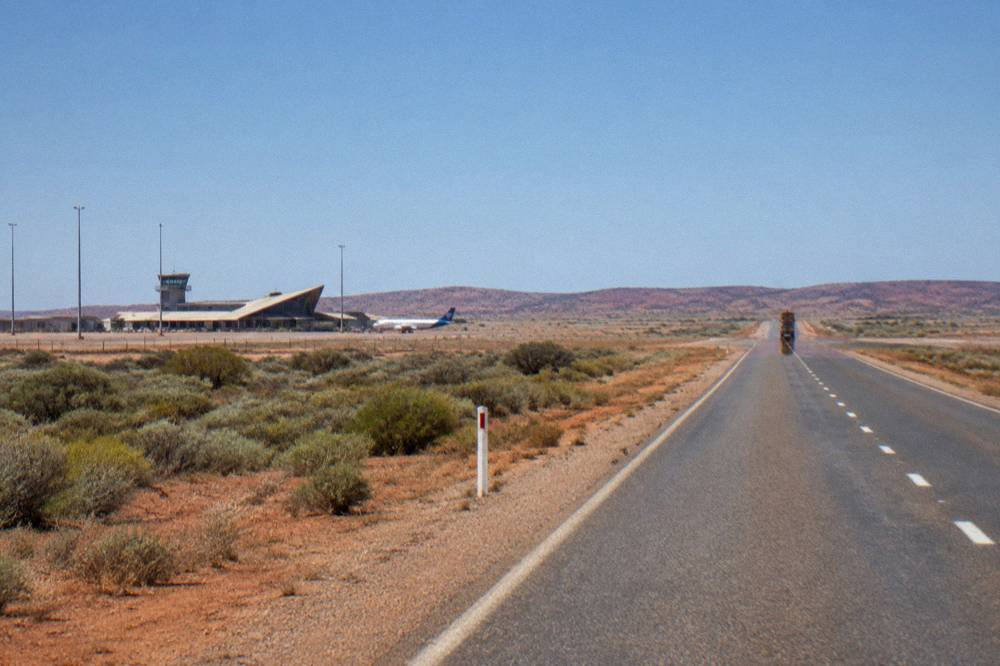
Ningaloo Reef runs along the Coral Coast of Western Australia, roughly 1,270 km north of Perth, with Exmouth on the northern end and Coral Bay about 150 km south of it. Most visitors fly Qantas from Perth to Learmonth Airport near Exmouth, a flight of just under two hours, then drive about 25 minutes north to Exmouth or about an hour and ten minutes south to Coral Bay.
The drive alternative is a serious commitment: around thirteen hours from Perth to Exmouth via the North West Coastal Highway, on fully sealed road, with long gaps between fuel stops and a strong case for topping up at every town north of Geraldton, especially Carnarvon. Many travellers treat it as a road trip over several days rather than a single push, and the Exmouth flights and drive guide breaks down both options. Once you are based in one town, the other is close enough for a day trip, at about ninety minutes to two hours each way, though tour departure times make staying put simpler.
Where you base yourself shapes which reef you swim. Exmouth is the larger town, with more accommodation, restaurants and services, and its operators cover the northern reef, the Muiron Islands and the Tantabiddi launch point. Coral Bay is smaller and quieter, with the reef effectively starting at the beach, and its tours, like the Ningaloo Marine Interactions Whaleshark Odyssey from A$700 per person, work the southern sections. The Exmouth versus Coral Bay comparison works through the trade-offs in detail, and both towns also run whale shark trips.
| Getting there | Time | Notes |
|---|---|---|
| Perth to Learmonth flight | Just under 2 hours | Qantas direct, about 11 flights a week |
| Learmonth airport to Exmouth | About 25 minutes | Sealed road north |
| Learmonth airport to Coral Bay | About 1 hour 10 minutes | Sealed road south |
| Perth to Exmouth drive | About 13 hours non-stop | 1,270 km, plan fuel stops |
| Exmouth to Coral Bay | About 90 minutes to 2 hours | Roughly 150 km |
Why Do Whale Sharks Gather At Ningaloo Reef?
Each March and April, more than 200 coral species spawn mass egg and sperm clouds into the water, and the plankton bloom that follows becomes a food surface for whale sharks. Two opposing currents, the southward Leeuwin and the northward Ningaloo, trap that plankton against the reef in slow eddies, so the sharks feed within a short boat run of shore from March to July.
This is the mechanism that makes Ningaloo famous, and it is documented in the department's own Gujawari information guide for the marine park. Gujawari is the Traditional Owners' name for the whale shark, and the guide explains the sequence plainly: the mass coral spawning after the March full moon floods the lagoon with nutrients, the plankton multiply, and the whale sharks, which filter feed on exactly that, arrive in numbers matched almost nowhere else. Sightings historically peaked March to July, though in recent years tours have met sharks as late as early November.
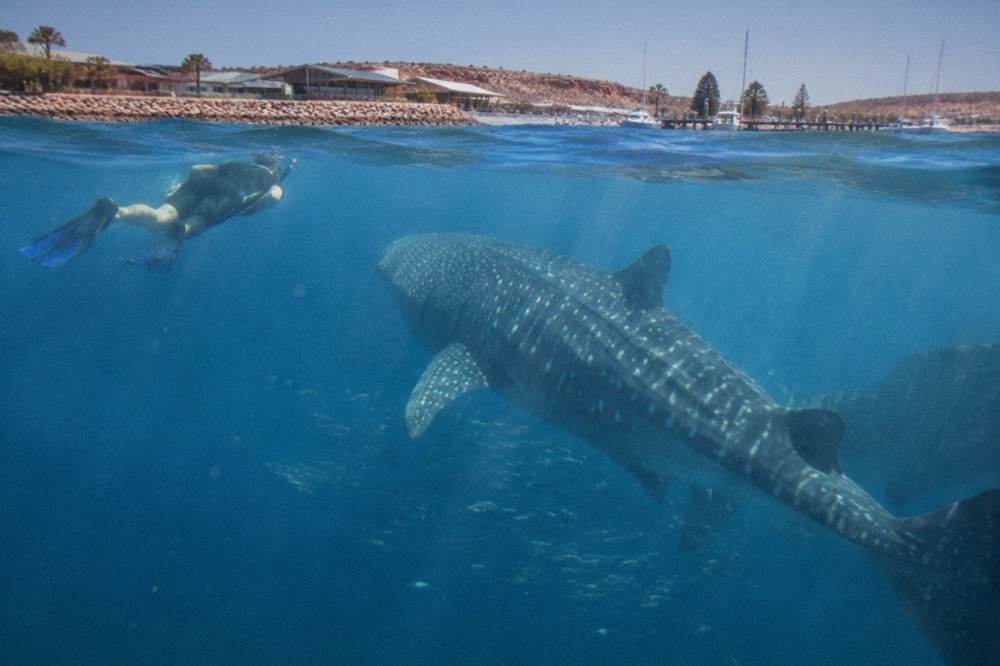
The practical consequence for a visitor is seasonality. The department's season wording is March to July; the Explore Parks WA page says between March and August; operators in Exmouth run to August and sightings often continue to October. Coral Bay's dedicated whale shark season is shorter, typically March to late June. Within that window the day itself follows a pattern the regional tourism body describes well: boats leave around 7:00 am, guests do two inner-reef snorkels while spotter planes search, then groups of up to ten swimmers take turns in the water with a guide, with everyone back on land between 4:00 and 5:00 pm. The Ningaloo whale shark season guide covers month by month timing.
It is worth being honest about what no operator can promise. Whale sharks are wild animals, and no listing on this site's roster states a sighting guarantee. The department sets the interaction rules; the sharks set the itinerary. A quiet day is possible, and the honest framing is that the March to July window makes an encounter likely, not certain, and each listing's own terms tell you what happens if the sharks do not show.
What Wildlife Lives On Ningaloo Reef Beyond Whale Sharks?
Beyond whale sharks the reef supports a resident population of reef manta rays at Coral Bay encounterable year round, humpback whales passing June to November, plus turtles, dolphins, dugongs and more than 200 coral species. This mix is why operators here sell three distinct product families: whale shark swims from A$700, manta trips from A$220, and reef snorkel days from A$145.
The manta situation is one of the genuinely useful facts for trip planning. Coral Bay's mantas are locals: they stay around the cleaning stations of the southern reef rather than migrating, so manta tours run in every month. The Ningaloo Reef Dive half-day manta adventure, from A$220 with a spotter plane to find the rays, and the Coral Bay Ecotours Marine Eco Safari both work this population. Exmouth sees mantas too, but more transiently, usually as part of wider wildlife days. The Ocean Eco Adventures luxury manta cruise from Exmouth and Coral Bay, from A$600 per person, notes plainly on its listing that sightings are not guaranteed, which is the honest baseline for all wild-animal tours.
Humpbacks arrive on schedule. Between roughly June and November an estimated 40,000 or more humpbacks migrate along the Western Australian coast, and Ningaloo sits on that route. Dedicated humpback swim tours run about August to October from Exmouth and July to October from Coral Bay, and the Coral Bay Ecotours Humpback Whale Safari, 5.0 from 87 reviews, from A$745, is the roster's flagship. Outside the swim window, the Ocean Eco Adventures sunset whale watch from Exmouth, from A$139, gets you on the water among them without getting in it.
| Species | When at Ningaloo | Typical tour family | Roster entry price |
|---|---|---|---|
| Whale sharks | March to July main, sightings to October | Full-day swim tours | From A$700 |
| Reef manta rays | Year round at Coral Bay | Manta swim tours | From A$220 |
| Humpback whales | June to November passing, swims Aug to Oct | Humpback safaris and whale watch | From A$139 |
| Turtles | Resident in the lagoon | Short turtle snorkels | From A$145 |
| Reef fish and corals | Year round | Beach and boat snorkels | From A$250 |
Turtles deserve their own mention because they are the most reliable encounter of all. The Cape Immersion three and a half hour turtle tour from Exmouth, 4.8 from 197 reviews, from A$145, exists because the lagoon's resident turtle population shows up on almost every snorkel, unlike the headline species that carry a season.
What Rules Protect Swimmers And Sharks At Ningaloo Reef?
Only operators licensed by the department may run commercial whale shark tours in Ningaloo Marine Park, and two legislated interaction protocols govern every swim: maximum ten swimmers in the water at once, at least 3 m from a shark's head or body and 4 m from its tail, no touching or riding, no flash photography, no cameras on extension poles, and no scuba diving or motorised propulsion aids.
These rules come from the department that manages the park, not from tour companies, and they apply to every licensed operator equally. Vessels have their own protocol: an approach zone of 250 m radius around any whale shark, one vessel in contact at a time for a maximum of 90 minutes at no more than 6 knots, no boat closer than 30 m, and commercial vessels must fly a whale shark flag and dive flags while swimmers are in the water. Recreational swimming with a whale shark is limited to 60 minutes in the water, and everyone, swimmer or skipper, must stop if the animal shows signs of stress.
For a visitor, these rules shape the day you actually experience. The ten-swimmer cap is why a whale shark tour feels like a relay: your group of up to ten slips into the water with a guide while the rest of the boat watches, then rotates. Group sizes on the listings reflect it, from 14 on the Coral Bay Ecotours humpback safari up to 20 or 30 on manta and whale shark boats, with only a fraction in the water at any moment. The photography rules are worth reading before you pack: handheld cameras without flash are generally fine, but poles are not, and many operators prefer you leave the camera on the boat while a crew photographer works. The dedicated whale shark photos guide and the fuller swim rules breakdown cover the detail.
Conservation status underlines why the rules are strict. The whale shark is Specially Protected in Western Australia, listed as Vulnerable and Migratory under national environment law, and Endangered on the IUCN Red List. Ningaloo is one of the few places on Earth where people swim with it under a regulated framework, and the licence system exists to keep it that way.
Can You Snorkel Ningaloo Reef Without A Tour?
Yes, and it is one of the reef's defining features: at Turquoise Bay, Coral Bay's main beach and several other spots the coral starts within metres of the sand, and Ningaloo Marine Park charges no entry fee. A guided tour still adds gear, safety cover, outer-reef sites and wildlife spotting, with beach and boat snorkel trips running from A$145 to A$320.
Independent snorkelling at Turquoise Bay is genuinely easy, which is not something most coral reefs can claim. You park inside Cape Range National Park, which does carry a standard vehicle entry fee of A$17.00 per standard vehicle, and swim out over coral a few strides from the beach. The current at Turquoise Bay runs along the shore, so the standard approach is a drift: enter at one end, float over the reef, exit further down the sand. Fish are abundant, turtles are common, and on clear days the visibility is remarkable for a shore dive.
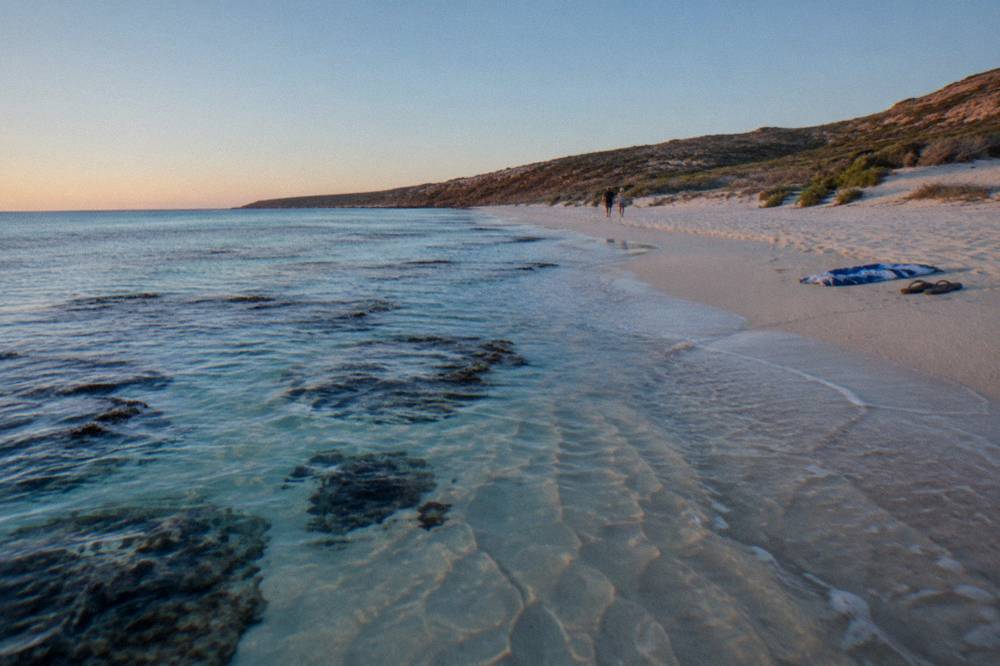
What a tour adds is reach and eyes. The outer reef, where the bigger animals work, is a boat trip, and crew who snorkel the same sites daily know where turtles, reef sharks and rays gather. The Cape Immersion six-hour wildlife snorkel from Exmouth, from A$275 with a 4.9 rating across 138 reviews and a group capped at twelve, pairs reef snorkelling with wildlife spotting over a full day with lunch. The Exmouth Adventure Co Ningaloo in a Day trip, from A$320, adds a Yardie Creek cruise on top. For a first day on the reef, a guide also covers the practical basics: fitting fins, reading conditions and knowing when not to enter the water. Water temperature matters here too: it averages near 28 degrees in March and April but falls to about 23 degrees from August onward, so operators supply wetsuits on their trips and independent snorkellers should check conditions before swimming.
Which Ningaloo Reef Trip Fits Your Plans?
Match the trip to the season and your confidence: whale shark swims from A$700 to A$745 run March to August and need only basic snorkel ability; manta trips from A$220 to A$600 run year round from Coral Bay; humpback swims run about August to October; and reef snorkel days from A$145 to A$320 suit every month and every ability. Most visitors book one swim and one reef day.
The full roster on this site covers fourteen bookable listings, and the pattern across them is consistent. The three whale shark swims, the Coral Bay Ecotours Whale Shark Safari from A$745 with a 4.8 rating from 173 reviews, the Ningaloo Blue swim from Exmouth from A$705 with hotel pickup, and the nine-hour Ningaloo Marine Interactions odyssey from A$700, are all full days with gear included; Ningaloo Blue and Coral Bay Ecotours also list a meal. Note one policy difference that matters: the Ningaloo Blue listing states the sale is final, while the other two list free cancellation, so check terms before booking rather than after.
| Trip type | Season | Entry price | Best for |
|---|---|---|---|
| Whale shark swim | March to August, sightings to October | From A$700 | The headline experience, first-time visitors |
| Manta swim | Year round from Coral Bay | From A$220 | Confidence building, repeat visitors |
| Humpback swim or watch | About July/August to October | From A$139 | Spring trips outside whale shark peak |
| Beach or boat snorkel | Year round | From A$145 | Families, non-swimmers, budget days |
| Turtle snorkel | Year round | From A$145 | Short trips, near-certain wildlife |
If you are building an itinerary rather than a single day, the things to do beyond whale sharks guide and the question of how many days you need in Exmouth both help. The short version: the reef rewards at least three days, one for the swim, one for a reef or manta trip, and one for Cape Range's gorges and beaches, because the land half of the World Heritage listing is worth your time too.
Planning across two towns is easier than it looks, since Exmouth and Coral Bay tours overlap more than they compete. Whale Shark Tours Exmouth exists to make that comparison quick, and the per-species guides on this site break down each option in detail.
Common Questions About Ningaloo Reef
What is Ningaloo Reef?
A roughly 300 km fringing coral reef along Western Australia's North West Cape, close enough to shore to snorkel from the beach, and the core of the Ningaloo Coast World Heritage Area listed in 2011.
What is so special about Ningaloo Reef?
Deep ocean water lies only a short boat ride from the beach, so whale sharks, mantas and humpbacks appear unusually close to shore, and the whale shark gathering each March to July is among the most predictable in the world.
When can you swim with whale sharks at Ningaloo Reef?
The main season runs March to July under the managing department's wording, with Exmouth operators running to August and sightings often continuing to October, and in recent years into early November.
Is Ningaloo Reef the same as the Great Barrier Reef?
No. Ningaloo is a fringing reef attached to the shore, while the Great Barrier Reef is an offshore barrier system. At Ningaloo you can swim over coral metres from the beach, which rarely happens on the east coast.
Do you have to pay to enter Ningaloo Reef?
Ningaloo Marine Park has no entry fee. Neighbouring Cape Range National Park, where several snorkel beaches sit, charges a standard vehicle entry fee of A$17.00 per standard vehicle.
Can you snorkel Ningaloo Reef without a tour?
Yes. Turquoise Bay and Coral Bay's main beach put coral within metres of the sand. Guided trips from A$145 to A$320 add gear, outer-reef sites and wildlife spotting.