What Month Is Best For Whale Sharks In Ningaloo?
A month-by-month guide to the Ningaloo whale shark season: which weeks are peak, which are shoulder, water temperatures, prices and what else is in the water from March to November.
What Month Is Best For Whale Sharks In Ningaloo?
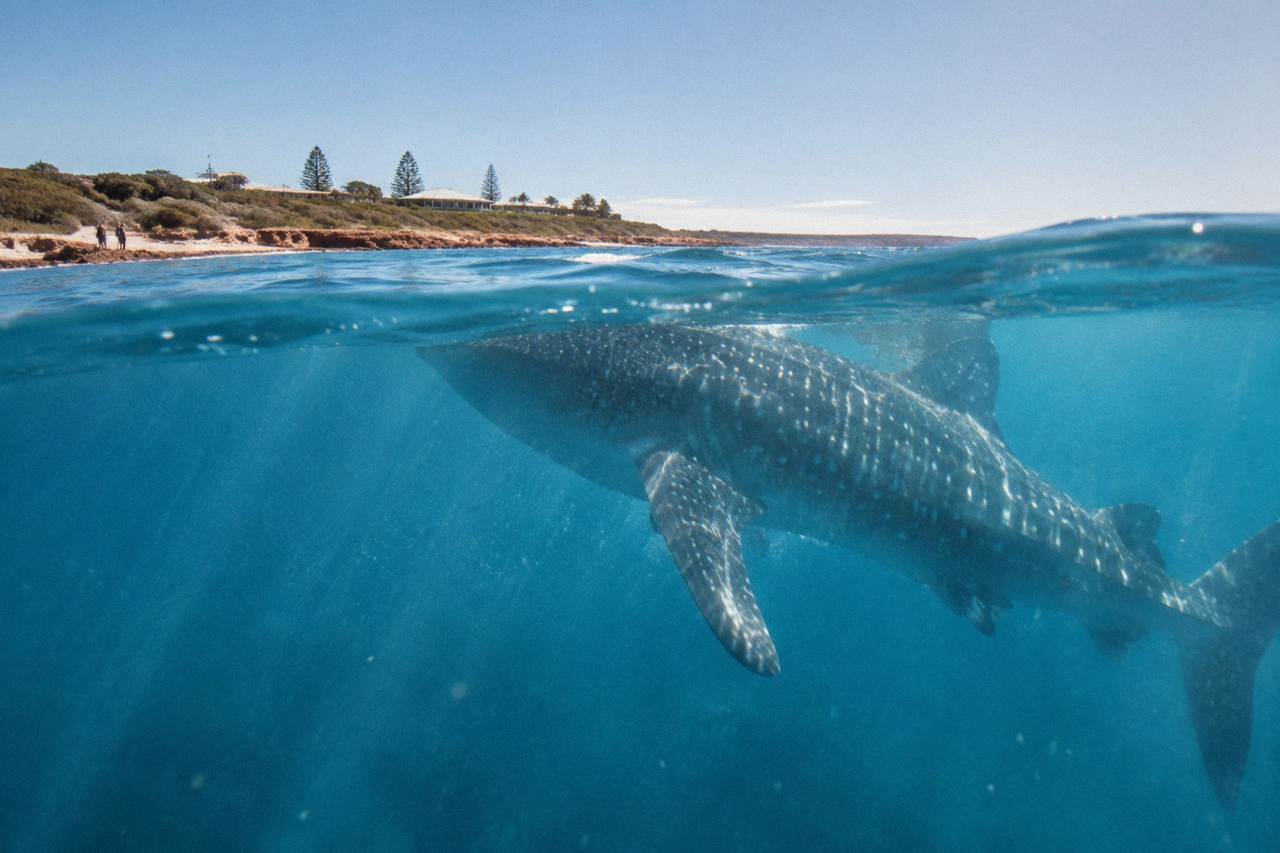
The best months for whale sharks in Ningaloo are April, May and June, the core of a season that the state parks authority frames as March to July, with Exmouth operators running tours to August and sightings often stretching into October. If you want the highest chance of a swim with calm, warm water, mid-season April to June is the pick; if you want humpbacks as well, July and August overlap the two migrations.
The whale shark calendar at Ningaloo is unusual among wildlife tourism destinations because it is unusually reliable. The sharks arrive each year after the mass coral spawning of March and April, which triggers the plankton blooms they feed on, and the historic peak runs March to July. The department that manages the marine park, the Department of Biodiversity, Conservation and Attractions, states the season as March to July on its whale shark management page, while the regional tourism body notes that Exmouth operators keep tours running to August and that sightings have continued as late as early November in both 2024 and 2025.
That spread is why a single answer to "which month" is hard. The honest version is that you are choosing between three windows: the reliable core of April to June, the still-strong shoulders of March and July to August, and the wildlife-rich but unpredictable late season of September and October, when whale sharks are possible but humpback whales become the main event.
Scale matters too. In 2025, 41,390 people swam with whale sharks at Ningaloo, a record number, and the first confirmed swim of the 2026 season happened off Exmouth around 12 March. The sharks are not a rare event here; they are an annual migration that supports an entire town's tourism economy.
If you are already comparing specific tours, the three swims below cover the two departure towns and the main price band.
How Does The Ningaloo Whale Shark Season Work Month By Month?
The season runs March to July officially, with Exmouth tours continuing to August and Coral Bay tours winding up at the end of June. April to June is the peak, when plankton blooms peak and both towns run daily trips. From August onward the roster shifts toward humpback swims, with whale sharks still possible into October and, in the last two years, early November.
The month-by-month pattern below is drawn from the official season wording, the regional tourism body's calendar and the way the operator roster actually runs. Use it as a planning frame, not a promise: whale sharks are wild animals and no month delivers them on schedule.
| Month | Whale sharks | What else is in the water | Notes for planners |
|---|---|---|---|
| March | Season opens, first swims usually mid-month | Mantas, reef fish | Coral spawning triggers the food chain; water warmest of the year |
| April | Strong, peak begins | Mantas, dolphins | Calm autumn conditions; book early, school holidays overlap |
| May | Peak, widely called the best single month | Mantas, occasional humpbacks early | Warm water, reliable sightings, tours run daily from both towns |
| June | Peak continues, Coral Bay's last full month | Humpbacks arriving in numbers | Coral Bay tours end late June; Exmouth continues |
| July | Good in Exmouth, tapering in Coral Bay | Humpbacks in full swing | The overlap month: whale sharks plus whale watching |
| August | Exmouth operators still running | Humpback swims begin from Exmouth | Choose a tour that covers both species |
| September | Possible, not scheduled | Humpback swims, mantas | Shoulder season; confirm what the tour targets |
| October | Occasional, sightings recorded to early November in 2024 and 2025 | Humpbacks, mantas, turtles | Wildlife tours rather than dedicated shark trips |
Two practical points sit behind that table. First, Coral Bay and Exmouth do not share one calendar: Coral Bay's dedicated whale shark season is shorter, typically March to the end of June, while Exmouth's runs to August. Second, the late-season months are not empty, they are simply a different product, with humpback swims and manta trips taking over the boats. The Exmouth versus Coral Bay comparison breaks down which town suits which traveller in more detail.
One thing no month changes: the rules in the water. Swimmers stay at least 3 metres from the head and body and 4 metres from the tail, no more than 10 people are in the water at once, and there is no scuba diving with the sharks. The whale shark swim rules at Ningaloo cover the full protocol.
Which Months Are Peak Season And Which Are Shoulder?
Peak is April to June, when both towns run daily whale shark tours and the plankton food chain is at its strongest. The shoulders are March, when the season is finding its feet, and July to August, when Exmouth keeps running while humpbacks arrive. September and October are a genuine shoulder: wildlife-rich, cheaper to visit, but with whale sharks possible rather than expected.
The peak months earn their reputation for a chain of reasons, not one. The mass coral spawning of March and April, involving more than 200 coral species, dumps nutrients into the water. The southward Leeuwin Current and the northward Ningaloo Current meet and form eddies that concentrate plankton along the reef. Whale sharks feed on that plankton, so they hold close to the coast through the middle of the year. May is the month most operators and repeat visitors single out: the water is still warm, the sharks are established, and the winter winds have not yet fully arrived.
The shoulder months reward flexibility. March trips carry a small chance of being early for the main aggregation, though the 2026 season's first swim happened around 12 March, so mid-March is a reasonable bet from Exmouth. July and August trips from Exmouth add a real chance of humpback whales on the same day, which is a combination few places on earth can offer. The trade-off is simple: outside the peak, choose an operator whose tour is built for the season you are travelling in, and read the listing's terms carefully, because no tour on this roster promises a sighting.
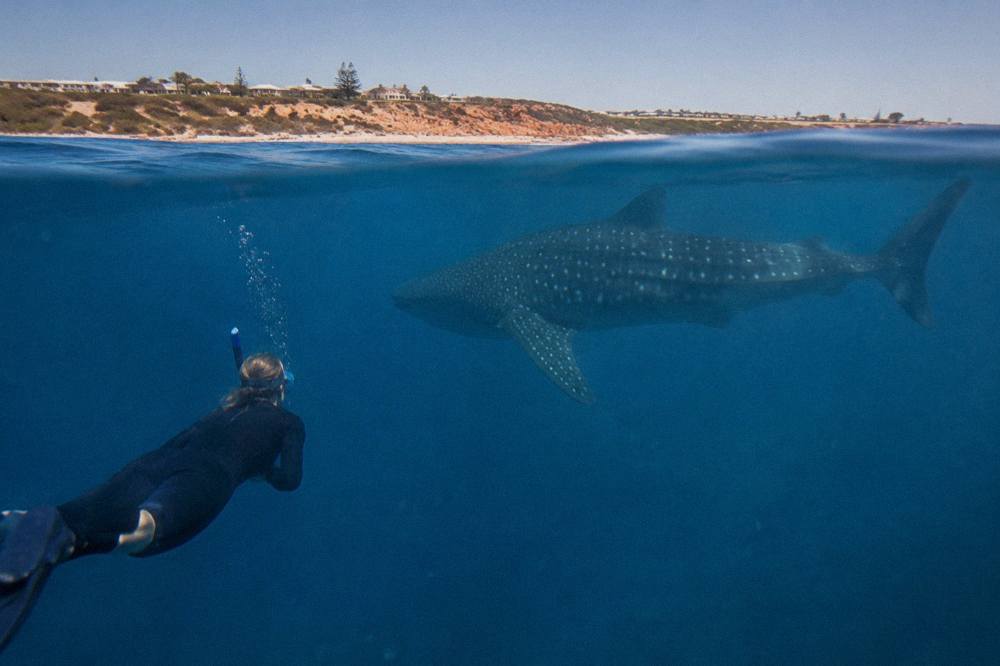
Price does not move much between peak and shoulder on the bookable roster, which surprises people. The three dedicated whale shark swims listed on this site run from A$700 to A$745 per person regardless of month: the Ningaloo Blue swim from Exmouth from A$705, the Ningaloo Marine Interactions odyssey from Coral Bay from A$700, and the Coral Bay Ecotours safari from A$745. What changes between months is availability, not price. Peak-season dates in Exmouth fill first, especially the April school-holiday window and the May sweet spot, which is exactly why the month question and the booking question are really the same question. The guide on booking whale shark tours in advance goes deeper on timing.
The Coral Bay Ecotours Whale Shark Safari is the town's longest-running trip, an 8 to 9 hour day on the water with a champagne lunch, rated 4.8 from 173 reviews, with a group of up to 20 and a DPaW park fee of A$20 per adult payable before departure.
What About Water Temperature And Weather By Month?
Ningaloo's water runs warmest in March and April at around 28 degrees, cools through winter to about 24 degrees in July and bottoms out near 23 degrees from August to October. Whale shark swim listings supply wetsuits, so temperature shapes comfort rather than feasibility: early season swims feel like bathwater, late season swims need the full wetsuit. Cape Immersion snorkel tours ask guests to bring or hire their own.
The monthly averages, drawn from long-term sea surface data for the reef, tell a clear story. March sits around 27.95 degrees and April around 28.05, the warmest water of the year. May holds near 27.07. June drops to about 25.53, July to about 24.28, and August to about 23.43. September is the coolest at roughly 23.18, and October recovers only slightly to about 23.43. For a snorkeller in a wetsuit, the difference between April and September is noticeable but not decisive; for anyone susceptible to cold, it argues for the earlier months. The wider set of guides lives on Whale Shark Tours Exmouth.
| Month | Average water temperature | Wetsuit feel | Best for |
|---|---|---|---|
| March | About 27.95 degrees | Light or none needed | Warm-water swimmers, season openers |
| April | About 28.05 degrees | Light or none needed | Families, first-time snorkellers |
| May | About 27.07 degrees | Thin suit comfortable | The all-round best month |
| June | About 25.53 degrees | Standard 3mm suit | Peak reliability, cooling nights |
| July | About 24.28 degrees | 3 to 5mm suit | Whale shark plus humpback overlap |
| August | About 23.43 degrees | Full wetsuit | Late shark season, humpback swims |
| September | About 23.18 degrees | Full wetsuit | Wildlife tours, quiet boats |
| October | About 23.43 degrees | Full wetsuit | Humpbacks, mantas, turtles |
Weather on the day matters more than the monthly average. Tours operate in open ocean outside the reef, where wind and swell vary hour to hour, and skippers make the final call on safety. Winter cold fronts can bring choppy days in June and July; autumn, from March to May, tends to deliver the flattest seas of the year, which is one more quiet argument for the peak window. If rough water is a concern for you, the guide to seasickness on a whale shark tour covers what actually helps.
Can You See Whale Sharks Outside The Main Season?
Yes, but with falling certainty. Exmouth operators run into August, sightings have been recorded into October and even early November in the last two years, and the tourism body's own wording is that tours often meet sharks to October. The honest framing is possible, not promised: no tour on this roster guarantees a sighting in any month, and outside the peak the day becomes a broader wildlife trip.
The late season deserves more respect than it gets. A September or October day on the Ningaloo Reef is not a failed whale shark trip; it is a humpback swim, a manta encounter and a turtle snorkel that might also produce a whale shark. The Coral Bay Ecotours Humpback Whale Safari, for example, is an 8 hour swim-focused trip rated 5.0 from 87 reviews, from A$745 per person with alcohol included and a group capped at 14. The humpback whale swim guide maps that whole season. For everything else about basing yourself in town during the swim season, the Coral Bay whale shark season travel guide covers where to stay, eat and launch your day on the reef.
What the late months cost you is predictability. The official season wording is March to July, and the tourism body is explicit that there is no guarantee outside the main season. The way to buy a shoulder-season trip is to read what the listing actually targets: a dedicated whale shark tour running in August is a different product from a wildlife eco tour running in October, and the difference shows up in what the crew search for all day. The eco tour versus main season tour comparison lays out that choice in full.
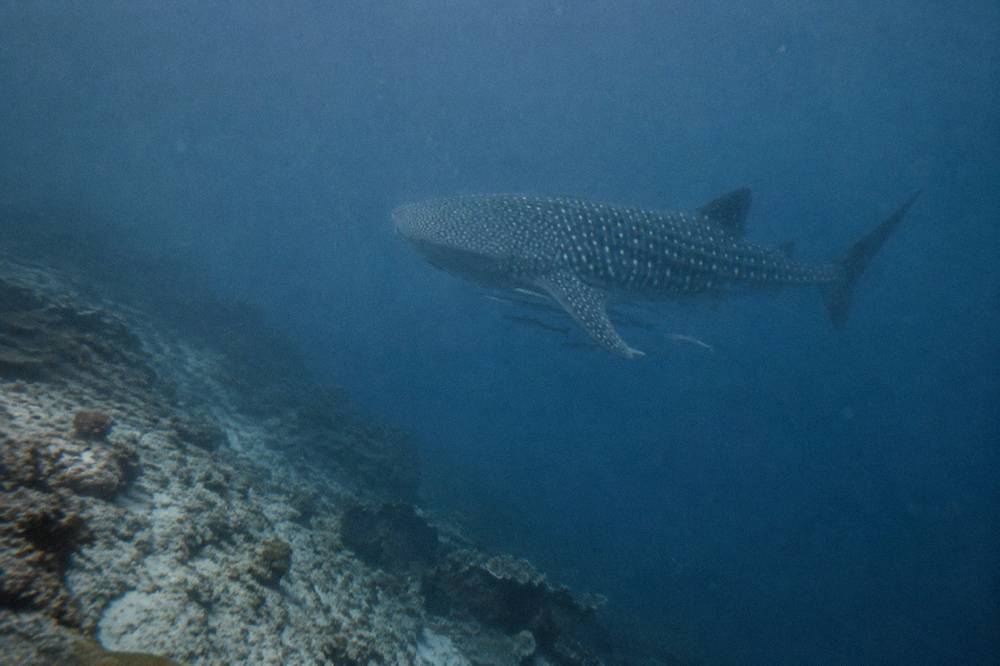
For travellers set on a whale shark and travelling in the shoulder, the single best move is to base in Exmouth rather than Coral Bay. Exmouth operators run to August and the town's boats keep searching later into spring; Coral Bay's dedicated whale shark season ends in June, after which its boats pivot to mantas and humpbacks. The Ningaloo Blue swim from Exmouth illustrates the Exmouth product: hotel pickup, a 6 to 7 hour day, groups of 18, from A$705 per person, rated 4.8 from 219 reviews. One caution worth repeating: that listing states the sale is final and non-refundable, so a shoulder-season booking there deserves extra certainty about your dates before you commit.
How Do Humpbacks And Mantas Change The Calendar?
Humpbacks run June to November, with swim tours from Exmouth about August to October, and Coral Bay's manta rays are resident year-round. That means the second half of the whale shark season is also the start of the humpback season, and Coral Bay in particular offers manta encounters in every month of the year, which turns a "wrong month" whale shark trip into a different but genuinely good day.
The overlap is the strategic heart of the Ningaloo calendar. Book July or August from Exmouth and you are in the one window where a single day can plausibly deliver a whale shark, a humpback and a manta. The humpbacks pass Ningaloo in the tens of thousands along the Western Australian migration corridor, arriving from June and peaking from August to October, when dedicated swim tours run. Mantas are the year-round insurance policy: a resident reef manta population lives at Coral Bay with reliable cleaning stations, which is why the town's manta trips run in every season and why the manta ray swim guide treats Coral Bay as the base. Before you commit to that triple-species day, our honest look at whether Ningaloo whale shark tours are worth the money covers real prices, sighting odds and who should book something else.
The roster makes the split concrete. Coral Bay carries the densest manta options: the Ningaloo Reef Dive full-day manta trip from A$260, the half-day version with a spotter plane from A$220, the Coral Bay Ecotours Marine Eco Safari from A$350 with a group of 30, and the Ningaloo Marine Interactions Best of Ningaloo day, rated 5.0 from 274 reviews, also from A$350. Exmouth counters with the Ocean Eco Adventures luxury manta cruise from A$600 and a sunset whale watch from A$139 that needs no swim at all. A September traveller who accepts the odds on whale sharks is not gambling on nothing.
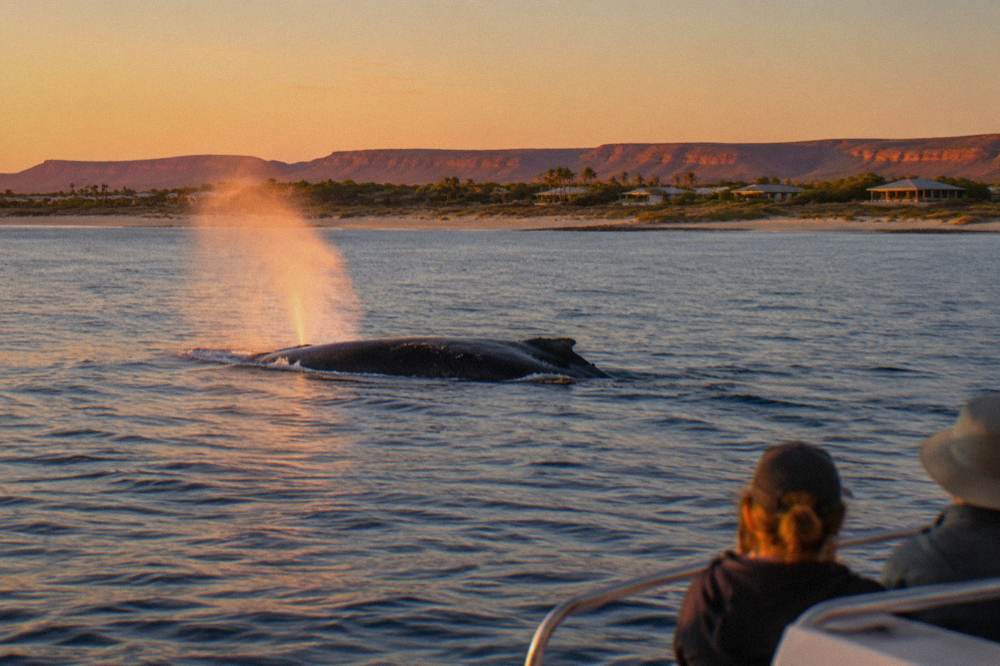
So the month question has a hidden second layer. If your heart is set on a whale shark and nothing else will do, aim April to June and treat July as the fallback. If your real goal is "swim with something enormous at Ningaloo", then August to October is not a compromise, it is the humpback season, and Coral Bay in any month is a manta town. The regional tourism body's whale shark season page publishes the season windows for both towns, and it matches what the operator roster here actually sells.
How Far Ahead Should You Book Each Month?
Peak months need the longest lead time: April to June Exmouth dates, especially the school-holiday overlap, can fill weeks ahead, and May weekends go first. Shoulder months can be booked closer in, but do not leave a once-in-a-trip swim to the last day in town, because a single weather cancellation with no spare day is the most common way travellers miss out. Build in one buffer day whatever the month.
The booking window follows the calendar closely. March trips are usually the easiest of the season to secure, because demand builds through the month as the first sightings make the news. April to June is when advance booking earns its keep, particularly for the Exmouth operators, where hotel pickup and small group sizes cap daily numbers. July and August sit in between: humpback demand is rising but whale shark boats still have room, and a traveller flexible about which species they swim with can sometimes book a day or two out.
The buffer-day advice applies to every month, and it is the single most repeated regret in guest reports. Tours are cancelled or rescheduled when conditions are unsafe, and the skipper's call is final; a traveller with one fixed day and a flight the next morning has no margin. Two full days in town, with the swim booked for the first, converts a weather problem into a reschedule. The deeper guide to how many days you need in Exmouth builds a full itinerary around exactly this.
It is also worth matching the booking terms to the month. Most of the roster offers free cancellation, including the Coral Bay Ecotours safari and the Ningaloo Marine Interactions odyssey, which matters if your dates might shift around weather. The Ningaloo Blue listing is the exception: it states the sale is final. In peak season, with a firm date and a buffer day, that is a manageable risk; in the shoulder, when you are betting on a maybe, it is a reason to check the terms twice before booking. Whatever the month, the button is the same: check availability on the operator's live listing, and read what the listing says about its own season before you pay.
If you are weighing the three headline trips against the calendar, this is the shortlist that fits the season's two most popular months, plus the humpback option for anyone travelling late.
Common Questions About Whale Shark Months In Ningaloo
What Month Is Best For Whale Sharks In Ningaloo?
April, May and June are the best months. They sit in the middle of the official March to July season, the water is calm and at its warmest in March and April., and both Exmouth and Coral Bay run daily tours. May is the month most often singled out. Exmouth tours continue to August, and sightings have been recorded into October and early November, but certainty drops away after the peak.
Are whale sharks at Ningaloo in August?
Often, yes. The official season wording is March to July, but Exmouth operators run tours to August and the regional tourism body reports sightings often continuing to October. Coral Bay's dedicated whale shark season ends in June. August is also when humpback swim tours begin from Exmouth, so a late-season trip usually delivers whales even if the sharks have thinned out.
What is the cheapest month to swim with whale sharks at Ningaloo?
The bookable tours do not discount by month: the three dedicated swims on this site run from A$700 to A$745 per person in every month they operate. Savings in the shoulder come from accommodation and flights, not the tour price. What changes between months is availability, with peak dates filling first and shoulder dates easier to secure close in.
Can you see whale sharks at Ningaloo in October or November?
It is possible but not scheduled. Exmouth tours met whale sharks as late as early November in both 2024 and 2025, and sightings often run to October. No tour guarantees a sighting in any month, and outside the main season the tourism body is explicit that there is no guarantee. Late-season trips are best bought as wildlife tours with humpbacks and mantas as the headline.
Is March too early for whale sharks at Ningaloo?
Not usually. The first confirmed swim of the 2026 season happened off Exmouth around 12 March, and the season officially opens in March. Mid to late March is a reasonable bet from Exmouth, though the aggregation builds through April. March also offers the warmest water of the year, around 28 degrees.
Which is better for whale sharks, Exmouth or Coral Bay?
For season length, Exmouth: its operators run to August while Coral Bay's dedicated season ends in June. For a shorter, warmer-water trip with year-round mantas as a backup, Coral Bay. The two towns are about 150 km apart, roughly a 1.5 to 2 hour drive, and both sit on the same reef system, so the sharks are shared and the choice is really about timing and travel style.