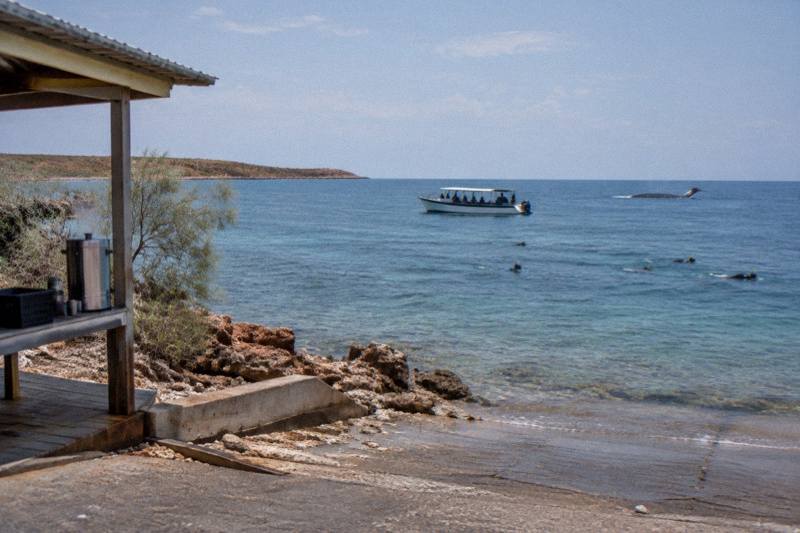
Humpback Whale Season In Exmouth: When To Swim And Who Runs The Tours
Humpbacks pass Ningaloo in their tens of thousands every winter, and a small number of licensed operators put swimmers in the water beside them. The season is shorter and the rules stricter than the famous whale shark swim, and only one swim listing is bookable on this site's roster.
Short answer
Humpback whale swim tours at Ningaloo run about July to October from Coral Bay and August to October from Exmouth. The roster carries one humpback swim listing, the Coral Bay Ecotours Humpback Safari, from A$745 per person, 8 hours, group size 14. An Exmouth sunset whale watch, from A$139, is a no-swim alternative.
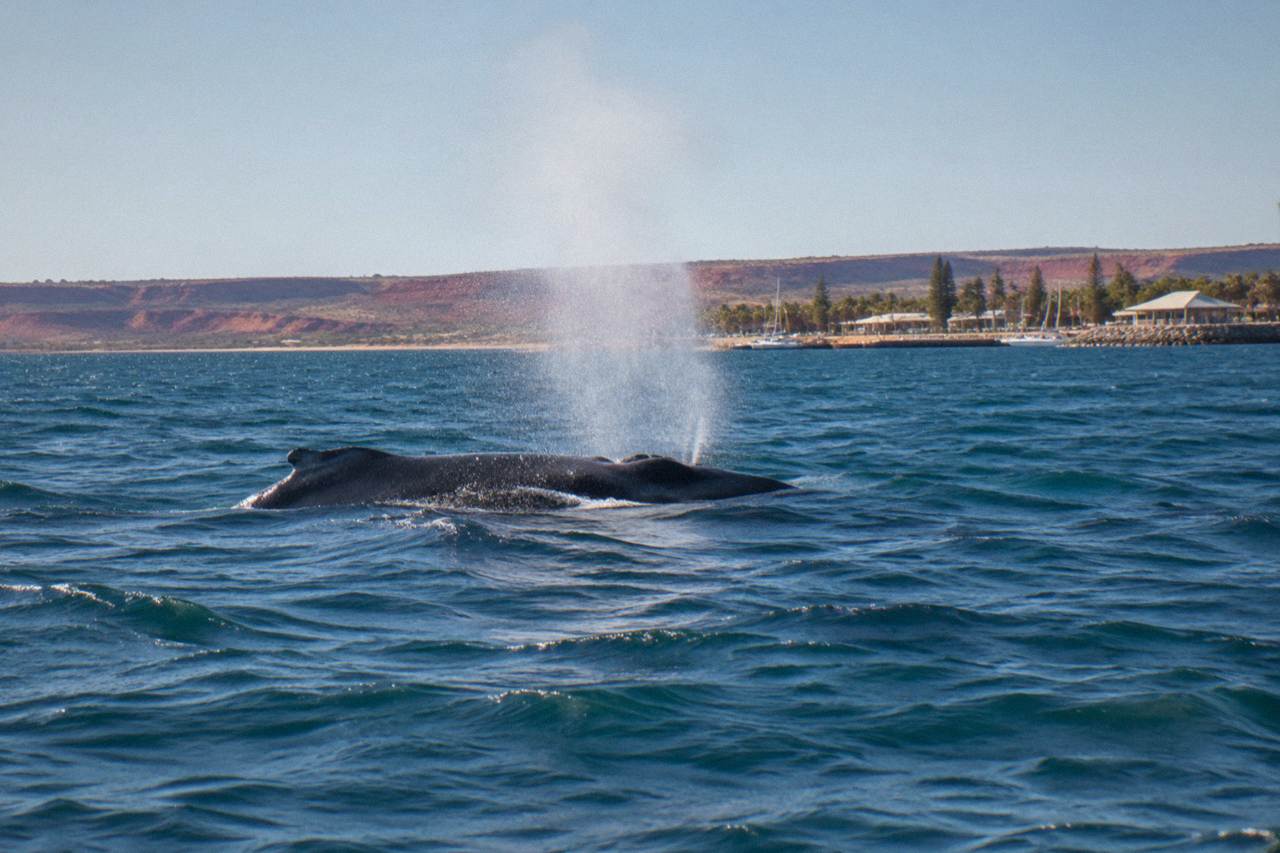
After the whale sharks thin out in late winter, a second migration fills the same stretch of water. Humpback whales travel north along the Western Australian coast between June and November, resting and calving in the warm waters off Ningaloo before turning south again. Estimates cited by the regional tourism body put the migrating population at roughly 40,000 to 45,000 animals along the WA coastline in a season, which is why whale watching here is reliable even when a swim is not. This guide covers the humpback whale season in Exmouth and Coral Bay, the one swim listing on this site's roster, the rules that govern a humpback interaction, and how to choose between a swim tour and a boat-based watch.
Swimming with a humpback is a different product from the whale shark swim most visitors come for. Whale sharks are filter feeders that move slowly and predictably along the reef; humpbacks are fast, breaching mammals, and the interaction rules reflect that. Only a licensed operator may put swimmers in the water, and even then the whale decides the encounter. Wild animals, no promises.
When Is Humpback Whale Season In Exmouth And Coral Bay?
Humpbacks swim past Ningaloo from June to November, but the in-water swim season is narrower: roughly July to October in Coral Bay and August to October in Exmouth, per the regional tourism body. The 2026 season opened with the first guided Coral Bay swims reported in early July and the first Exmouth sightings around the same time. A whale watch from shore or boat is possible across the whole window.
The dates shift a little each year with the migration, which is why operators and the tourism body use approximate months rather than fixed calendar dates. Australia's Coral Coast, the regional tourism organisation, publishes the swim season windows for both towns: Coral Bay tours typically from the start of July, Exmouth tours from the start of August, both running to October. The Parks and Wildlife Service lists humpbacks in Ningaloo Marine Park waters from June to November, which is the wider viewing window rather than the swim window.
That timing matters for trip planning because the humpback season overlaps the tail of the whale shark season. Whale sharks run March to July under the state agency's wording, with Exmouth operators running to August and sightings often stretching into October in recent years, as covered in the guide to the whale shark season in Exmouth. A visitor in August or September can realistically do both animals in one week, and that is exactly the choice this article's second half unpacks.
One practical note on geography. Coral Bay opens its swim season about a month earlier than Exmouth, and the two towns are about 150 km apart, roughly a 1.5 to 2 hour drive. If your dates fall in July and a humpback swim is the priority, Coral Bay is where the season starts. The trade-offs between the two bases, including accommodation and reef access, are laid out in the guide to Exmouth versus Coral Bay.
| Month | Humpback presence at Ningaloo | Swim tours running |
|---|---|---|
| June | First northbound whales arrive | Generally not yet |
| July | Steady northbound traffic | Coral Bay yes, Exmouth from late in the month or August |
| August | Peak season overlap with late whale sharks | Both towns |
| September | Whales resting with calves in the gulf | Both towns |
| October | Southbound migration, season winds down | Both towns, closing |
| November | Stragglers heading south | Swim season effectively over |
Which Operators Run Humpback Swim Tours At Ningaloo?
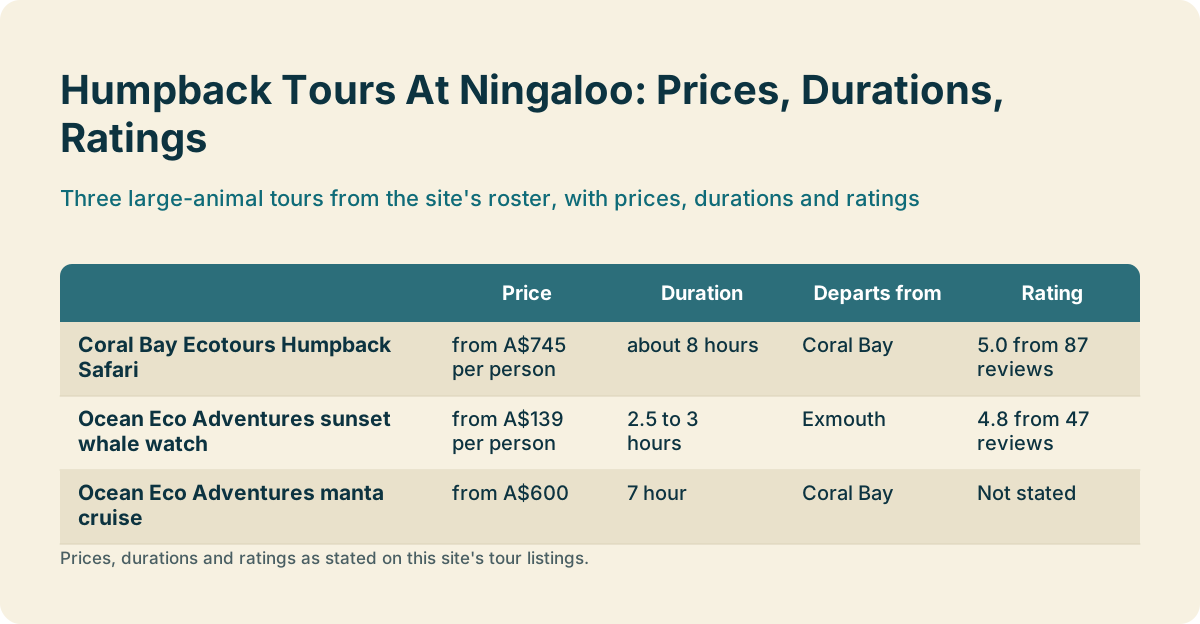
This site's roster carries one humpback swim listing: the Coral Bay Ecotours Humpback Safari, rated 5.0 from 87 reviews, from A$745 per person, an 8 hour tour from Coral Bay with a group of 14 and free cancellation. For everyone else the humpback experience is boat-based, headlined by the Ocean Eco Adventures sunset whale watch from Exmouth, from A$139.
The Coral Bay Ecotours product is the roster's only in-water humpback option. It runs about 8 hours, departs from Peoples Shopping Village in Coral Bay, and the listing does not offer pickup, so guests meet at the point. A meal and refreshments are stated on the listing, and cancellation is free. Group size is 14, smaller than the 18 to 20 typical of whale shark boats, which fits the more intimate, more conditional nature of a humpback interaction. Alcohol is stated as included on the listing.
The Ocean Eco Adventures sunset cruise is the Exmouth alternative when a swim is not the goal. It runs 2.5 to 3 hours from the Exmouth Game Fishing Club jetty, pickup is offered on the listing, and it carries a 4.8 rating from 47 reviews, from A$139 per person. Watching from the deck at sunset costs a fraction of a swim day, and no swimming confidence is required.
Those three cards frame the real decision. The humpback safari is the swim, the sunset cruise is the low-commitment watch, and the Ocean Eco Adventures luxury manta cruise from A$600 is the third large-animal option in the same family, a 7 hour Coral Bay trip with a gourmet lunch stated on the listing. Its own policy line is worth quoting for what it says about all Ningaloo wildlife: manta rays are wild animals and sightings are not guaranteed. The same sentence, unstated, applies to every humpback tour on the coast, and the guide to sighting policies at Ningaloo explains what a listing can and cannot promise.
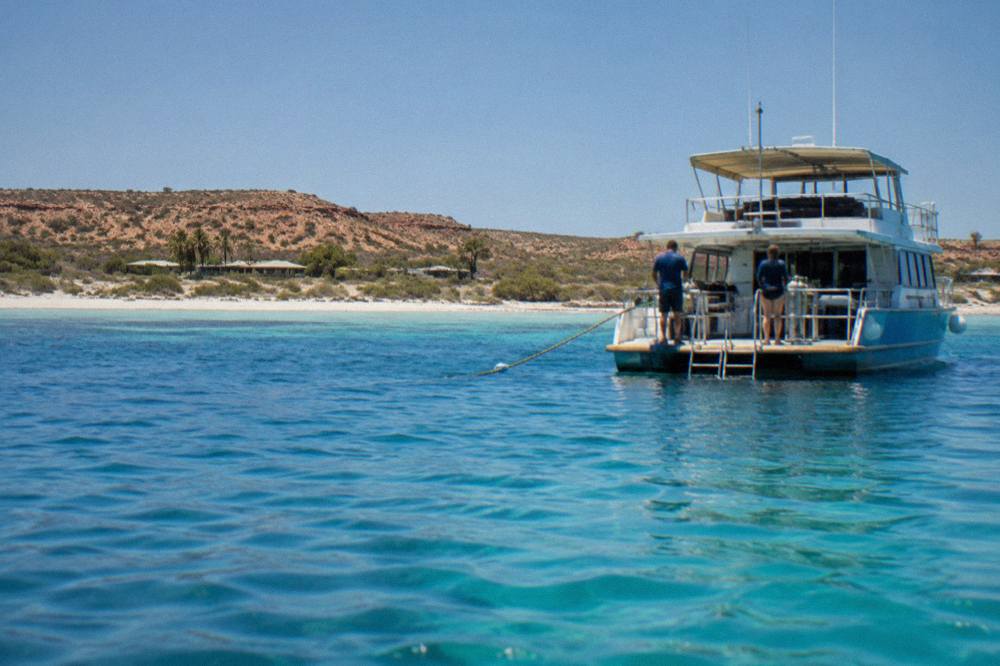
For swimmers booked into the Ecotours safari, the day looks close to a whale shark day with one difference in the water. The boat searches for whales, the skipper positions ahead of the animals' travel, and swimmers enter in small guided groups. The interaction lasts as long as the whale tolerates it, which can be minutes.
What Does A Humpback Swim Tour Actually Involve?
A humpback swim day is a full-day boat tour, in this case 8 hours from Coral Bay with a group of 14, spent finding whales, drifting beside them, and entering the water in small guided groups when the skipper judges the encounter safe. Whales are wild: a tour can deliver a long swim, a brief look, or none at all, and no listing on this roster promises otherwise.
The rhythm is familiar to anyone who has read up on the whale shark swim day at Ningaloo. Crew brief guests, gear goes on, the boat heads out, and the search begins. Where a whale shark day uses spotter planes over a slow-moving fish, a humpback crew reads the surface behaviour of animals that may be travelling, resting or playing. Resting pairs, a mother and calf in the later season, are the preferred encounter; a breaching or fast-travelling whale is left alone.
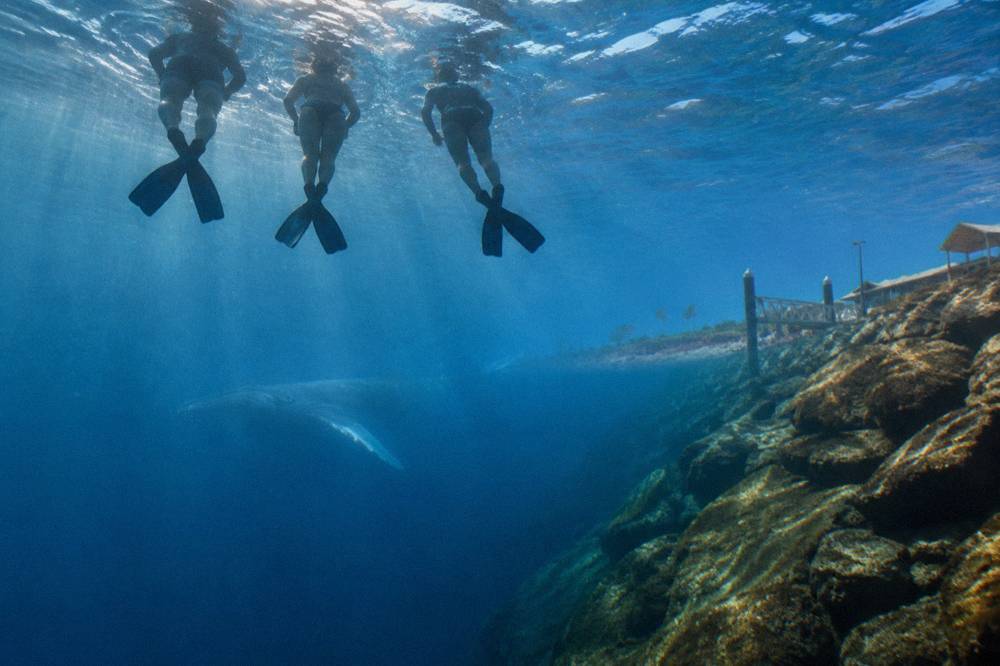
When the skipper calls it, swimmers enter quietly, usually in lines holding a guide line or finning gently behind a guide, and watch the whale pass beneath or alongside. The whole in-water portion may be short. That is the honest pitch of every licensed humpback swim on this coast: the boat day, the reef snorkels on the way, the food and the crew are certain; the whale's cooperation is not. If a quiet day is possible with the ocean's biggest fish, it is equally possible with its most acrobatic whale, and this site's policy is to never imply otherwise.
Fitness requirements sit slightly above the whale shark swim. Humpback swims happen in open water, often deeper and sometimes choppier than the lagoon conditions a whale shark day starts with. Confident snorkelling is the baseline; strong swimming helps. The detail on swimming ability for Ningaloo in-water tours generally is covered in the article on whether you need to be a strong swimmer, and the same logic transfers.
Seasickness deserves a sentence of its own, because an 8 hour day in open water is a long day for a prone stomach. The standard advice from operators across the coast is to take medication early rather than late, stay on deck, and tell the crew. The article on seasickness on a Ningaloo tour day covers it fully, and the practical points are identical on a humpback boat.
How Do The In-Water Rules For Humpbacks Differ From Whale Sharks?
Whale shark swims at Ningaloo are governed by a detailed legislated protocol: 10 swimmers maximum, 3 m from the head and body, 4 m from the tail, one vessel in contact at a time. Humpback interactions run under a separate, stricter licensing regime, and swimmers cannot scuba, touch or approach a whale; the skipper and guide control every entry. Both animals are fully protected in WA waters.
The whale shark protocol is public and specific. The Department of Biodiversity, Conservation and Attractions sets out the swimmer and vessel rules on its whale shark management page: an approach zone of 250 m radius around the animal, one vessel in contact for up to 90 minutes, and swimmers keeping at least 3 m from the head and body and 4 m from the tail. No touching, no flash photography, no cameras on poles, no motorised propulsion. The full set is summarised in the guide to the whale shark swim rules at Ningaloo.
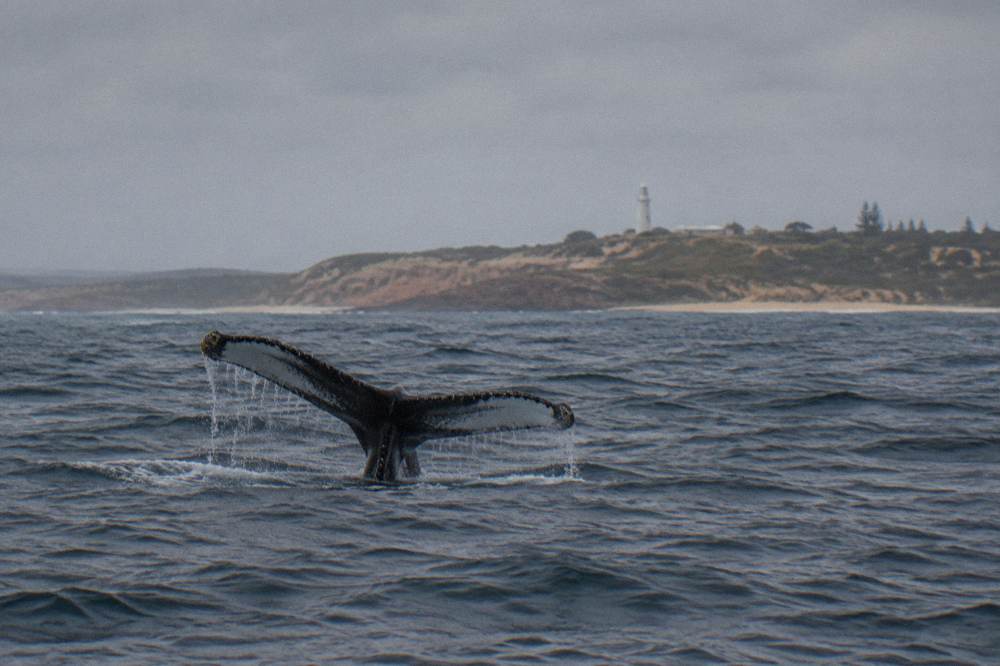
Humpback swims are not the same product with a bigger animal. A mammal that can move at speed, with a calf beside it for part of the season, demands more caution, and the licensed operators who run these tours operate under conditions that put the skipper's judgement first. What a guest experiences as "the guide said not today" is usually a whale behaving in a way the licence does not permit approaching. That is the system working, and it is why a humpback swim feels less predictable than a whale shark day even on a good tour.
| Rule or feature | Whale shark swim | Humpback swim |
|---|---|---|
| Swimmers in water at once | Maximum 10 | Small guided groups, skipper-controlled entry |
| Distance from animal | 3 m head and body, 4 m tail | Set by guide and licence conditions, entry only on the skipper's call |
| Vessel contact | One vessel, 90 minutes max, 6 knots | Skipper judgement within licence conditions |
| Scuba permitted | No | No |
| Touching or riding | Prohibited | Prohibited |
| Who may run it | DBCA licensed operators only | DBCA licensed operators only |
The practical takeaway for a reader: on a humpback tour you follow instructions more closely than on a whale shark tour. Entries happen on a call, not on a schedule, and the crew will pass on whales that a whale shark crew might work with patiently. Guests who accept that framing tend to rate the day well regardless of the swim length.
Humpback Swim Or Sunset Whale Watch: Which Suits You?
The swim, from A$745 for the Coral Bay Ecotours safari, suits confident snorkellers who want the full-day in-water attempt. The sunset whale watch from Exmouth, from A$139 and 2.5 to 3 hours, suits everyone else: families, non-swimmers, tight schedules, and anyone who wants breaching whales with a drink in hand rather than a wetsuit on. Many visitors do the watch and save the swim budget for whale sharks.
The price gap does most of the talking. A$745 against A$139 is the difference between a committed expedition and an evening on the water. The sunset cruise also carries a lower barrier in every practical sense: pickup is offered on the listing, no gear is needed, and 3 hours is a gentler ask for children or anyone prone to seasickness than 8 hours offshore. It holds a 4.8 rating from 47 reviews, and it is the roster's cheapest way to see humpbacks at all.
The swim suits a narrower visitor: someone who snorkeled before, wants the mammal encounter specifically, and accepts that the in-water minutes are not promised. The listing's 5.0 rating from 87 reviews reflects a product people love, but read the reviews the way this site reads every rating, as a pool of 87 opinions rather than a guarantee. If the whale shark swim is already on your itinerary, the marginal case for the humpback swim weakens: most travellers rank one big in-water day above two.
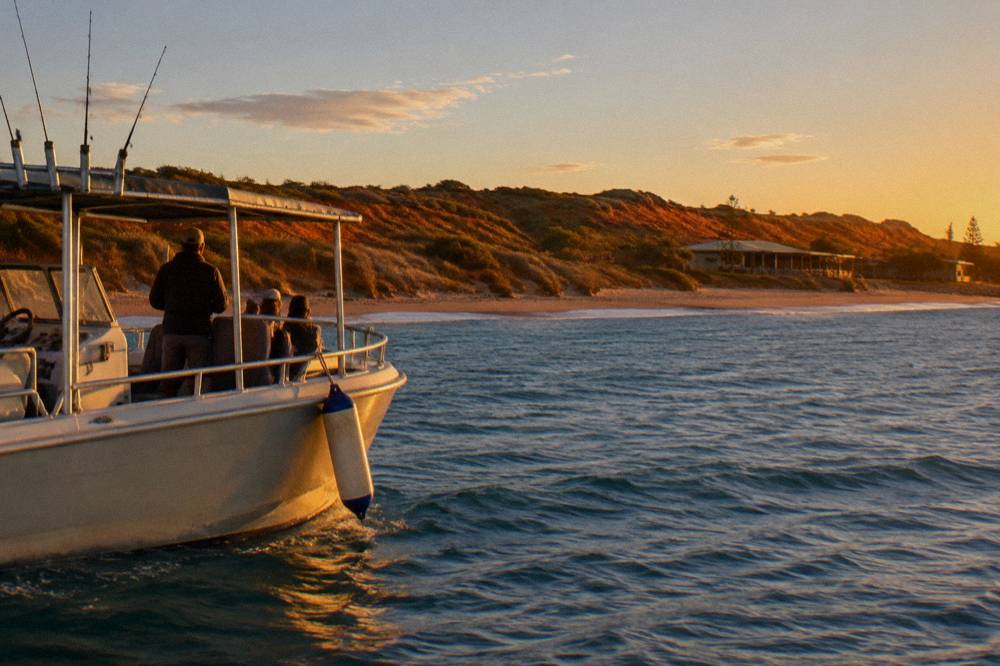
A third path splits the difference: the Ocean Eco Adventures luxury manta cruise. Mantas are year-round residents at Coral Bay with a more reliable encounter profile than humpbacks, the 7 hour trip includes a gourmet lunch on the listing, and from A$600 it sits just under the humpback safari. Its 4.7 rating comes from a small pool of 6 reviews, so treat that figure with the caution a thin sample deserves. The manta option is examined in full in the guide to the manta ray swim at Ningaloo.
| Option | Price from | Duration | In the water? | Best for |
|---|---|---|---|---|
| Coral Bay Ecotours Humpback Safari | A$745 | 8 hours | Yes, guided groups | Confident snorkellers, full-day commitment |
| Ocean Eco Adventures manta cruise | A$600 | 7 hours | Yes, snorkel | Large-animal day with lunch |
| Ocean Eco Adventures sunset whale watch | A$139 | 2.5 to 3 hours | No | Families, evenings, tight budgets |
What Does A Humpback Season Trip Cost At Ningaloo?
The humpback swim itself costs from A$745 per person on this roster's single listing. A realistic humpback-season week in Exmouth or Coral Bay also carries a whale shark swim from A$700 to A$745, reef and turtle snorkels from A$145 to A$320, and a sunset whale watch from A$139. Budget the big in-water days first, then fill the week with the cheaper reef tours.
The headline figures come straight from the listings. The three whale shark swims on this roster run A$700 to A$745: the Ningaloo Blue swim from Exmouth from A$705, the Ningaloo Marine Interactions odyssey from A$700, and the Coral Bay Ecotours safari from A$745. The humpback safari sits at the same price point, A$745, which is why choosing between a humpback day and a whale shark day is usually an either-or rather than a both.
Cheaper days fill the gaps. The Cape Immersion turtle snorkel from Exmouth runs from A$145 for about 3 hours 30 minutes, its 6 hour boat snorkel from A$275, and the Exmouth Adventure Co guided Turquoise Bay snorkel from A$250. A guest review for the turtle trip is easy to believe: at 4.8 from 197 reviews it is one of the roster's most-reviewed products, and turtles are commonly seen on these reef snorkels, though sightings are not guaranteed. Those smaller tours are catalogued in the guide to things to do in Exmouth beyond the whale sharks.
Accommodation and travel sit on top. Peak-season occupancy at the major Exmouth properties often runs 85 to 100 percent between April and October, so the humpback window of August to October coincides with the busiest beds. The practical advice, and the honest answer to whether you should pre-book, is in the article on booking Ningaloo tours in advance: in this window, yes.
| Spend item | Low | High |
|---|---|---|
| Humpback swim (roster listing) | A$745 | A$745 |
| Whale shark swim (roster range) | A$700 | A$745 |
| Manta day trip (roster range) | A$220 | A$600 |
| Reef or turtle snorkel (roster range) | A$145 | A$320 |
| Sunset whale watch (roster listing) | A$139 | A$139 |
Note that the Coral Bay Ecotours whale shark safari adds a park fee on top of its ticket, A$20 per adult and A$10 per child payable before departure, per its listing exclusions. Read the exclusions on any listing before assuming the headline price is the final price.
Can You Combine Humpbacks With Whale Sharks Or Mantas?
Yes, and the calendar does most of the work: August is the overlap month when whale shark operators are still running from Exmouth and humpback swims are open from both towns. A two-swim week, one whale shark day and one humpback or manta day, is the classic late-winter Ningaloo itinerary, built from two full-price tour tickets.
August is the month to aim for. The regional tourism body shows Exmouth whale shark tours running to August with sightings often later, and humpback swims opening from Exmouth in the same month. The first 2026 whale shark encounters off Exmouth were recorded around 12 March, and humpback swims were reported from early July, so by August both seasons are live. September is the stronger humpback month, with mothers and calves around, but the whale shark main season is over and any shark then is a bonus rather than the product.
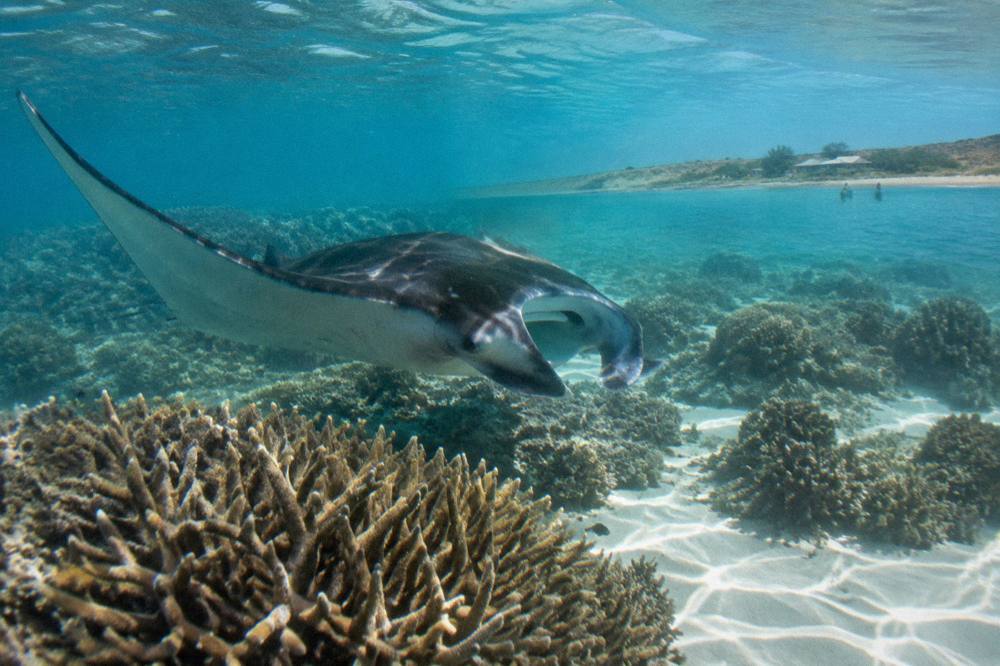
Mantas complete the trio. Coral Bay's resident reef mantas are encountered year-round, and the roster's manta listings, from the A$220 half-day Ningaloo Reef Dive trip to the A$350 Coral Bay Ecotours eco safari, run outside the humpback window entirely. A traveller who cannot decide between animals can book a manta day in any month and treat it as the reliable one of the three, with the honest caveat that wild is wild there too.
Back-to-back swim days deserve a caution. Two 8 hour offshore days in a row is tiring, and the second one lands on muscles that already worked. Most operators and most itineraries leave a rest day between big swims, which the reef snorkels happily fill. The Exmouth Adventure Co Ningaloo in a Day tour, from A$320, is a good middle day: it mixes a Yardie Creek cruise with snorkelling and comes with the smallest group on the roster, 8 guests.
The last planning variable is where to sleep, and the two towns serve the humpback season differently. Coral Bay opens the swim season a month earlier and keeps everything walkable; Exmouth has the deeper accommodation pool and the airport 25 minutes away. The trade-offs are laid out in the guide to Coral Bay during swim season and the companion guide to where to stay in Exmouth. Whichever base you pick, this site, Whale Shark Tours Exmouth, exists to make the choice simpler.
The short version of all of it: book the humpback swim if the mammal is the animal you came for, book the sunset watch if it is not, and if the calendar lets you do both a humpback day and a whale shark day, do them a day or two apart and let the reef fill the gap.
Common Questions About Humpback Whale Season In Exmouth
When is humpback whale season in Exmouth?
Humpbacks are present in Ningaloo waters from June to November, but the in-water swim season is narrower: about August to October from Exmouth and July to October from Coral Bay, per the regional tourism body. Exact opening dates shift each year with the migration.
Can you swim with humpback whales at Ningaloo?
Yes, with a licensed operator, during the swim season of roughly July to October in Coral Bay and August to October in Exmouth. The roster's humpback swim listing is the Coral Bay Ecotours Humpback Safari, from A$745 per person for an 8 hour tour with a group of 14.
Is a humpback swim guaranteed to happen?
No. Humpbacks are wild animals and no listing on this roster promises a sighting or a swim. The boat day, gear and guidance are certain; the whale's behaviour is not. A quiet day is possible, and the honest operators say so plainly.
How much does a humpback swim cost at Ningaloo?
The roster's single humpback swim listing, the Coral Bay Ecotours Humpback Safari, is from A$745 per person. A boat-based sunset whale watch from Exmouth, with no swimming, is from A$139 per person for 2.5 to 3 hours.
Do you have to be a strong swimmer for a humpback swim?
Confident snorkelling in open water is the baseline. Entries are skipper-controlled and happen in small guided groups, often in deeper water than a lagoon. If open-ocean swimming is a stretch, the sunset whale watch or a manta trip is the better fit.
Can you see whale sharks and humpbacks on the same trip?
Yes, in the August overlap, when Exmouth whale shark operators are still running and humpback swims have opened from both towns. Many visitors book one swim of each a few days apart and fill the middle days with reef or turtle snorkels.