Are There Great White Sharks At Ningaloo Reef?
An honest answer to whether great white sharks appear at Ningaloo Reef, which shark species swimmers actually encounter near Exmouth and Coral Bay, and how the swim rules keep tours safe.
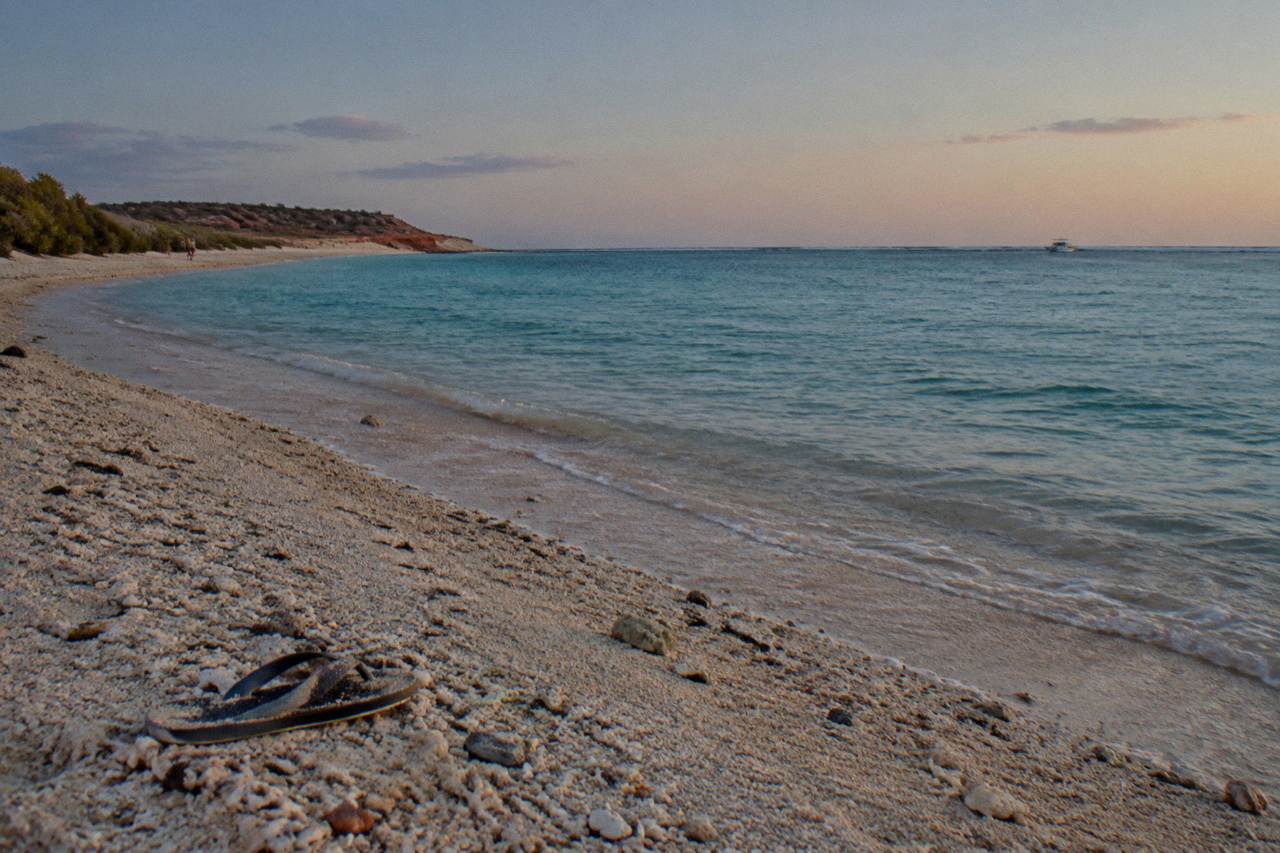
Are There Great White Sharks At Ningaloo Reef?
No. Great white sharks are not part of the Ningaloo Reef experience that swimmers, snorkellers and tour operators describe. The official Ningaloo Marine Park pages and the regional tourism body's whale shark material name whale sharks, humpback whales, manta rays, turtles and dugongs as the headline marine life, and great whites do not feature anywhere in the tour listings, the licence rules or the park's species information. The shark that draws more than 41,000 people a year to this coast is the opposite of a predator: a plankton-feeding fish the size of a bus.
That distinction matters because it changes what a day on the water actually looks like. When you book a swim such as the Ningaloo Blue whale shark swim from Exmouth, or the Coral Bay Ecotours Whale Shark Safari, the animal on the itinerary is Rhincodon typus, a filter feeder with a mouth built for krill, not for seals. The Ningaloo Marine Interactions odyssey from Coral Bay, the Cape Immersion boat snorkels out of Exmouth and the Exmouth Adventure Co trips all operate in the same regulated waters, under the same Department of Biodiversity, Conservation and Attractions interaction protocols, and none of them lists great whites among the wildlife guests may encounter. If you're now wondering whether whale sharks will actually be around during your visit, the month-by-month guide to whale shark timing in Exmouth covers the season windows and which tours run when.
This article sets out what the official record says, which sharks you genuinely might see, how the swim rules work, and which tours put you in that water. The short version for anyone anxious about it: the thing people travel across the world to swim beside here has no teeth worth fearing.
Are There Great White Sharks At Ningaloo Reef?
No, great white sharks are not a Ningaloo Reef presence in any official or operator account of these waters. The park authority's marine park page lists whale sharks, humpbacks, manta rays, turtles and dugongs as the notable species, and no licensed tour out of Exmouth or Coral Bay markets, reports or manages for great whites. The sharks at the centre of Ningaloo tourism are whale sharks, filter feeders, plus smaller reef sharks around the inner lagoons.
The honest answer comes down to ecology and geography rather than marketing. Ningaloo Reef sits on Australia's west coast between Exmouth and Coral Bay, a fringing reef washed by the warm southward flow of the Leeuwin Current. The whales, whale sharks, manta rays and reef fish the region is famous for are all tropical and warm-temperate species, drawn by the mass coral spawning each March and April and the plankton blooms that follow. The species that dominates a Ningaloo wildlife day, the whale shark, arrives specifically to feed on that plankton, as the department's whale shark management pages explain.
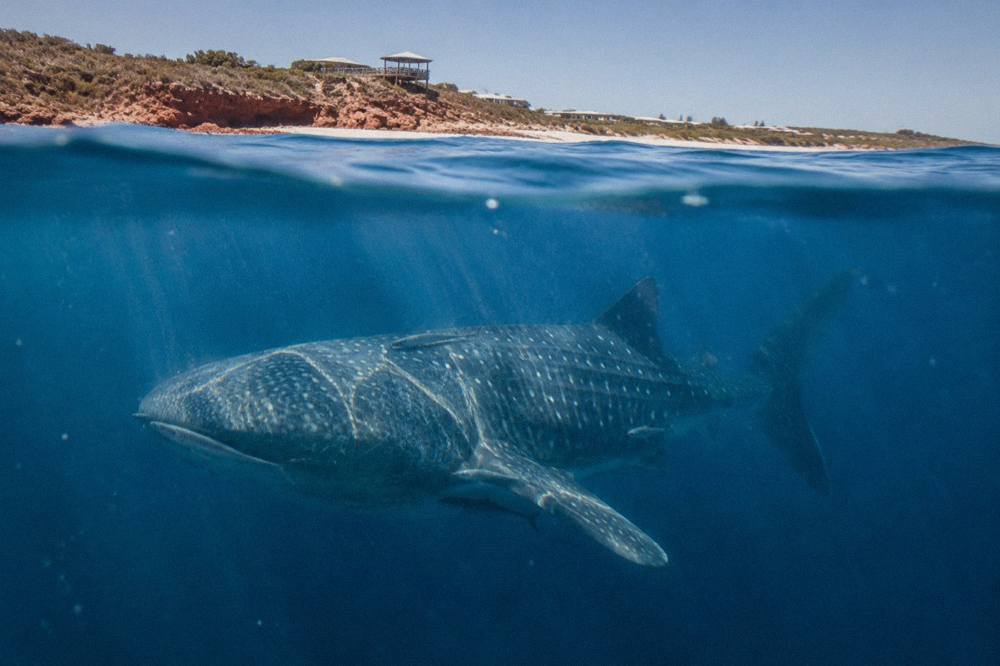
Great white sharks, by contrast, are associated with the colder, seal-bearing waters of Australia's southern coast. They are not listed among the species visitors are told to expect at Ningaloo on any of the sources behind this site's research, and none of the 14 tours on our roster, from the whale shark swims to the manta trips and the reef snorkels, mentions them in a listing, an exclusion or a safety note. When a listing carries a wildlife caveat, it is the opposite kind: the Ocean Eco Adventures luxury manta cruise states plainly that manta rays are wild animals and sightings are not guaranteed. That is the standard register of honesty on this coast, and it extends to every species claim on this page.
So if the question behind the question is "is it safe to get in the water at Ningaloo", the record answers yes, in the qualified way wild-animal tourism always is. Swimmers enter the water under licensed supervision, in groups capped by law, beside animals the regulators have studied for decades. The whale shark's own conservation story is part of that record: the species is listed as Endangered internationally and Specially Protected in Western Australia, which is why every aspect of a Ningaloo swim is controlled by rule rather than left to discretion.
What Sharks Do You Actually See At Ningaloo Reef?
The shark species swimmers actually encounter at Ningaloo are whale sharks on the outer reef, from March through the main season, and small reef sharks such as blacktip and whitetip reef sharks around the inner lagoons and snorkel sites. Reef sharks are shy, generally human-averse and commonly seen resting under coral ledges or cruising the shallows at Turquoise Bay and similar sites. Sharks aside, plenty of visitors also ask about saltwater crocodiles at Ningaloo Reef, so we gathered a sourced answer on what is actually documented there and how to snorkel safely.
Reef sharks are the everyday shark experience here, and they are unremarkable in the best way. A guided snorkel such as the Cape Immersion six-hour Ningaloo Reef wildlife adventure, rated 4.9 from 138 reviews and from A$275 per person, regularly puts guests over inner-reef sites where small sharks share the water with turtles, rays and clouds of reef fish. The listing for the shorter Cape Immersion turtle tour, about three and a half hours from A$145, is built around the reef's turtle population, but the same lagoon systems hold the small resident sharks that snorkellers notice once and then relax about. Group size on both trips is capped at 12, which keeps the water calm and the interactions quiet.
| Shark or ray type | Where you meet it at Ningaloo | Typical tour type | What it is like in the water |
|---|---|---|---|
| Whale shark | Outer reef, main season from March | Full-day licensed swim tours | Enormous, slow, plankton-feeding, indifferent to swimmers |
| Reef sharks (blacktip, whitetip) | Inner lagoons and snorkel sites | Reef and turtle snorkel tours | Small, shy, usually seen at a distance |
| Manta rays | Coral Bay especially, year-round residents | Manta swim and eco tours | Graceful filter feeders, curious rather than threatening |
| Turtles | Lagoon and reef sites everywhere | Turtle and reef snorkel tours | Calm grazers, seen on most inner-reef trips |
The whale shark itself deserves the headline, because it is the largest fish in the sea and the reason most people are reading about Ningaloo at all. Adults reach many metres in length, yet they feed by filtering plankton and have no predatory interest in people. The Gujawari information guide published by the park authority records the animal's place in local culture: the Traditional Owners of this coast, the Baiyungu, Thalanyji and Yinigurdira, call the whale shark gujawari and the reef country Nyinggulu. A swim beside one is supervised, brief by design, and governed by rules we cover further down.
Rays round out the big-animal roster. Coral Bay supports a resident reef manta population year-round, which is why the manta tours cluster there: the Ningaloo Reef Dive full-day manta trip from A$260, the Coral Bay Ecotours Marine Eco Safari from A$350 with a 4.8 rating from 565 reviews, and the Ningaloo Marine Interactions Best of Ningaloo day, 5 from 274 reviews, all operate out of Coral Bay on that resident population. None of these animals is a threat, and all of them are wild, which is exactly why the interaction rules exist.
Are Whale Sharks Dangerous To Swimmers At Ningaloo?
The whale shark is a filter feeder, straining plankton rather than hunting prey, and Ningaloo's swim rules call for no touching and a minimum of 3 m from the head and body, 4 m from the tail. The real risks on a whale shark day are open-ocean ones: sun, seasickness and fatigue, which is why tours brief on swimming fitness and why the rules cap group numbers rather than arm anyone against the shark.
The distinction between a filter feeder and a predator is the whole answer. A whale shark's mouth can be well over a metre wide, but it is a strainer for plankton and small nekton, not a jaw for prey. Swimmers are instructed to keep at least 3 metres from the head and body and 4 metres from the tail, and the tail is the part the rules take most seriously, because a startled flick from an animal this size could knock a person even with no intent behind it. Distance rules exist for the shark's welfare and the swimmer's safety alike.
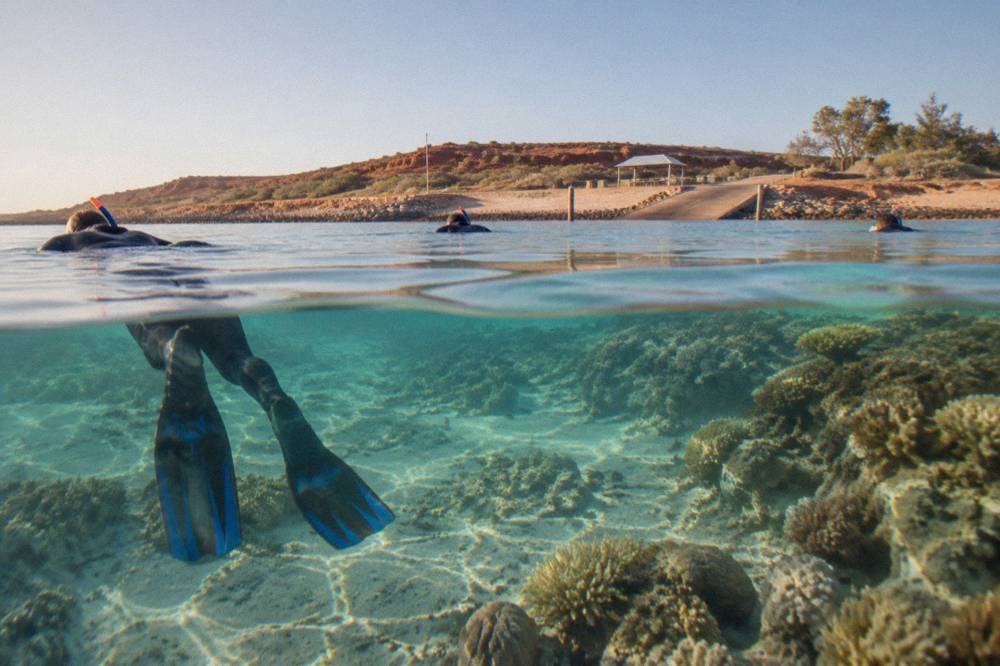
The deeper answer to safety anxiety is structural. Every commercial whale shark tour in Ningaloo Marine Park must be licensed by the department, must operate inside a legislated interaction protocol, and must carry a guide in the water with every group of up to 10 swimmers. The day pattern described by the regional tourism body, a roughly 7:00 am departure, two inner-reef snorkels while spotter planes search, then repeated swim jumps in supervised groups, is built so that no one swims alone, unsupervised or outside the protocol. We compared the listings across the roster and this structure is common to all of them, from the 18-guest Ningaloo Blue trip to the 20-guest Coral Bay Ecotours safari from A$745.
It is also worth being honest about what "dangerous" wildlife questions usually mean on this coast: not sharks, but conditions. Open-ocean water outside the reef can be choppy, swells run up to a couple of metres on some days, and people who suffer seasickness should plan for it. If that is your situation, our piece on handling seasickness on a whale shark tour covers what operators advise, and our guide to the swimming fitness question deals with ability. Neither animal nor adrenaline is the gate here; basic water confidence is.
How Do The Whale Shark Swim Rules Keep Swimmers Safe At Ningaloo?
The rules cap swimmers at 10 per group in the water, require 3 metres from a whale shark's head and body and 4 metres from its tail, ban touching, riding, flash photography, extension-pole cameras and motorised propulsion, and limit any interaction to 60 minutes with one vessel in contact at a time inside a 250 metre approach zone. Licensed operators must display whale shark and dive flags while swimmers are in the water.
These are legislated interaction protocols under Western Australia's Biodiversity Conservation Regulations, not house policies a tour can relax. Vessels may not approach a shark closer than 30 metres, must travel at 6 knots or less inside the approach zone, and must drop swimmers ahead of the animal's direction of travel rather than chase it. Only one boat holds contact at a time, for a maximum of 90 minutes; a second vessel waits 250 metres back and any others 400 metres. Recreational swimmers are bound by the same distance and behaviour rules, and the official guide is explicit that scuba diving with whale sharks is prohibited outright: it is snorkel only, at the surface, in daylight supervision.
| Rule | What it requires | Who it applies to |
|---|---|---|
| Swimmer group cap | Maximum 10 people in the water at one time with a guide | All licensed commercial tours and recreational swimmers |
| Distance minimums | 3 m from head and body, 4 m from tail | Everyone in the water |
| Vessel contact | One vessel at a time, 90 minutes max, 6 knots, 30 m minimum approach | All vessels, private and commercial |
| Photography | No flash, no extension poles; handheld cameras only | Everyone |
| Time limit | Interaction capped at 60 minutes | Recreational protocol, mirrored in licence conditions |
The photography rules are worth knowing before you pack, because they shape the photos you bring home. Flash and pole-mounted rigs are banned outright, and some operators restrict personal underwater cameras during the swim itself so crew can manage the group. We cover the detail, including where professional photo packages fit in, in our guide to whale shark photography at Ningaloo. The broader safety picture, including why the animal's Endangered listing drives all of this, sits in our longer piece on whether whale sharks are dangerous.
None of this machinery exists because of great whites or any threatening shark. It exists because a vulnerable, slow-reproducing species shares its water with tens of thousands of swimmers a season, and because an industry built on a wild animal only survives if the animal is never harassed. The rules read as protective in both directions, and swimmers who follow the guide's brief spend their in-water minutes watching a quiet giant cruise past at arm's-reach-minus-three-metres.
Which Ningaloo Tours Put You In The Water Safely?
Every in-water tour on this site operates inside the same licensed framework, from the A$700 to A$745 whale shark swims to reef snorkels from A$145. Group sizes range from 8 on the Exmouth Adventure Co Ningaloo in a Day trip to 30 on the Coral Bay Ecotours manta safari, and most listings include gear, meals and free cancellation, though the Ningaloo Blue whale shark swim is sold as final and non-refundable.
The choice is really between three kinds of day. A whale shark swim is the full-day commitment: the Ningaloo Blue trip from Exmouth runs 6 to 7 hours with hotel pickup, from A$705, rated 4.8 from 219 reviews, and the Coral Bay Ecotours safari runs 8 to 9 hours from A$745 with a 4.8 rating from 173 reviews, plus a DPaW park fee of A$20 per adult payable before departure. The Ningaloo Marine Interactions odyssey, 5 from 23 reviews, from A$700, stretches to nine hours from Coral Bay. All three put you in the water with a guide under the interaction protocol. If you're still weighing which town and operator suit you best, our guide to Australia's top whale shark swim locations compares Exmouth and Coral Bay side by side.
| Tour | Departs | Price from | Rating and reviews | Group size |
|---|---|---|---|---|
| Ningaloo Blue whale shark swim | Exmouth, pickup offered | A$705 | 4.8 from 219 | 18 |
| Coral Bay Ecotours Whale Shark Safari | Coral Bay, meet at point | A$745 | 4.8 from 173 | 20 |
| Ningaloo Marine Interactions odyssey | Coral Bay, meet at point | A$700 | 5 from 23 | 20 |
| Cape Immersion six-hour reef snorkel | Exmouth, pickup offered | A$275 | 4.9 from 138 | 12 |
| Cape Immersion turtle snorkel | Exmouth, pickup offered | A$145 | 4.8 from 197 | 12 |
The second kind of day is the reef or wildlife snorkel, which is where the inner-lagoon sharks, turtles and reef fish live. The Cape Immersion six-hour wildlife adventure includes lunch and snorkel gear from A$275; the same operator's turtle tour, about three and a half hours on the water, is the gentlest and cheapest introduction to Ningaloo water from A$145, with wetsuits hireable as an extra per the listing. Exmouth Adventure Co runs a guided Turquoise Bay snorkel day from A$250 and a Ningaloo in a Day combo with the Yardie Creek cruise from A$320. For anyone easing toward the big swim, these trips answer the "is the water safe" question better than any article can.
The third kind is the manta and whale watching day, out of Coral Bay mostly. Ningaloo Reef Dive's half-day manta adventure uses a spotter plane and runs from A$220; the Ocean Eco Adventures luxury manta cruise from Exmouth or Coral Bay pickup costs from A$600 and includes a gourmet lunch, with the honest caveat that manta sightings are never guaranteed. In humpback season, roughly August to October, the Ocean Eco Adventures sunset whale watch from A$139 keeps you on the boat entirely, which suits anyone who wants the wildlife without the wetsuit.
Cancellation terms differ enough to check before booking. Most listings on the roster offer free cancellation, but the Ningaloo Blue whale shark swim states on its listing that the sale is final and non-refundable, so that booking deserves certainty about dates. Our guide to choosing the best whale shark tour from Exmouth walks through the trade-offs tour by tour, and Whale Shark Tours Exmouth keeps the full comparison and trip picker for planning the whole week around.
What Other Wildlife Shares The Water At Ningaloo?
Ningaloo's headline wildlife beyond whale sharks is humpback whales from June to November, resident reef manta rays at Coral Bay year-round, turtles nesting on these beaches, plus dugongs, dolphins and a wide variety of reef fish on Ningaloo Reef. The same licensed day tours encounter most of these animals as a normal part of a trip rather than as separate bookings.
The humpback migration is the second act of the Ningaloo year. After the whale shark main season, March to July under the department's wording with operators running to August, an estimated 40,000 to 45,000 humpbacks travel the Western Australian coast, and swim-with-humpback tours run from roughly July to October out of Coral Bay and August to October out of Exmouth. The Coral Bay Ecotours Humpback Whale Safari, 5 from 87 reviews and from A$745, is the roster's dedicated swim product; the sunset whale watch from the Exmouth Game Fishing Club jetty is the dry-land-alternative from A$139.
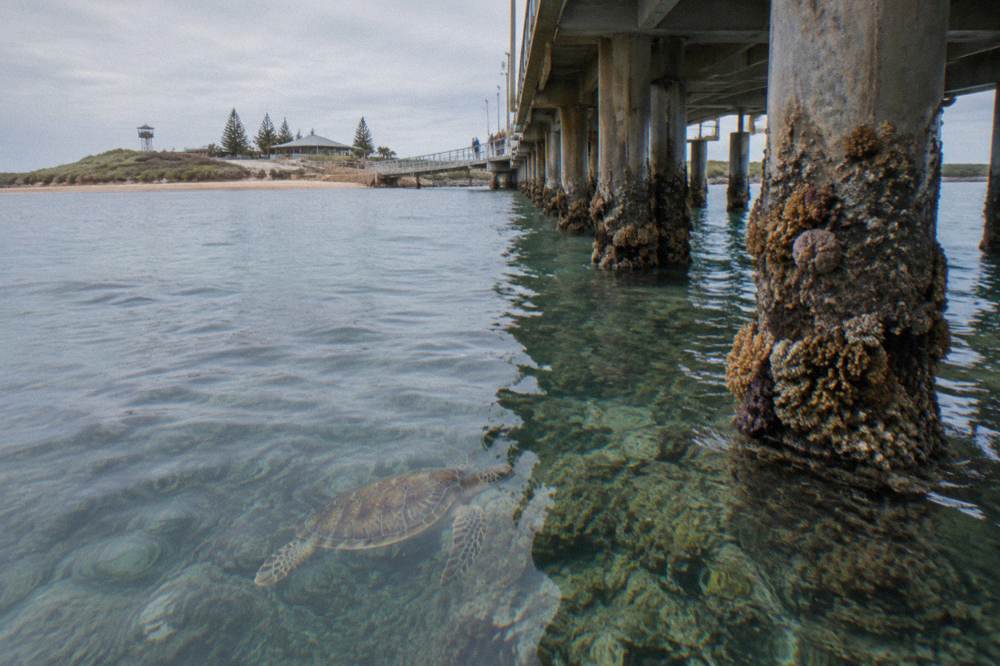
Turtles are the constant. The Cape Immersion turtle snorkel exists because the lagoons off Exmouth hold reliable turtle populations, and the listing's 197 reviews at 4.8 reflect how dependable those encounters are. Dugongs and dolphins appear on the outer-reef transits, and the manta days at Coral Bay, whether the half-day trip from A$220 or the Eco Safari with lunch and afternoon tea from A$350, regularly add rays, turtles and reef sharks to the same outing. This layered wildlife is why many visitors book one big swim plus one reef day, which our piece on how many days you need in Exmouth plans out.
What none of these encounters involves is a predatory shark. The pattern across every official page, every tourism body account and every one of the 14 listings on this site is consistent: Ningaloo is sold, and regulated, as a gentle-giant destination. The department that licenses the swims, the regional tourism body promoting them and the Traditional Owners whose word for the whale shark gives the official guide its name all describe the same thing, a plankton-fed giant passing close to a supervised line of snorkellers. If a great white question was standing between you and a booking, the honest answer is that it has no place in this water or this industry.
Common Questions About Sharks At Ningaloo Reef
Are There Great White Sharks At Ningaloo Reef?
No. Great whites are not part of the Ningaloo tour experience in any official park, tourism body or operator account of these waters. The sharks swimmers meet are whale sharks, plankton-feeding giants, and small reef sharks around the inner lagoons.
Are whale sharks dangerous to swim with?
No. Whale sharks are filter feeders with no predatory interest in people, and every licensed Ningaloo swim runs under legislated rules: 10 swimmers max per group, a guide in the water, 3 metres from the head and body, 4 metres from the tail. The real risks on the day are sun, seasickness and fatigue.
What sharks can you see snorkelling at Ningaloo Reef?
Blacktip and whitetip reef sharks are the common sightings on inner-reef snorkels, including sites around Turquoise Bay and the lagoons off Exmouth. They are small, shy and generally keep their distance. Whale sharks appear on the outer reef during the swim season.
Do I need to worry about sharks when swimming at Exmouth beaches?
The animals associated with Exmouth water are the same gentle roster the tours encounter: turtles, reef fish, rays and small reef sharks. Standard ocean caution applies anywhere, but no official source or tour listing identifies predatory sharks as a Ningaloo beach concern.
Is swimming with whale sharks at Ningaloo guaranteed?
No listing on this site's roster states a sighting guarantee. Whale sharks are wild animals and a quiet day is possible, especially outside the March to July main season. Check each listing's terms before booking; the Ningaloo Blue swim in particular is sold as final and non-refundable.