Whale Shark Photography At Ningaloo: Rules, Cameras And Photo Packages
Ningaloo is one of the few places where a swimmer with a handheld camera can photograph the largest fish in the sea, but the rules are legislated and the conditions are not gentle. Here is what the DBCA interaction protocol allows, which listings include photography, and how the practical realities of the day shape the pictures you bring home.
Short answer
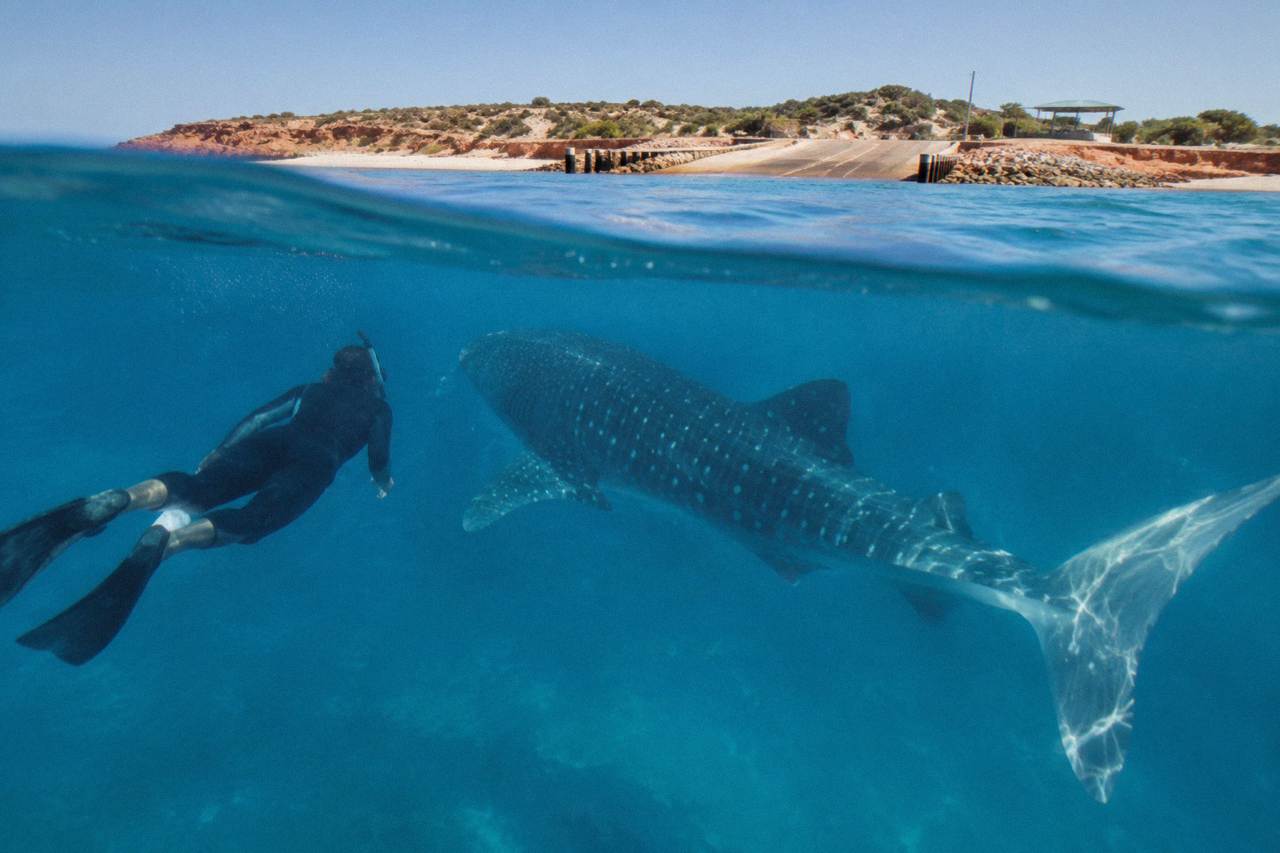
Flash photography and cameras on extension poles are banned under the DBCA whale shark interaction protocol, and swimmers must stay 3 metres from the head or body and 4 metres from the tail. Handheld GoPros are generally permitted. The Coral Bay Ecotours whale shark listing states a photo package is included, and the Ningaloo Marine Interactions best-of listing is titled with wetsuits and photos.
Swimming with whale sharks at Ningaloo Reef puts a camera-toting snorkeller within metres of the largest fish in the ocean, in water that shifts from glassy to choppy within an hour. The photographs people bring back from these tours are often the single most durable souvenir of the trip, which is why the photography question sits at the centre of so many booking decisions. Some buyers pick their operator almost entirely on whether a professional photographer rides along.
The rules around cameras at Ningaloo are not operator house rules. They sit inside a legislated interaction protocol written by the Department of Biodiversity, Conservation and Attractions, and they apply to every licensed commercial tour. On top of that sit the practical realities of the day: a fast-moving animal, a group of up to ten swimmers, and water that averages roughly 28 degrees in March and cools to about 23 degrees by September.
This guide covers the camera rules exactly as written, what the listings on this site actually state about included photography, and the honest physics of getting a frame worth keeping.
What Are The Camera Rules For Whale Shark Photos At Ningaloo?
The DBCA interaction protocol bans flash photography and cameras on extension poles for anyone swimming with a whale shark at Ningaloo, and swimmers must stay at least 3 metres from the animal's head or body and 4 metres from its tail. Touching or riding the shark, restricting its movement, and motorised propulsion aids are all prohibited, and no more than 10 swimmers may be in the water at one time.
These are not suggestions. The protocol sits under Western Australian legislation and is a licence condition for every commercial operator in Ningaloo Marine Park, which is why a guide on the boat will repeat them at the morning briefing with the same wording whether you swim out of Exmouth or Coral Bay. The department's whale shark management page states the full swimmer and vessel protocols, and the official Gujawari information guide adds a recreational detail worth knowing: swimming with a whale shark is limited to a maximum of 60 minutes, and scuba diving is not permitted at all.
For a photographer, the two bans that matter most are flash and poles. No flash means your camera has to work with ambient light, which at Ningaloo is usually generous: the water is clear and the animals are surface-oriented, so most shooting happens in the top few metres where sunlight is strong. No extension poles means no selfie sticks held out toward the shark, which in practice is also a distance-control device: a pole invites the swimmer to close the 3 metre gap, and the gap is the rule.
| Rule | What it means for your camera |
|---|---|
| No flash photography | Ambient light only; disable the flash before you enter the water |
| No cameras on extension poles | Handheld only; selfie sticks stay on the boat |
| Stay 3 m from head or body, 4 m from tail | Wide lenses win; you cannot close the distance for a close-up |
| Maximum 10 swimmers in the water | Your frame will likely include fins and other swimmers |
| No touching, riding or restricting movement | No chasing to set up a shot |
| No SCUBA, 60 minute swim cap | Snorkel only, and the interaction window is finite |
The vessel side of the protocol shapes photos too. Only one boat at a time may hold "contact" with a shark, inside a 250 metre approach zone, for up to 90 minutes at no more than 6 knots, and boats show both a whale shark flag and dive flags while swimmers are in the water. That is why your hero shots are never taken from the boat at speed; they are taken in the water, in the quiet minutes after the skipper positions ahead of the animal's line of travel. If you want the full background on how those in-water rules play out across a whole day, the whale shark swim rules guide covers the protocol swimmer by swimmer.
Which Ningaloo Tour Listings Include A Photographer Or Photo Package?
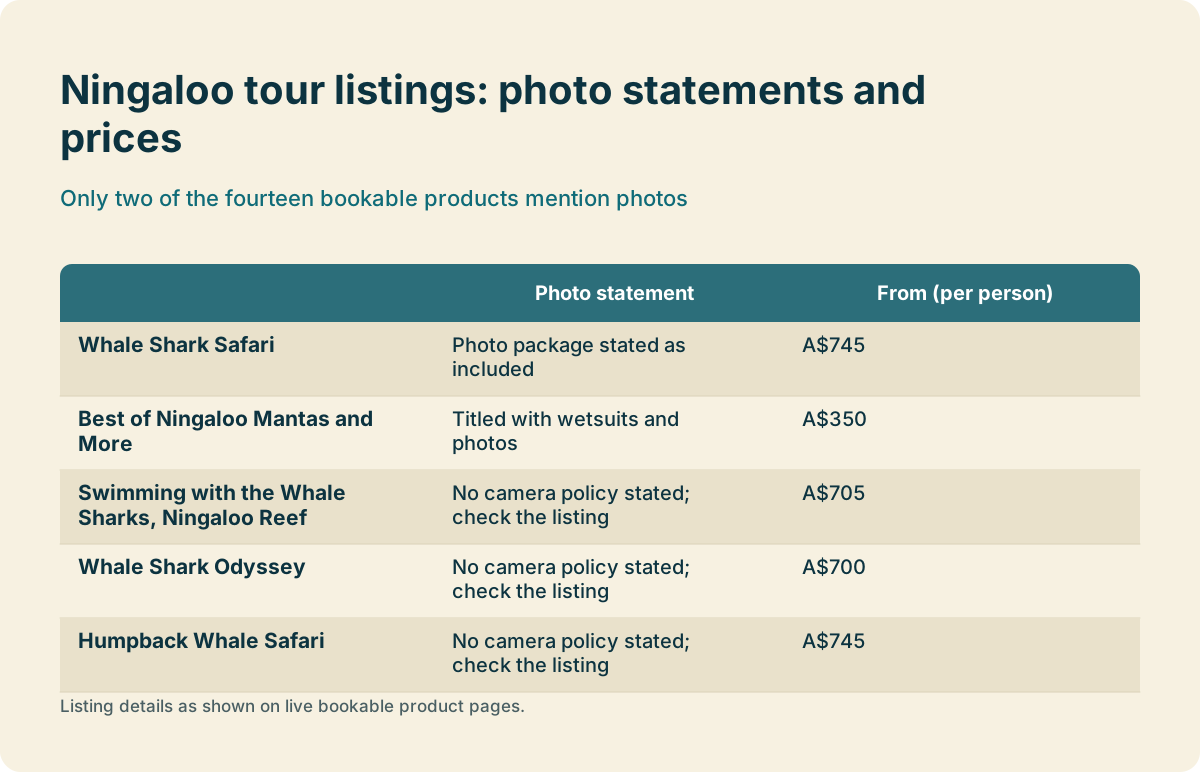
Several listings on this site's roster state photography in what they offer. Coral Bay Ecotours' Whale Shark Safari and Humpback Safari both list a photo package, Ningaloo Blue's whale shark swim lists free photos, and the Whale Shark Odyssey from Ningaloo Marine Interactions includes a photo package of your day. Some other listings mention photos too, but where a listing says nothing, the honest answer is to check the live booking page before you book.
Operator pages around Exmouth often mention complimentary photography, and what is actually included varies from listing to listing. The table shows what several of the listings state, so check the listing for your tour before you book. The distinction matters because photo inclusion is a genuine tie-breaker: a professional who shoots every swim and hands over the files removes the pressure of getting it right yourself in a 60 minute window.
| Listing | Operator | Photo statement on the listing | From (per person) |
|---|---|---|---|
| Whale Shark Safari | Coral Bay Ecotours | Photo package stated as included | A$745 |
| Best of Ningaloo Mantas and More | Ningaloo Marine Interactions | Titled with wetsuits and photos | A$350 |
| Swimming with the Whale Sharks, Ningaloo Reef | Ningaloo Blue | Free photos listed as included | A$705 |
| Whale Shark Odyssey | Ningaloo Marine Interactions | Photo package of your day listed as included | A$700 |
| Humpback Whale Safari | Coral Bay Ecotours | Photography package listed as included | A$745 |
The Coral Bay Ecotours Whale Shark Safari runs 8 to 9 hours from Coral Bay with a group of 20, is rated 4.8 from 173 reviews, and includes a meal, though note the listing's exclusions: the park fee is extra, at $20 per adult and $10 per child payable before departure. Free cancellation applies. If a photo package is the thing that decides your booking, this listing is the clearest statement of it on the roster.
The Best of Ningaloo listing from Ningaloo Marine Interactions is a manta-focused day rather than a whale shark swim, 7 hours from Coral Bay with a group of 20, rated 5 from 274 reviews and from A$350 per person, with a meal stated and free cancellation. Its card name, "Manta Day, Wetsuits and Photos", puts photography in the product's own title, and mantas hold a photographic advantage whale sharks cannot match: the reef manta population at Coral Bay is resident year-round and the animals often loop cleaning stations, giving a shooter repeated passes rather than one fast transit.
For everyone else, the practical comparison is between the swim listings on the roster. The trio below spans the range: an Exmouth departure with hotel pickup, the Coral Bay safari with its stated photo package, and the manta day that names photos in its title.
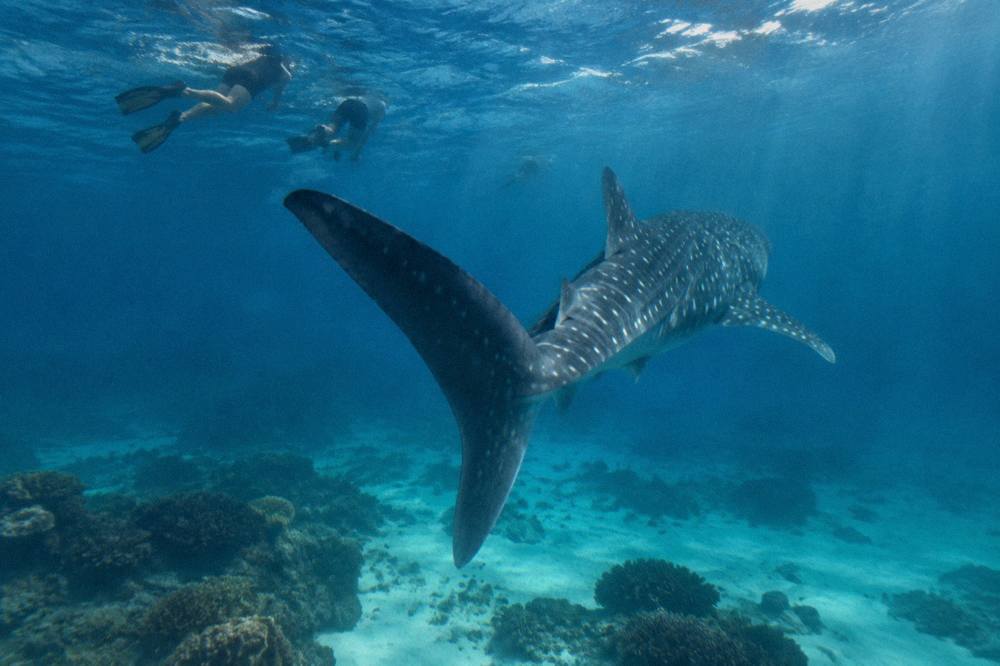
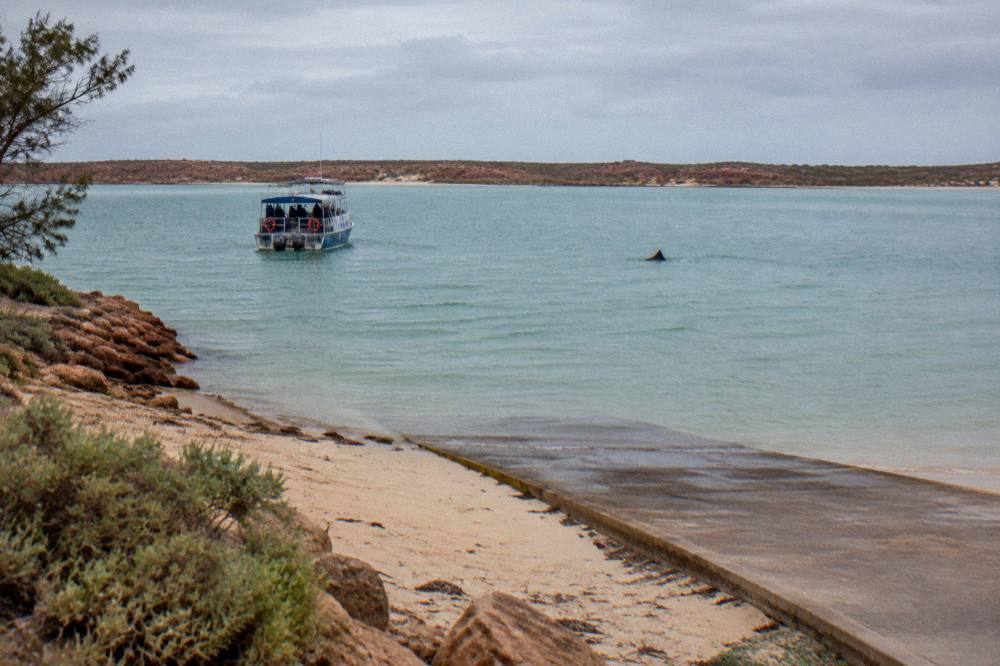
The featured swim on this site, the Ningaloo Blue whale shark tour from Exmouth, illustrates why the photo question is worth asking before you pay. The listing states hotel pickup from Exmouth or the Tantabid boat ramp, a group of 18, a 6 to 7 hour day, a meal, and a rating of 4.8 from 219 reviews, from A$705 per person. The listing includes free photos, and it states plainly that the sale is final: non-refundable. Most other swims on the roster carry free cancellation, so this one rewards asking the operator directly about photos before booking.
Should You Rely On Included Photos Or Bring Your Own Camera?
Bring your own camera even when a listing includes a photo package, because the two cover different failures: the included photographer captures the whale shark reliably but cannot shoot your specific frame, while your own handheld GoPro gets your point of view but can flood, fog or simply miss. The DBCA rules permit handheld cameras without flash, so your own gear is legal on every licensed tour.
The strongest position is both. An included package de-risks the day: if the animal appears for ninety seconds at the end of a long search, a professional shooting every swim has done this hundreds of times and knows the light, the distance rule and the animal's speed. Your own camera, meanwhile, is the only one that captures the seconds before and after the swim: the boat on the outside reef, the inner reef snorkels that fill the morning while the spotter plane searches, the turtle at the surface on the ride home.
The genuine downsides of your own camera are mundane and repeated on every tour. Flooded housings from a single unseated O-ring. Fogged lenses from a hot boat deck and cool water. A full memory card at the exact wrong moment. And the most common failure: a swimmer so busy operating a camera that they lose track of the guide and the shark, which is why many crews ask first-timers to leave the camera for the first jump and simply look. Whether a given tour permits personal underwater cameras at all during the swim is a per-operator question; the rules ban flash and poles, not cameras, but individual licence conditions and briefing rules vary, so check the listing or ask the operator before you pack.
| Consideration | Included photo package | Your own handheld camera |
|---|---|---|
| Guaranteed frames of the shark | Yes, if a swim happens | Depends entirely on you |
| Your point of view and framing | No | Yes |
| Cost | Stated on the listing, if at all | Purchase plus housing plus risk |
| Legal under DBCA rules | Yes | Yes, no flash and no poles |
| Covers the whole day (boat, reef snorkels) | Varies by operator | Yes |
| Failure mode | Operator misses your group | Flood, fog, full card, missed moment |
One more decision factor belongs here rather than later: the booking terms. If photography is the heart of the trip for you, the cancellation policy is part of the photographic plan, because rough weather and unusable light are the same event. Across the roster, the Coral Bay Ecotours safari, the Ningaloo Marine Interactions products and the reef and manta tours carry free cancellation, while the Ningaloo Blue swim states the sale is final. Weigh that alongside the photo terms.
How Do You Actually Get A Good Whale Shark Photo At Ningaloo?
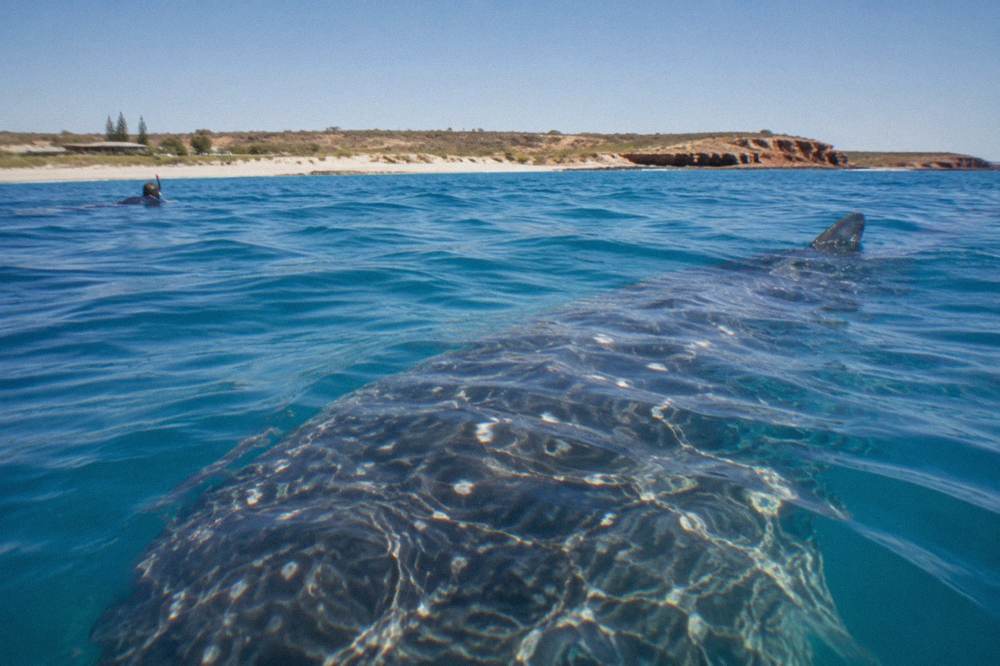
Position ahead of the shark and slightly to the side, let it swim past you rather than chasing it, and shoot wide with the sun behind you: the 3 metre rule makes long lenses pointless and the animal's speed makes close framing almost impossible. Most keepable whale shark frames are taken in the first ten seconds of a pass, before other swimmers enter the frame.
The mechanics of a whale shark swim dictate the photograph. The skipper drops the group ahead of the animal's direction of travel, exactly as the vessel protocol requires, and the shark then swims through the group's position. You are not pursuing; you are receiving. That means the frame you get is a function of where you float when the drop happens, and the best photographers on the boat are the ones who listened to the guide's positioning instruction rather than staring at their screen.
Water clarity is on your side. Ningaloo's outer reef water in the March to July core season is typically clear, with visibility of 10 to 15 metres or more common, and the animal spends much of its time near the surface feeding, so your subject is usually front-lit from above. Shoot slightly upward to put the shark against the bright surface rather than the darker deep, keep the sun behind your shoulder, and let the animal fill the lower frame with water above it for scale. The white spotted pattern over a dark body reads well from almost any angle, but the classic frame is a side profile with the tail trailing out of frame and a human silhouette somewhere for scale.
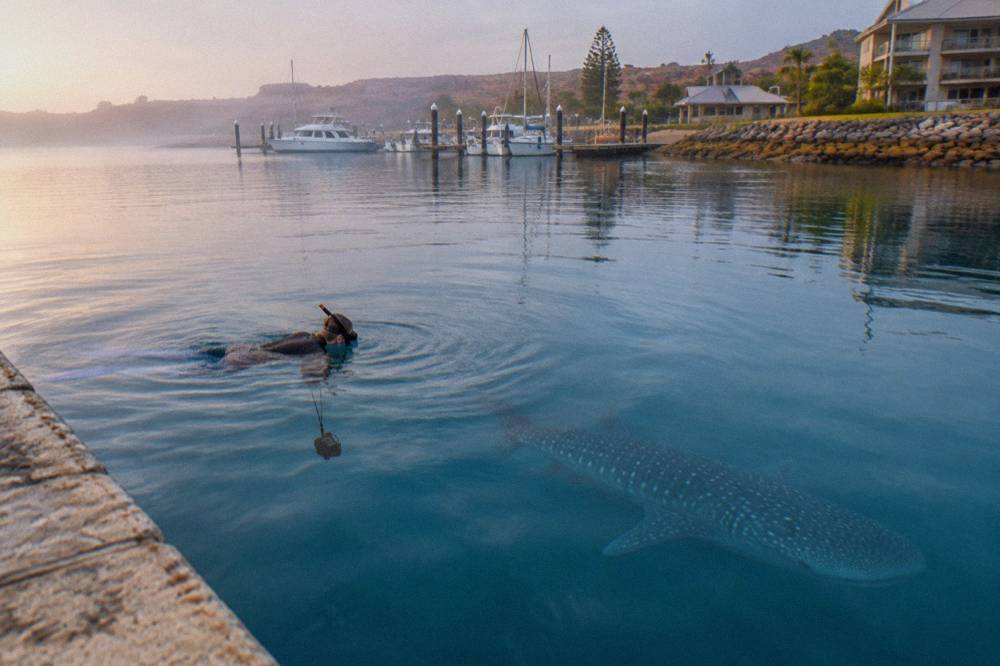
Repeat jumps are the norm. A day tour out of Exmouth or Coral Bay typically leaves accommodation around 7:00 am and returns between 4:00 and 5:00 pm, with two inner reef snorkels in the morning while the spotter plane searches, then repeated drops on the shark through the middle of the day in groups of up to ten with a guide. Each pass is another attempt at the frame, which is why the what happens on a Ningaloo whale shark swim guide is worth reading before you plan your shooting: the day's rhythm, not the camera, decides how many chances you get.
Etiquette is also photographic strategy. Ten swimmers in the water means nine other sets of fins between you and the animal on some passes, and the swimmer who splashes hardest gets the worst position because the guide pulls them back. Calm kicking, a horizontal posture, and patience produce cleaner frames than sprinting. If you want to see how the whole search-and-drop sequence works, the piece on how spotter planes find whale sharks at Ningaloo traces the aircraft-to-boat-to-swimmer chain your photo depends on.
What Camera Gear And Settings Suit Ningaloo Water?
A wide lens, a fast shutter, and the flash disabled are the core settings for Ningaloo whale shark photos, and sea surface temperatures run from about 28 degrees in March and April down to about 23 degrees by September, so the wetsuit you wear matters more to your comfort than any camera choice. Compact action cameras in housings suit most swimmers; anything beyond handheld is banned.
Starting settings for an action camera or compact underwater rig: the widest field of view available, shutter speed fast enough to freeze a moving animal, and auto white balance nudged toward the blue, with the flash physically switched off the night before, not at the swim step. Whale sharks move faster than they appear to, and the classic beginner result is a beautifully exposed blur. Burst mode earns its battery cost here.
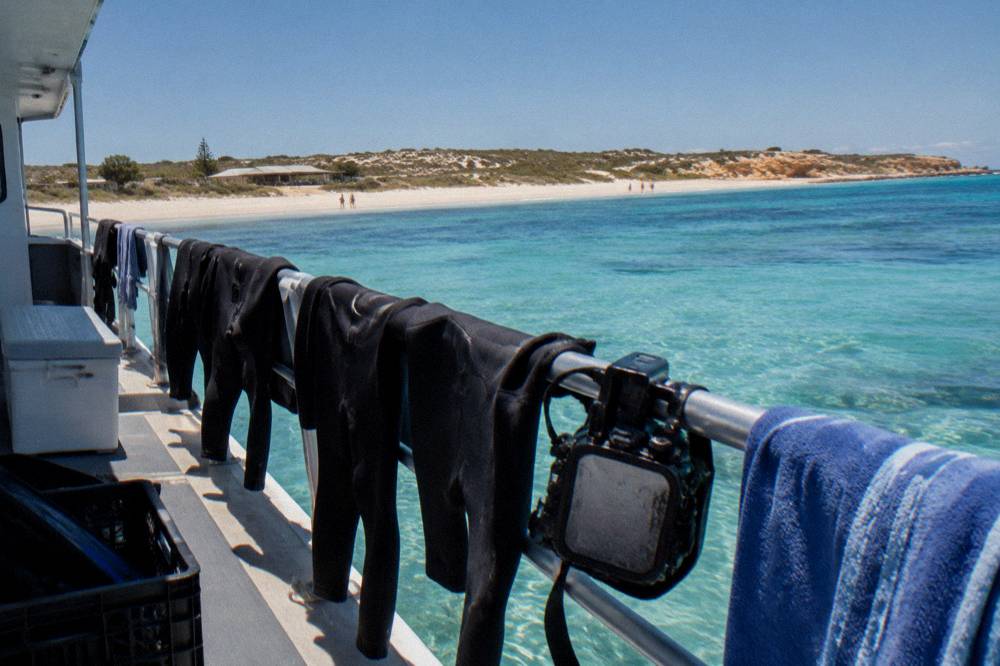
The seasonal water story matters for two reasons. Warmer early season water, averaging about 28 degrees in March and April, means lighter suits and longer comfortable sessions at the surface waiting for drops. By August and September, averages near 23 degrees make a thicker wetsuit standard, and a cold swimmer holding a camera shudders on the shutter button. Most tours supply wetsuits as part of the gear; the Best of Ningaloo listing even carries them in the product name alongside photos. Gear supply varies listing to listing, so confirm what is provided before you bring your own.
| Month | Season stage | What it means for photos |
|---|---|---|
| March | Peak season start, warmest weeks | Bright surface light, light or no wetsuit, long comfortable waits |
| April | Peak season, warm water | Warmest water, peak clarity days |
| May | Late peak, cooling begins | Still warm, first cooler mornings |
| June | Core season, water cooling | Thicker suits appearing, light softer |
| July | Core season tail | Full suits, good visibility |
| September | Coolest period, fewer departures | Coolest, suits standard, fewer swim departures |
Fogging deserves its own sentence because it ruins more Ningaloo memory cards than any animal behaviour. A housing moved from a hot deck into cooler water mists instantly unless you prepare it: keep the camera in shade or a bag until the last moment, use anti-fog inserts if the housing allows them, and enter the water before powering on. A flooded or fogged camera also cuts both ways for the day's other photographs, which is why the general what to bring on a whale shark swim checklist treats camera prep as packing, not photography.
Do You Need An Expensive Camera To Photograph A Whale Shark?
No: the constraint at Ningaloo is distance and speed, not sensor size, and a current action camera in a sound housing produces publishable whale shark frames because the subject is huge, close to the surface and front-lit. The DBCA ban on flash and poles removes the gear advantages that matter in most underwater photography anyway.
Underwater photography is normally a lighting problem, and lighting gear is exactly what the rules prohibit. That flattens the difference between a basic action camera and a professional rig more than most buyers expect. The whale shark is the size of a bus, the water is clear, and the shooting depth is a few metres in full sun. Those are the friendliest possible conditions for a small sensor.
What money does buy is reliability and redundancy: better housings with stronger seals, spare batteries, wider lenses that let you stay further from the tail and still fill the frame. What it does not buy is the photograph, because the photograph comes from positioning, calm swimming and the timing of the drop. A swimmer with a two-year-old action camera who listens to the guide will out-shoot a swimmer with a housed mirrorless body who chases. For a sense of what the encounter actually looks and feels like before you invest in gear, the are whale shark tours worth it piece sets out the honest case both ways.
There is also a wildlife-photography courtesy angle specific to this animal. Whale sharks at Ningaloo are an endangered, specially protected migratory species under both state and national law, and the same protocols that ban flash and poles exist because bright lights and close approaches change the animals' behaviour. A photographer who respects the 3 metre rule is not just compliant; they are photographing an animal that has not been disturbed, which is visible in the frame as relaxed, straight-line swimming rather than a diving, evasive profile.
What Can Go Wrong With Whale Shark Photos At Ningaloo?
The four common failures are fogged or flooded housings, missed moments from unfamiliar gear, exhausted swimmers holding cameras badly late in the day, and quiet days when no shark is found at all, because whale sharks are wild animals and no listing on this roster promises a sighting. Every one of these is manageable except the last, which is why photo terms matter when you choose a tour.
Fog and flooding are prevented on the boat, not in the water, as covered above. Missed moments are prevented by learning your camera's one-handed operation before the trip: practice turning it on, switching to burst, and starting recording with one hand while treading water. Late-day fatigue is prevented by handing the camera to a crew member or stowing it for the final snorkel and simply watching.
The quiet day deserves honesty. No operator can promise a whale shark, and this site prints no sighting guarantees because none of the roster listings state one. The regional tourism body is explicit that there is no guarantee outside the main March to August window, and Exmouth tours met whale sharks as late as early November in 2024 and 2025, which means shoulder-season bookings trade certainty for empty boats. What a stated photo package changes on a quiet day is nothing about the shark and everything about what you still take home: the better operators' photographers shoot the reef snorkels, the mantas, the humpbacks that pass from June to November, and the boat, so the day still yields images.
That shoulder-season reality is also where the non-whale-shark roster earns its place in a photography plan. Coral Bay's resident reef mantas run year-round, and the manta and reef listings are bookable when the whale shark boats have stopped or the sharks have thinned out. The Coral Bay Ecotours Marine Eco Safari, rated 4.8 from 565 reviews and from A$350, and the Ningaloo Reef Dive full-day manta trip, rated 4.8 from 106 reviews from A$260, both photograph reliably in a way a wild whale shark transit never can, because mantas circle and return. The Ocean Eco Adventures luxury manta cruise from Coral Bay, 4.7 from 6 reviews from A$600, states plainly that sightings are not guaranteed, which is the honest register every wild-animal listing deserves.
The nine-hour Whale Shark Odyssey from Ningaloo Marine Interactions deserves a mention for photographers specifically, and not only for the extra hour on the water: it is rated 5 from 23 reviews, from A$700, departs Coral Bay, carries 20 guests, and offers free cancellation, though no meal is listed on it, so pack accordingly for a long shooting day.
Common Questions About Whale Shark Photos At Ningaloo
Can you bring your own camera on a Ningaloo whale shark swim?
Handheld cameras without flash are permitted under the DBCA interaction protocol, and cameras on extension poles and flash photography are banned. Whether a particular tour allows personal underwater cameras during the swim itself is a per-operator rule on top of the law, so check the listing or ask the operator before your trip.
Is a GoPro allowed when swimming with whale sharks at Ningaloo?
Generally yes, as a handheld camera with the flash off and no pole attached. The protocol restricts how you use it, not the device: stay 3 metres from the shark's head or body, 4 metres from the tail, and never touch or restrict the animal to set up a shot.
Which tours include a photographer at Ningaloo?
On this site's roster, several listings spell out their photo terms: Ningaloo Blue includes free photos, the Whale Shark Odyssey lists a photo package, and the Coral Bay Ecotours Whale Shark Safari and Humpback Whale Safari both mention photography packages. The Best of Ningaloo listing is titled with wetsuits and photos. For any other tour, check the live listing.
Why is flash photography banned with whale sharks?
The DBCA protocol exists to stop interactions from changing the animals' natural behaviour, and bright artificial light is one of the disturbances it rules out, alongside touching, riding, restricting movement and motorised propulsion aids. Whale sharks at Ningaloo are a specially protected migratory species, so the ban applies to every swimmer, commercial or recreational.
How close can you get to a whale shark for a photo?
Swimmers must stay at least 3 metres from the head or body and 4 metres from the tail, measured at all times including while shooting. In practice the animal often swims closer to you than the rule allows you to swim to it, in which case you back away rather than shoot.
Do you get photos if no whale shark is found?
It depends on the operator and the listing. Where a photo package is stated, as on the Coral Bay Ecotours whale shark listing, the photography usually covers the whole day, including reef snorkels and other wildlife, but no roster listing promises a sighting, and whale sharks are wild animals. Read the listing's own terms before booking.
The short version for anyone packing a bag: bring a small handheld camera, kill the flash, leave the pole at home, and treat the included-photo question as a real line in your tour comparison. A whale shark photographed properly, at the rule's distance, in Ningaloo's surface light, is a photograph that lasts a lifetime, and Whale Shark Tours Exmouth exists to help you pick the boat that gives you the best chance of taking it.