What Should You Bring On A Ningaloo Whale Shark Swim?
A practical packing list for a Ningaloo whale shark swim: what operators supply, what to wear, camera rules, food, and seasickness kit for a day on the water off Exmouth and Coral Bay.
What Should You Bring On A Ningaloo Whale Shark Swim?
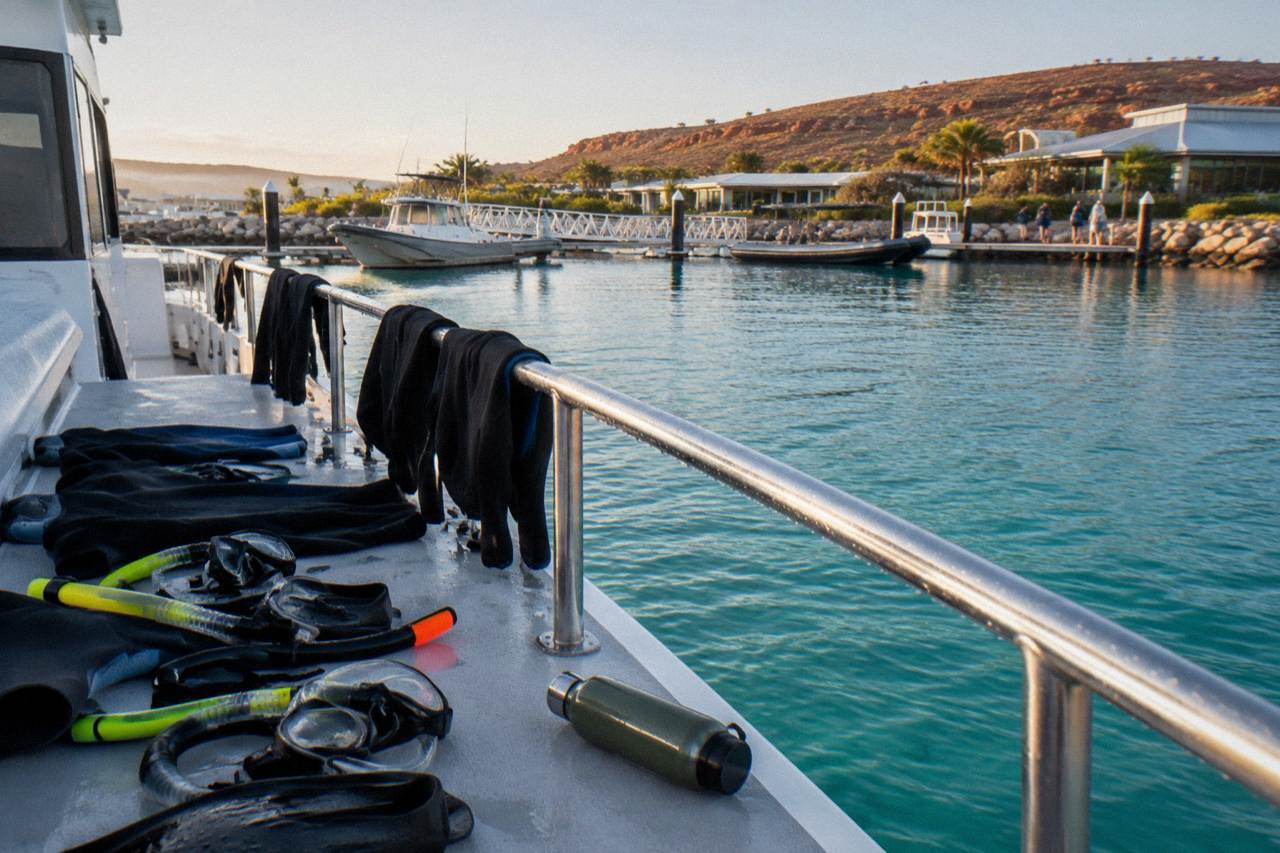
You need surprisingly little: swimmers, a towel, reef-safe sunscreen, a hat, sunglasses, a warm layer, any personal medication, and a water bottle, because the operator supplies the wetsuit, snorkel gear, flotation and, on most listings, food. A typical Ningaloo day runs from about 7:00 am to 4:00 or 5:00 pm, so pack for a full day of sun, wind and salt rather than a quick snorkel.
The short answer is that a whale shark swim is a full-day boat trip built around a handful of short, high-energy swims. Operators keep the boat at a meeting point or pick you up from your accommodation, run reef snorkels while spotter planes search, then rotate small groups into the water when a shark is found. Everything technical is provided. What ruins days is the ordinary stuff: sunburn, seasickness, chill on the ride home, and a phone with no battery left for the photos the crew sends you later. If you're still comparing operators, our guide to the best whale shark tour in Exmouth explains how the local crews differ before you pack a single thing.
The one thing you cannot bring into the water freely is a camera on a pole or with flash, both banned under the park's interaction rules. This packing list is built from what the licensed operators on this site actually state on their listings, plus those official rules that govern what goes in the water at Ningaloo Marine Park.
If you are still choosing a tour, the trio below covers the main formats: the full swim day, a longer wildlife snorkel, and a short reef trip for a calmer day on the water.
For a fuller walkthrough of the day itself, from the first safety briefing to the last jump, see the guide to what happens on a Ningaloo swim. For season timing, the best month for whale sharks at Ningaloo matters more than any gear choice: whale sharks visit between March and July, per the state parks authority, with operators running tours to August and sightings often continuing into October.
What Do Ningaloo Operators Supply On The Day?
On the whale shark swim listings, the operator supplies the wetsuit, snorkel, mask, fins and flotation gear, and most include food. The Ningaloo Blue swim from Exmouth, from A$705 per person and rated 4.8 from 219 reviews, states a meal and hotel pickup on its listing. The Coral Bay Ecotours Whale Shark Safari, from A$745, also states a meal, but adds a park fee payable before departure. If you fancy a swim outside tour hours, our plain guide to swimming at Exmouth's beaches covers currents, stingers and water temperatures at spots like Turquoise Bay and Town Beach.
The pattern across the licensed fleet is consistent: heavy gear is the operator's problem, comfort items are yours. Wetsuits matter more than visitors expect, because sea temperatures at Ningaloo slide from roughly 28 degrees in March and April to about 24 by July and 23 to 24 through September and October. A supplied wetsuit handles that comfortably, which is why every serious operator carries them in a range of sizes.
Food is the main point of difference between listings, and it is worth reading before you pack. Two of the three swim listings on this site state a meal or refreshments. The third, the nine-hour Whaleshark Odyssey from Coral Bay, states none, so for that trip bring your own food and check the listing for the latest inclusions before you rely on it. The Coral Bay Ecotours safari adds the DPaW park fee of A$20 per adult and A$10 per child, payable before departure.
| Listing | Base | Price from | Rating | Meal on listing | Notes |
|---|---|---|---|---|---|
| Ningaloo Blue whale shark swim | Exmouth | A$705 | 4.8 from 219 reviews | Meal stated | Hotel pickup; listing states sale is final |
| Coral Bay Ecotours Whale Shark Safari | Coral Bay | A$745 | 4.8 from 173 reviews | Meal stated | DPaW park fee extra: A$20 adult, A$10 child |
| Ningaloo Marine Interactions odyssey | Coral Bay | A$700 | 5 from 23 reviews | No meal listed | Nine hours; bring your own food |
Away from the swim itself, the same logic applies on the reef and wildlife trips. The Cape Immersion six-hour snorkel and wildlife adventure, from A$275 and rated 4.9 from 138 reviews, states a meal and offers pickup in Exmouth. The three-and-a-half-hour Cape Immersion turtle tour, from A$145 and rated 4.8 from 197 reviews, lists no meal, so a packed lunch for after the trip is the safe call.
Wondering which day suits you before you pack for it?
The swim listings on this site generally carry free cancellation, the Ningaloo Blue product being the exception: its listing states the sale is final. Where free cancellation applies you can lock in a date and adjust later, which is worth doing given how far ahead peak-season trips fill. More on that in the guide to booking whale shark tours in advance.
What Sun Protection And Clothing Actually Work On The Boat?
Pack reef-safe sunscreen, a hat with a strap, polarised sunglasses, a long-sleeve rash vest or UPF shirt, and one warm, windproof layer for the ride home, and apply the first coat of sunscreen before boarding. Ningaloo days are long, the Australian sun is fierce even through cloud, and ordinary sunscreen washes off swimmers straight onto the reef. A rash vest doubles your protection in the water without relying on sunscreen alone.
The sunscreen point deserves emphasis. Ningaloo Reef is a World Heritage area and a fringing reef you can swim to from the beach; whatever is on your skin when you enter the water ends up on the coral. Reef-safe zinc-based formulations are widely available in Exmouth and Coral Bay shops if you cannot find them at home. Crews on licensed tours will remind you, and some only allow application at certain points in the day so it has time to bind before you swim.
Footwear is simpler than people make it. Boats are barefoot, so thongs or sandals that slip off easily are ideal, with a pair of reef shoes if you plan shore swims off your own schedule at places like Turquoise Bay. For clothing, the biggest miss most first-timers make is the warm layer: even in April the wind on a fast boat can strip heat fast, especially in a wet wetsuit, and the trip home is when people shiver.
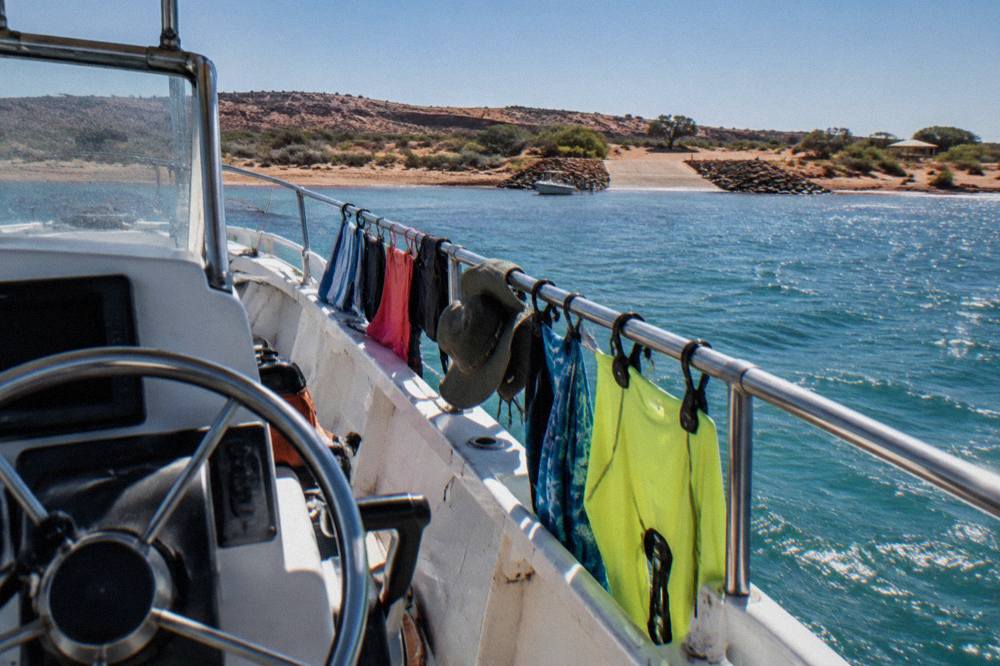
Eyewear and hats need retention. Anything you wear on a moving boat should have a strap or a leash, because the wind and spray of a run between snorkel sites will take an unsecured hat overboard in seconds. A cheap pair of sunglasses you can afford to lose beats an expensive pair you worry about all day.
What Camera Gear Can You Use In The Water With Whale Sharks?
The official rules for Ningaloo Marine Park ban flash photography and cameras on extension poles around whale sharks, and ban motorised propulsion aids outright, so a handheld GoPro or compact underwater camera without flash is the legal baseline, but many commercial operators restrict personal cameras during swims for safety, so check your listing before packing one. Keep 3 metres from the head and body and 4 metres from the tail, and never touch or ride the animal.
These are not operator house rules, they are the state's interaction protocol, set by the Department of Biodiversity, Conservation and Attractions, which licenses every commercial whale shark tour in the park. The same protocol caps swimmers at ten per group, limits a vessel's time with a shark, and requires commercial boats to fly specific flags while swimmers are in the water. You can read the full protocol on the department's whale shark management page.
The practical consequence for packing is this: bring a camera, but bring the right one and expect to follow crew direction on when you may use it. A handheld action camera on a short tether is the safest choice. Anything with a pole mount, a trigger flash or a bulky housing is likely to be vetoed, and arguing the point on the boat helps nobody, least of all the shark. The rest of the planning pages sit on Whale Shark Tours Exmouth.
| Item | Allowed in the water? | Notes |
|---|---|---|
| Handheld GoPro or action cam | Yes, if the operator permits | No pole, no flash; confirm on the listing |
| Underwater compact camera | Yes, if the operator permits | Keep 3 m from head and body, 4 m from tail |
| Camera on an extension pole | No | Banned under the interaction protocol |
| Flash photography | No | Banned under the interaction protocol |
| Phone in a case | Generally yes on deck | Risky in the water; crew photos are often included |
One more thing worth knowing: many crews shoot photos of your swim themselves, and those images are often part of the package. For a fuller rundown of how photos work on these tours, including what operators typically include, see the guide to whale shark photos at Ningaloo. If your heart is set on your own footage, the guide to the swim rules at Ningaloo covers the full protocol in plain language.
If you want a full wildlife day on the water with plenty of camera-friendly reef time between swims, the six-hour Cape Immersion snorkel is a good format: small groups of 12, a meal on the listing, and a slower pace than the swim boats.
What Food, Drink And Seasickness Kit Should You Pack?
Bring a full water bottle, light snacks even when a meal is listed, no alcohol the night before, and take seasickness medication well before departure if you are prone to it, because the boats operate in open ocean outside the reef where chop and swell are normal. Standard advice across the fleet: eat lightly, stay on deck in fresh air, and tell the crew early if you feel unwell.
The seasickness point is the one that quietly wrecks the most trips. Whale shark swimming happens outside the protective reef, in open water where conditions change through the day. The skipper makes the final call on whether it is safe to run, and tours do get rescheduled or refunded when the operator cancels for weather, but a guest who is sick does not get their money back on most terms. If you know you are prone, medication taken the night before and again before boarding works far better than tablets swallowed when you already feel green.
For the Ningaloo Marine Interactions odyssey specifically, the no-meal-listed point from earlier matters twice over on a nine-hour day: pack a real lunch, not just snacks. Even on listings that include catering, having your own muesli bars or fruit helps on long transit legs, and dietary needs are always safer covered by your own supplies than assumed.
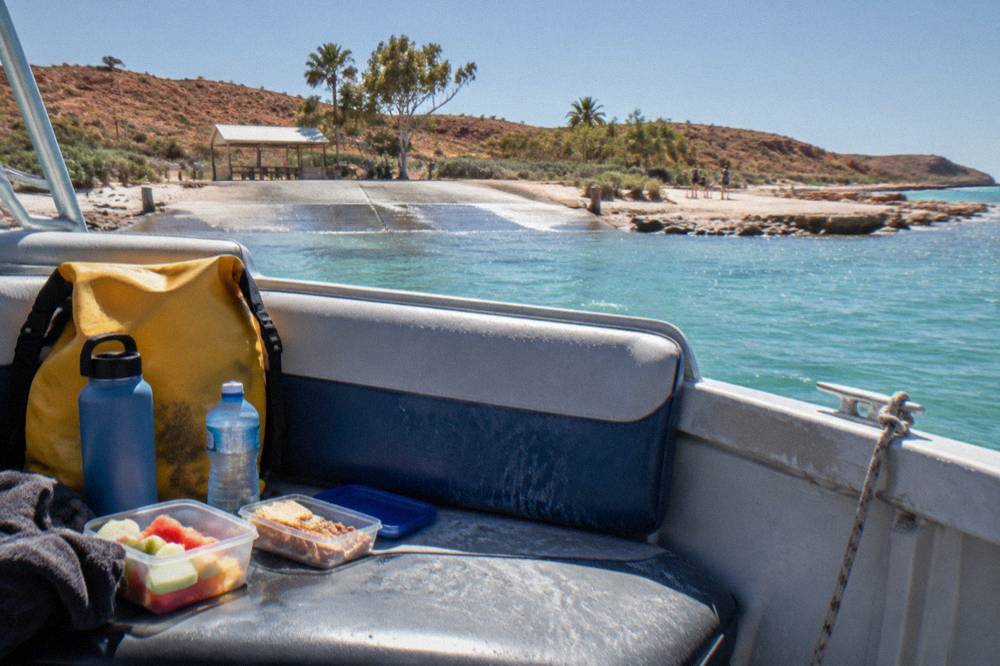
Hydration and alcohol are linked. A day of sun, salt and swimming dehydrates people faster than they notice, and a big night before compounds both seasickness and fatigue. Water is usually available on board, but arriving with your own bottle means you can drink on the bus out to the ramp, which for Exmouth departures starts around 7:00 am.
What Should Go In Your Dry Bag?
A small dry bag or day pack should hold a towel, a warm layer, your medication, a phone or camera, sunscreen for reapplication, spare contact lenses or glasses, and cash or a card for any extra fees, with everything you cannot afford to lose either left at your accommodation or in a zip-lock inside the bag. Boats provide storage but not individual lockers, and spray reaches deck bags on the run out.
The towel earns its place twice: after the final swim and after the onboard shower or rinse most boats offer on the way home. The warm layer sits in the bag until the return leg, which is exactly when the wind chill arrives. Medication includes the obvious daily prescriptions plus anything specific to your day: motion sickness tablets, asthma inhalers, and a spare of anything where a lost item would end your swim.
A few practical additions separate good days from great ones. A contact-lens wearer who loses a lens on the first reef snorkel swims blind for the rest of the day, so spares or a prescription mask are worth the space. Reef-safe lip balm with SPF fails more often than sunscreen and hurts more. And a phone battery pack matters because boats rarely have charging points and the photo album the crew sends you arrives at day's end.
| Item | Why | Priority |
|---|---|---|
| Towel | After swims and the rinse on the way home | Essential |
| Warm, windproof layer | The return leg is cold in any month | Essential |
| Medication, plus spares | Seasickness, prescriptions, inhalers | Essential |
| Water bottle | Hydration from the 7:00 am pickup onward | Essential |
| Reef-safe sunscreen and lip balm | Reapplication between swims | Essential |
| Spare contact lenses or prescription mask | Losing one mid-day is common | High |
| Packed lunch and snacks | Only some listings state a meal | Depends on listing |
| Cash or card for park fees | The Coral Bay Ecotours safari charges a DPaW fee before departure | Only some listings |
| Battery pack and cable | Crew photos arrive after the trip | Nice to have |
The park fee line matters if you are booked on the Coral Bay Ecotours safari: its listing states the DPaW fee of A$20 per adult and A$10 per child is extra and payable before departure, so have a payment method ready. No other fee like it appears on the listings on this site.
For families packing for shorter days, the Cape Immersion turtle snorkel is a low-commitment option: three and a half hours on the water, from A$145, rated 4.8 from 197 reviews, with pickup offered from Exmouth, and no meal listed, so bring snacks for after.
What Should You Leave Behind On A Whale Shark Day?
Leave behind drones, spearfishing or fishing gear, glass bottles, bulky hard-shell suitcases, alcohol, and any expectation of a locker, and do not pack scuba gear because scuba diving with whale sharks is not permitted in the protocol at Ningaloo. Boats have limited dry storage shared by up to around twenty guests, so anything that does not fit in a soft day bag works against you and everyone else on board.
The scuba point surprises divers. The interaction protocol that governs Ningaloo swims is a snorkel-only framework, and the official whale shark guide for the park states plainly that scuba diving with these animals is not allowed. If you are a diver, the comparison between swimming and diving at Exmouth, and what each format offers, is covered in the guide to whale shark swims versus scuba diving.
Drones are the other frequent confiscation-in-spirit. Aircraft, including the spotter planes operators use to find sharks, work this airspace constantly during season, and unapproved drone flights around the boats and the animals are prohibited under the same management framework that licenses the tours. Leave it at the accommodation.
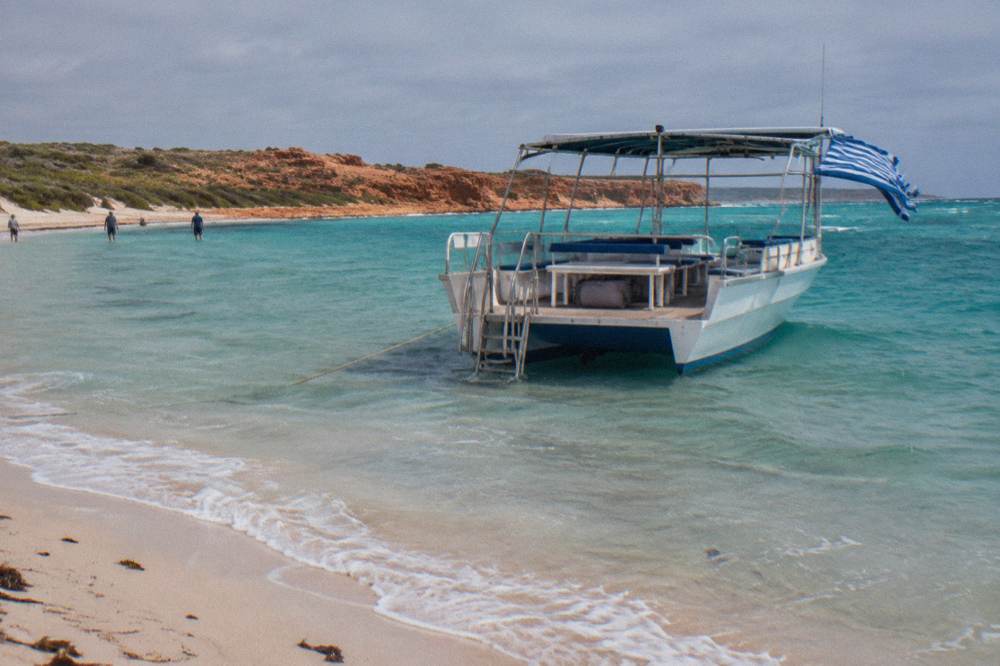
The rest is etiquette dressed as packing advice. Glass breaks on decks. Big bags block walkways on working vessels. Valuables you will anxiously check on all day belong in your room safe: the crew are focused on the water, not on guarding luggage. Bring less, and enjoy the day more, is the honest summary of every experienced guide's advice on the subject.
For everything that sits around the packing list, the regional tourism body's whale shark page covers the shape of a standard day, and the official Ningaloo Marine Park page confirms there is no park entry fee for the marine park itself, so the only fees to budget beyond your ticket are those an operator states on its listing.
If the full swim day feels like a lot of gear logistics, remember that the operators handle the heavy equipment and, on most listings, the food too. Your half of the bargain is sun protection, warmth, water and a camera that follows the rules. These three formats cover the range from full swim to easy reef day.
Common Questions About Packing For A Ningaloo Whale Shark Swim
Do I need to bring a wetsuit to swim with whale sharks at Ningaloo?
No. The licensed operators supply wetsuits in a range of sizes as part of the tour. Sea temperatures run from roughly 28 degrees in March and April down to about 23 to 24 from August to October, so the supplied suit is doing real work, especially late season.
Is food included, or should I bring lunch?
It depends on the listing. The Ningaloo Blue swim and the Coral Bay Ecotours safari both state a meal; the Ningaloo Marine Interactions odyssey lists none, so bring food for that nine-hour day. The Cape Immersion turtle tour lists no meal either. Always check the live listing before you pack.
Can I bring my own camera or GoPro?
A handheld camera without flash and without an extension pole fits the official rules, but many operators restrict personal cameras during whale shark swims for safety. Crews commonly shoot photos of your swim and include them. Confirm your specific tour's camera policy on its listing.
What extra fees should I have money ready for?
The Coral Bay Ecotours Whale Shark Safari states a DPaW park fee of A$20 per adult and A$10 per child, payable before departure. The marine park itself charges no entry fee, and no comparable fee appears on the other listings on this site.
What should I do about seasickness?
Take medication in advance if you are prone to it, avoid alcohol the night before, eat lightly, and stay on deck in fresh air looking at the horizon. No operator on this site's roster refunds for seasickness, so prevention is the only reliable strategy.
What Should You Bring On A Whale Shark Swim?
Swimmers already worn under your wetsuit, a towel, reef-safe sunscreen, a hat with a strap, sunglasses, a warm layer, a water bottle, your medication, and a handheld camera if the operator allows it. The operator supplies the wetsuit, snorkel gear and flotation, and food on most listings. Pack light: soft day bag only.