How Rare Is It To See A Whale Shark At Ningaloo?
An honest look at whale shark sighting odds at Ningaloo Reef: what the official numbers show, why tours find them so reliably in season, and what no operator can promise.
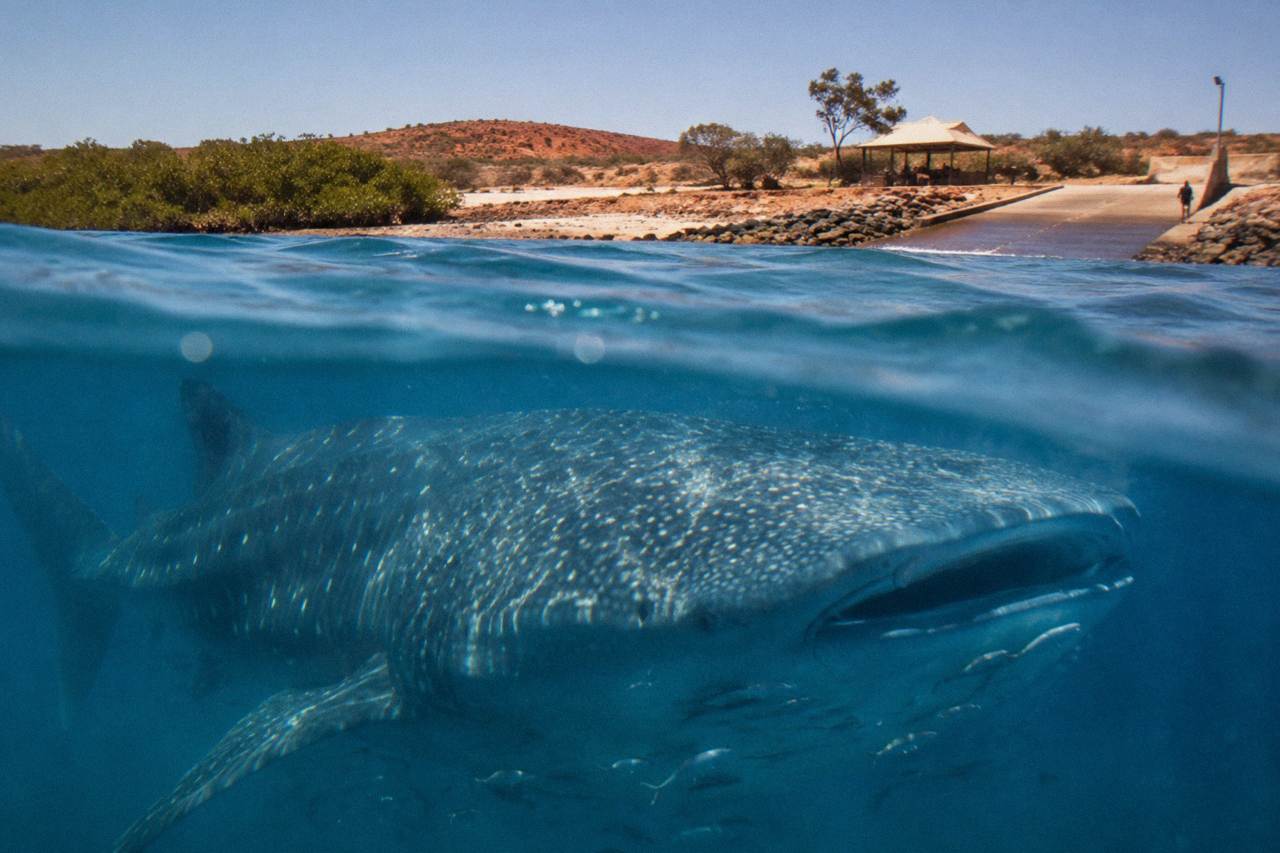
Whale sharks are the largest fish in the ocean, listed internationally as Endangered, and genuinely scarce across most of the world's seas. Yet at Ningaloo, 41,390 people swam with them in a single season in 2025, according to the regional tourism body's published figure. Both statements are true at once, and understanding why is the key to planning a trip that lives up to expectations. This article separates what the verified numbers actually show from the marketing language that surrounds them. For a wider comparison, our guide to the best place in the world to see whale sharks shows how Ningaloo measures up against every other destination on the planet.
The short version: Ningaloo is one of the very few places on the planet where whale sharks gather predictably in nearshore water, close enough to town that a full-day tour from Exmouth or Coral Bay can reach them. The Ningaloo Blue swim from Exmouth, the Coral Bay Ecotours safari and the Ningaloo Marine Interactions odyssey all exist because of that concentration. But whale sharks are wild animals, no official sighting-rate statistic exists, and no honest page can quote you a percentage. What follows is what can be verified, sourced and printed. Curious about the other big animals sharing that water, many swimmers start with the sourced answer to whether crocodiles ever appear at Ningaloo Reef before booking a trip.
How Rare Is It To See A Whale Shark At Ningaloo?
Seeing one on an in-season Ningaloo tour is common rather than rare, and that is a property of the place, not of the species. Ningaloo is one of only a handful of locations worldwide where whale sharks aggregate annually in shallow, nearshore water within reach of day boats, which is why 41,390 swims were recorded in the 2025 season. Globally the species is Endangered and encounters remain unusual almost everywhere else.
The reason is food. Each March and April, more than 200 coral species spawn on Ningaloo Reef in a mass event that triggers plankton blooms, and the meeting of the southward Leeuwin Current and the northward Ningaloo Current creates eddies that concentrate that food along the reef edge. Whale sharks arrive to feed on it, and they do so close to shore rather than far offshore. The department's own whale shark management page describes the March to July season at Ningaloo, and the traditional owners' Gujawari information guide records that sightings now extend as late as November in recent years.
That combination, an annual feeding aggregation within a protected marine park reached by licensed day boats from two small towns, is what turns a globally rare animal into a locally reliable one. Operators run to August in Exmouth and to the end of June in Coral Bay, with sightings often continuing to October, according to Australia's Coral Coast, the regional tourism body. In 2024 and 2025 Exmouth tour boats met whale sharks as late as early November.
It is worth being precise about what "rare" means here. The species is rare in the sense that the IUCN lists it as Endangered, and the WA government gives it specially protected status. An individual encounter elsewhere in the world, outside a handful of aggregation sites, genuinely is a matter of luck. At Ningaloo in the main season, thousands of people meet one every week of the season, and the infrastructure of planes, licensed boats and trained guides is built around making those meetings happen under strict rules. If you are weighing up whether the experience justifies the cost, the deeper comparison lives in our piece on whether whale shark tours are worth it.
If you are ready to look at dates, these are the three swims we would compare first: the Ningaloo Blue trip from Exmouth with hotel pickup, the nine-hour Ningaloo Marine Interactions odyssey from Coral Bay, and, for a different style of day at a different price point, the Coral Bay Ecotours manta eco safari.
Why Ningaloo Works When Almost Nowhere Else Does
Ningaloo is a fringing reef that sits unusually close to dry land, in places just a few hundred metres from the beach, and the whale sharks feed on the ocean side of that reef near the shelf. Day boats from Exmouth's Tantabiddi boat ramp or Coral Bay can be in the search zone within an hour, which is why a day tour pattern of roughly 7:00 am departure and 4:00 to 5:00 pm return works at all.
Very few whale shark feeding aggregations on Earth sit this close to a populated coast. The reef's World Heritage listing in 2011 recognises exactly this: an intact fringing reef system where large marine fauna aggregate within easy reach of shore. The practical consequence for a visitor is that you do not need a liveaboard boat, a long passage or a remote expedition. You need a seat on a licensed day boat, and Exmouth has accommodation, restaurants and an airport within half an hour of the ramp. If you're still weighing whether the town itself justifies the long drive out, the candid look at Exmouth, remoteness included lays out both sides.
The day itself, as described by the regional tourism body, follows a consistent rhythm across operators. The boat leaves around 7:00 am, guests do one or two inner-reef snorkels while spotter planes search the outside of the reef, and once a shark is located the boat positions ahead of its path. Swimmers enter in groups of up to ten with a guide, per the department's interaction protocol, and take repeated jumps across the contact window. A late lunch follows on the way home.
This is also why the roster of Ningaloo tours is so deep beyond the whale shark swim itself. The same waters carry resident reef mantas at Coral Bay year-round, humpbacks along the coast from June to November, turtles and dolphins on the inner reef. The Cape Immersion turtle snorkel from Exmouth, the Exmouth Adventure Co guided Turquoise Bay snorkel and the Ocean Eco Adventures sunset whale watch all trade on the same concentration of life that brings the whale sharks in.
For anyone deciding which swim to book, the honest starting point is the operator's live listing, where dates, inclusions and terms are current.
What The Numbers Actually Say
The verifiable figures are these: 41,390 people swam with whale sharks at Ningaloo in 2025; participation grew from about 1,000 swimmers in 1993 to more than 36,000 in 2022, per the department's management page; and no official sighting-rate percentage for tours exists anywhere in the published record. Anyone quoting you a precise success rate is estimating.
The 41,390 figure for 2025 comes from Australia's Coral Coast, the region's official tourism body, and was echoed in local coverage of the 2026 season opening. The department's own page tracks visitor participation over three decades. Those are counts of swims that happened, not a probability of a swim on a given day, and the distinction matters. A count tells you the fish were found, day after day, in commercial quantities. It does not tell you that any particular day of your holiday will be one of them.
| Year | Recorded whale shark swims at Ningaloo | Source |
|---|---|---|
| 1993 | About 1,000 | DBCA whale shark management page |
| 2022 | More than 36,000 | DBCA whale shark management page |
| 2025 | 41,390 | Australia's Coral Coast |
What the numbers do establish is scale. A season of 41,390 swims across a modest fleet of licensed boats, with group sizes capped at ten swimmers in the water at a time, means whale sharks were located and swum with on the overwhelming majority of operating days between March and the end of the season. That is an inference from counts, clearly labelled as one, not an operator promise. The first swim of 2026 was recorded off Exmouth around 12 March, which fits the long-run pattern of the season opening in early to mid March.
For context on the money side of the decision, the three dedicated swim listings on this site run from A$700 to A$745 per person, and we break the full cost picture down in how much it costs to swim with whale sharks in Exmouth. The table below shows what each swim actually offers at its listed price.
| Listing | Operator | Departs | Price (from) | Rating | Duration |
|---|---|---|---|---|---|
| Swimming with the Whale Sharks, Ningaloo Reef | Ningaloo Blue | Exmouth (Tantabiddi or hotel pickup) | A$705 | 4.8 from 219 reviews | 6 to 7 hours |
| Snorkel with Giants, Whaleshark Odyssey | Ningaloo Marine Interactions | Coral Bay | A$700 | 5 from 23 reviews | 9 hours |
| Whale Shark Safari, Champagne Lunch | Coral Bay Ecotours | Coral Bay | A$745 | 4.8 from 173 reviews | 8 to 9 hours |
Every price and rating above is from the operator's live listing. Note one real difference in terms: the Ningaloo Blue listing states the sale is final, while the other two listings show free cancellation. Check the terms on the listing before you book either way.
How Tour Boats Actually Find One
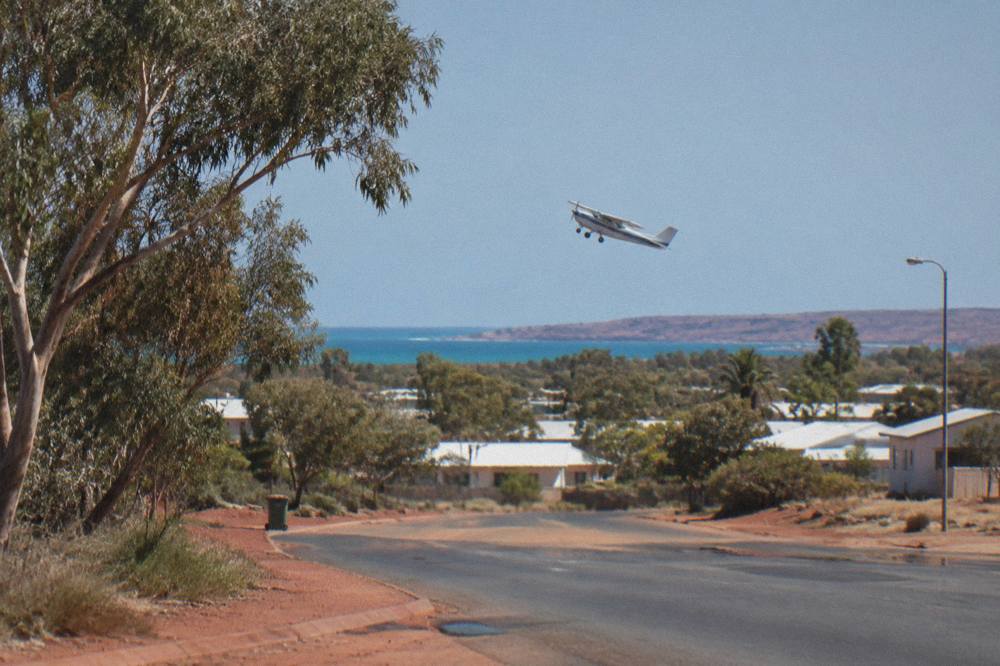
Spotter light aircraft do the finding. While guests snorkel the inner reef, a light plane flies grid patterns outside the reef edge and radios positions to the boats below, which is how a fish the size of a bus gets located in a few hours across tens of square kilometres of ocean. The department's interaction rules permit aerial spotting and strictly manage what happens next.
The protocol is specific because it has to be. Once a shark is found, an approach zone of 250 metres radius applies around it, one vessel at a time holds contact for a maximum of 90 minutes at no more than 6 knots, and other vessels stand off at 250 or 400 metres. Swimmers enter ahead of the shark's direction of travel, stay at least 3 metres from the head and body and 4 metres from the tail, and no more than ten people are in the water at once. A swim window is capped, with recreational interaction limited to 60 minutes under the published guide.
This machinery is why the search rarely fails in season, and it is a genuinely Ningaloo-specific advantage. The planes, the close reef, the concentration of feeding sharks and three decades of operator experience all stack on the same morning. The nine-hour Ningaloo Marine Interactions odyssey from Coral Bay is the longest of the three swim listings, giving that process the most daylight of any trip on this site, from A$700 per person with a 5 rating from 23 reviews.
The same aircraft sometimes find mantas, humpbacks and other wildlife on the same flight, which is why multi-species days are common enough that operators build them into itineraries. Our guide to whether spotter planes find the whale sharks at Ningaloo covers the aerial side in detail.
Endangered Does Not Mean Hard To Find Here
The whale shark is listed as Endangered by the IUCN, and as Specially Protected (migratory) under WA law and Vulnerable and Migratory under national environment law. Those listings describe the global population trend, not your odds on a given morning in May at Ningaloo, where the aggregation is the whole point of the season.
Globally, the picture is sobering. Whale sharks are filter feeders that roam enormous distances, grow slowly and are threatened by ship strikes, fishing and coastal development across their range. Their rarity is real. The Gujawari guide, the official Ningaloo information document named for the traditional owners' word for the fish, records that Baiyungu, Thalanyji and Yinigurdira people have known these animals far longer than the tour industry has existed, and that sightings at Ningaloo now extend as late as November, beyond the historic March to July peak. The wider set of guides lives on Whale Shark Tours Exmouth.
So the honest framing is two-sided. The species needs the protection it gets, and the strict interaction rules, the licensed-operator system and the 250-metre approach zone exist because an Endangered animal is being visited by tens of thousands of people each year. Meanwhile the same protection has kept the Ningaloo aggregation intact, which is precisely why it remains findable. Nobody should read "Endangered" as "unlikely to appear on my tour", and nobody should read "41,390 swims" as "guaranteed". Both readings break the facts.
What A Quiet Day Looks Like
A quiet day is possible, and no listing on this site states a sighting guarantee, a free repeat trip or a refund if no whale shark appears. The only wildlife-sighting policy printed on any roster listing is the reverse: the Ocean Eco Adventures manta cruise states plainly that mantas are wild animals and sightings are not guaranteed. Read your chosen listing's terms before booking rather than assuming.
What actually happens on a rare no-find day varies by operator and is a matter for their terms, which change and should be read live. Some operators elsewhere in Exmouth advertise their own no-sighting policies; those operators are not on this site's roster, and we do not restate their promises. What we can say from the published day pattern is that even the search itself is not a wasted day: the inner-reef snorkels, the flight over the reef and the wildlife along the way are all part of the product, and the same waters that carry whale sharks carry mantas at Coral Bay year-round.
This is one reason some travellers split their week. The Coral Bay Ecotours Whale Shark Safari, from A$745 with a 4.8 rating from 173 reviews, pairs naturally with that operator's manta eco safari, from A$350, which runs on the resident manta population that does not leave with the whale sharks.
And this is where Whale Shark Tours Exmouth comes back to the point of a site like this one: the uncertainty is real but small in season, and the way to shrink it further is to book early in your stay, not on your last day, so weather or a slow day can be absorbed. We compared the listings rather than repeating their marketing lines, and the differences that matter are departure town, duration, group size and cancellation terms, all printed above.
Timing Your Trip Around The Odds
The department states the season as March to July; Explore Parks WA says between March and August; operators in Exmouth run tours to August with sightings often to October, and Coral Bay's season typically ends in June. Peak reliability sits inside that window, and the 2026 season's first swim was recorded around 12 March.
If the odds are the thing you are optimising, aim for the middle of the window rather than either edge, and give yourself buffer days. A five-night stay in April, May or June with a swim booked on day two or three is the classic pattern: it leaves room to rebook if the weather turns, and the shoulder months overlap with mantas arriving commonly from late May and humpbacks appearing from June. Our month-by-month breakdown in what month is best for whale sharks in Ningaloo goes deeper.
| Period | What the verified sources say | Practical read |
|---|---|---|
| March | Season opens, first swim recorded about 12 March in 2026 | Early but proven; plankton blooms begin |
| April to July | DBCA core season; peak swim numbers | Highest reliability, book well ahead |
| August | Exmouth operators still running; Coral Bay finished | Good in Exmouth, humpbacks arriving |
| September to October | Sightings often continue; no guarantee outside main season | Shoulder trips, cheaper, more uncertainty |
| November | Exmouth boats met sharks in early November 2024 and 2025 | Exceptional, never a plan |
Water conditions shift across that span too, from around 28 degrees in March and April down to the low 20s by September and October, with operators providing wetsuits as standard. Nothing about the cooler months stops the tours; they simply suit a thicker suit and a warmer jacket for the ride home.
How Ningaloo Compares Worldwide
A short list of places on Earth offer reliable whale shark swims: Ningaloo is one of very few where the aggregation happens in nearshore, protected water reached by day boats from a resident town, and the only one on Australia's map at commercial scale. That geographic fact, more than anything else, is the answer to the rarity question.
Other famous sites, in Mexico, the Philippines, Belize and the Maldives, each have their own season, their own rules and their own reliability profile, and most involve longer transits or more variable encounters than a two-hour drive from a reef-edge boat ramp. Our wider treatment of the world's best whale shark locations covers that comparison properly. For an Australian traveller, the honest summary is simpler: this is the country's one aggregation, it is World Heritage protected, and it is bookable as a day trip with a champagne lunch at the end of it.
The 2026 season followed the script again, opening with the first confirmed encounters off Exmouth in mid March after what local coverage described as the sharks taking their time. By season's end the counters will have tallied another five-figure total, and the fish will have left, as always, on their own schedule.
Before the final questions, here once more are the three swims worth comparing side by side.
Common Questions About Seeing A Whale Shark At Ningaloo
How Rare Is It To See A Whale Shark?
Globally the species is Endangered and encounters are unusual almost everywhere. At Ningaloo between March and August, the annual nearshore feeding aggregation makes sightings on licensed day tours common, with 41,390 swims recorded in the 2025 season. No official sighting-rate percentage exists.
Are Whale Sharks Endangered?
Yes. The IUCN lists the whale shark as Endangered, and it holds Specially Protected (migratory) status in WA and Vulnerable and Migratory status under Australian national environment law. The Ningaloo interaction rules and licensed-operator system exist because of that status.
Do Whale Shark Tours Guarantee A Sighting?
No listing on this site states a sighting guarantee, and whale sharks are wild animals, so no honest operator or publisher can promise one. Read the cancellation and terms section of your chosen listing before booking. The Ningaloo Blue listing in particular states the sale is final.
What Month Has The Best Odds At Ningaloo?
The department's core season runs March to July, with operators in Exmouth running to August and sightings often to October. April to July is the reliability peak. The first swim of 2026 was recorded off Exmouth around 12 March.
How Do Boats Find The Whale Sharks?
Light spotter aircraft search outside the reef edge while guests snorkel the inner reef, then radio positions to the boats. Strict department rules govern the approach: a 250-metre contact zone, one vessel at a time for up to 90 minutes, and groups of no more than ten swimmers.
Where Can I Learn The Full Swim Rules?
The interaction protocol, including the 3-metre and 4-metre distances and the photography restrictions, is set by the WA Department of Biodiversity, Conservation and Attractions and summarised in our guide to the Ningaloo whale shark swim rules.